Stay informed with expert insights on testosterone therapy, men's health, and performance optimization.

Elevated hematocrit is a common and often manageable side effect of TRT, but it should always be evaluated by your healthcare provider.
According to Neidhart et al. (2025), high hematocrit is a very common side effect in TRT users, and for most men, it's quite manageable. You won’t necessarily need to stop treatment; it will depend on how elevated your hematocrit is, whether you have any underlying medical conditions, and your overall health.
Testosterone stimulates red blood cell production, so high hematocrit on TRT is relatively common. And if levels do become too high, your provider can adjust your TRT protocol.
If you're wondering how to lower your hematocrit, you first need to understand why it's elevated. This blog looks into what elevated hematocrit levels indicate and why they are important. It also provides reviews of evidence-based approaches to help you manage high hematocrit so you can get the most out of TRT.

Essentially, hematocrit is the ratio of the volume of red blood cells to the total volume of blood. Red blood cells are responsible for transporting oxygen to your organs and muscles, so their production is crucial. Elevated hematocrit can increase blood viscosity (thickness) and may increase the risk of complications, but that risk depends on the degree of elevation and the individual patient.
When undergoing testosterone therapy, monitoring this balance is important because testosterone naturally stimulates the body to produce new red blood cells. A modest increase in red blood cells is a recognized effect of TRT. Clinicians don't look at hematocrit alone when assessing your results; they consider your symptoms, hydration levels, other blood markers, and cardiovascular risk factors. It’s important that, over time, you continue to have regular blood tests; a single lab visit is insufficient to monitor blood markers and levels.
There is variation across laboratories, but the most commonly accepted range for a healthy adult male is about 41% to 50% (Cleveland Clinic, 2025).
It’s important to note that every lab has its own reference range, and your healthcare provider evaluates your results based on the evaluating laboratory’s reference interval (the specific ranges given by the exact laboratory that tested your sample).
Some healthy people naturally have hematocrit values near the upper end of the normal range. Living at high altitude, individual variation, and certain athletic adaptations (particularly endurance training at altitude) can contribute to higher values without indicating disease.
For men on TRT, your medical professional will likely pay close attention if your hematocrit starts to rise, but it depends on your unique clinical situation. This doesn't mean you'd have to stop treatment immediately; however, you would need to monitor your levels more frequently.
Hydration status is also important for hematocrit levels. Blood tests done while you're dehydrated could falsely show elevated hematocrit levels because the amount of liquid in your blood will have temporarily reduced. It's helpful to be well hydrated before routine blood work, unless instructed otherwise.
Hematocrit is only one aspect of your complete blood count (CBC). Your healthcare provider will also review your:
These tests will help determine whether your hematocrit elevation is TRT-related or caused by another medical condition.
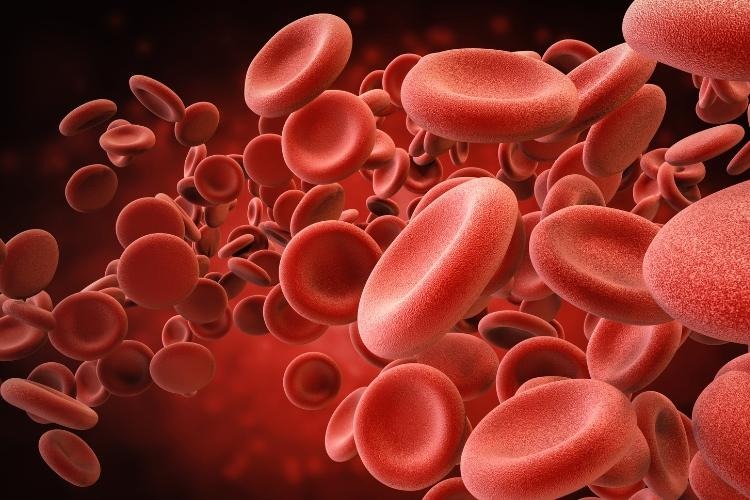
Hematocrit matters because healthy blood, and a subsequent healthy brain and heart, is about balance. Not having enough hematocrit reduces oxygen delivery, and having too much increases blood thickness (viscosity), affecting circulation.
Higher blood viscosity may increase the workload on the heart. Many men have mild increases in hematocrit levels without experiencing any symptoms, but in some men, especially those who have existing heart conditions and other risk factors, a significantly elevated hematocrit level may increase their cardiovascular risk (Kohn et al., 2024).
The brain is particularly reactive to changes in blood flow. Headaches, dizziness, and visual changes may occur with significantly elevated hematocrit, but these symptoms are not specific only to high hematocrit. Patients should seek medical attention if they notice any of these symptoms. Higher hematocrit may increase the risk of strokes and thromboembolic events, such as blood clots (Ory et al., 2022), although the degree of risk from TRT-induced erythrocytosis remains an area of ongoing research.
It's important to remember, though, that cardiovascular risks depend on several factors, for example, whether you have high cholesterol, high blood pressure, and diabetes, and if you smoke, are overweight, or have a family history of any of these conditions.
The aim is not simply to lower hematocrit; rather, it's to keep it within a healthy range that supports oxygen delivery without straining the heart.
Testosterone is often associated with brawn and bulk; however, it also regulates red blood cell production (erythropoiesis).
Some men experience a greater increase in hematocrit than others due to genetics, frequency of injections, sleep issues, and other underlying medical conditions.
To safely manage these reactions, we need to understand why they occur.
Let's consider the mechanics. Testosterone tells the kidneys to produce more erythropoietin (EPO – a hormone found in the kidneys), stimulating the bone marrow to create more red blood cells; at the same time, it suppresses hepcidin (a hormone produced by the liver that balances iron), which increases iron availability and means more red blood cells can be made (Bachman et al., 2013).
The result: hemoglobin rises, your red blood cell count rises, and hematocrit levels rise.
This response is not exact; it varies among individuals, but higher testosterone peaks are associated with a greater likelihood of erythrocytosis (high red blood cells).
It's important to regularly do blood tests to ensure TRT is safe and effective. The Endocrine Society recommends doing a baseline complete blood count (specifically hemoglobin and hematocrit) before starting testosterone therapy, repeating it 3–6 months after treatment begins, and then monitoring it every year thereafter (Bhasin et al., 2018). However, monitoring is individualized based on your response and risk factors; it might be more often than yearly, if needed.
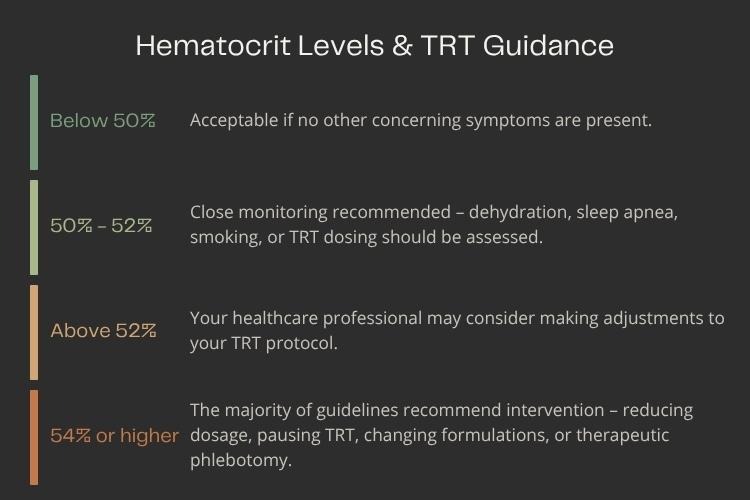
The numbers shown below are a guide and not strict parameters (Mayo Clinic, 2026). Any treatment you have should take your symptoms, medical history, and cardiovascular risk into consideration.
Learn more in our guide: High Testosterone in Men: Symptoms, Causes & Treatment Options
It's possible to feel well and still have slightly elevated hematocrit because it often doesn't cause symptoms.
What's challenging is that many of the symptoms are not specific to high hematocrit; for example, you can experience headaches and dizziness, which can also be caused by poor sleep, high blood pressure, dehydration, or other medical conditions. Symptoms and lab results should always be considered together.
There are some common symptoms that some men may experience if their hematocrit levels begin to rise. If these do occur, speak to your healthcare provider.
Symptoms of elevated hematocrit may include:
Testosterone is one of several factors behind increased hematocrit levels. Often, other factors can increase your red blood cells or cause hematocrit values to appear higher than they are.
These are some of the hidden drivers:
The following symptoms could be signs of a serious heart or neurological emergency. If you notice any of them, seek medical attention:
There isn't a single solution that will work for everyone; treatment is completely individualized. To effectively lower hematocrit on TRT, you need to consider the whole picture: the degree of hematocrit elevation; your symptoms, if any; your cardiovascular risk profile; how elevated your hematocrit is; and any other contributing factors.
Managing hematocrit is not only about meeting lab numbers; the purpose is to reduce risks while maintaining the benefits of TRT.
When your hematocrit is found to be elevated, your medical provider will likely reassess your treatment plan.
Usually, they will redo your blood work to ensure that the elevated results are not due to dehydration, smoking, sleep apnea, or other conditions.
Regular follow-up testing is an essential part of TRT management, as you need to monitor hormone levels and other important blood markers. Testing can be done at a clinic, or there are some providers who offer at-home testosterone testing.
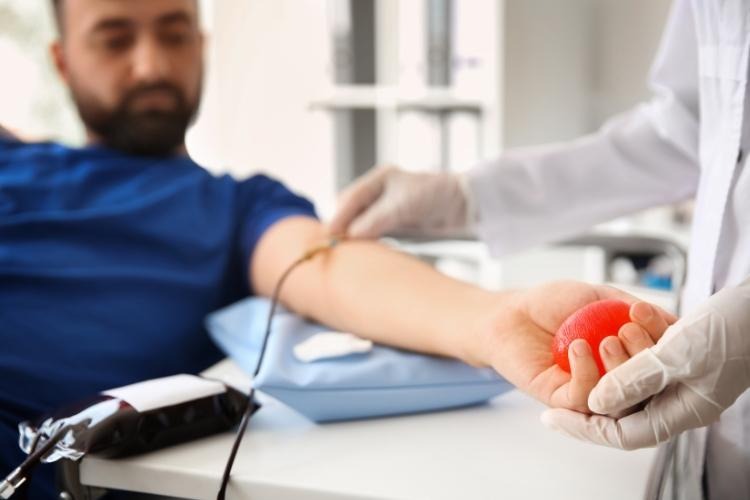
Once these are reviewed, therapeutic phlebotomy (controlled blood removal) may be appropriate for some patients with significantly elevated hematocrit, depending on their symptoms and the clinical context. It removes around 450-500ml of blood to reduce red blood cell volume and lower hematocrit and blood viscosity (thickness).
The downside is that repeated phlebotomies also deplete iron and iron stores (ferritin) over time. Low ferritin comes with its own problems, including fatigue, compromised cognitive function, iron deficiency, and poor performance, so this treatment needs to be closely monitored; otherwise, you're just replacing one problem with another.
Therapeutic phlebotomy is a useful tool, but its effectiveness is under debate. It lowers hematocrit, but if the underlying cause isn't addressed, you may simply be addressing the laboratory value without addressing the underlying cause of the elevated hematocrit (Bond et al., 2024).
Most doctors view phlebotomy as one aspect of a much broader strategy rather than the main solution and believe there are more sustainable ways to control hematocrit, such as optimizing testosterone dosing, using stable delivery methods, making lifestyle changes, and treating sleep apnea.
Adjusting your TRT protocol may be another way to lower hematocrit without sacrificing the benefits of the treatment.
Higher-dose or less frequent injections may produce larger testosterone peaks, which have been associated with a greater risk of erythrocytosis in some patients. Sometimes, more frequent, lower-dose injections may reduce testosterone peaks, which may help limit hematocrit increases in some patients.
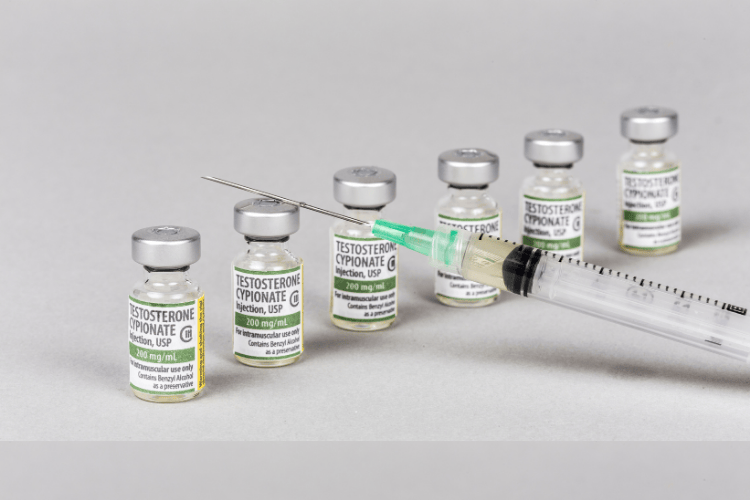
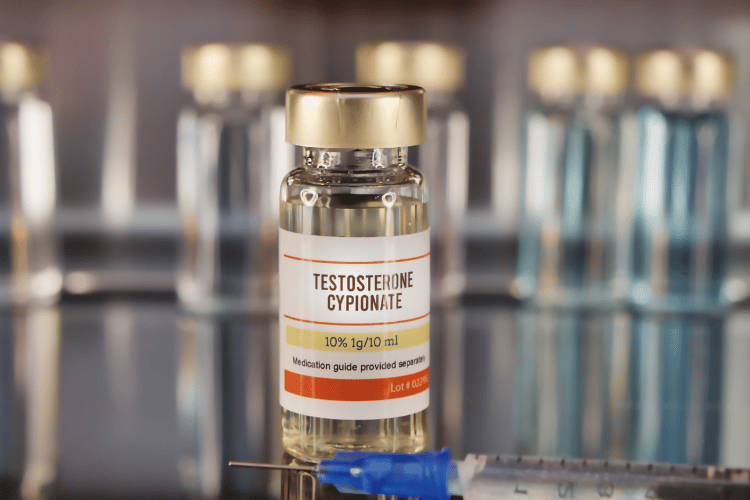
If your hematocrit levels refuse to budge, your health provider might try reducing your dose or switching you from injectable testosterone, for example, testosterone cypionate, to a transdermal patch or gel.
The primary goal is to find the lowest effective dose while keeping your symptoms well controlled.
Medical management is important, but your everyday habits also play a role when you're undergoing hormone treatment. We've already discussed the hidden drivers of a rise in hematocrit, so let's look at lifestyle adjustments. Lifestyle changes help reduce your overall cardiovascular risk, but they may not directly lower hematocrit.
Aerobic exercise, done regularly, has multiple benefits: it supports your heart, helps control blood pressure, and improves circulation. Plus, it reduces some of the cardiovascular risk factors linked to elevated hematocrit.
Around two and a half hours of moderate-intensity exercise, at least, every week, as well as some resistance training, is recommended.
Maintaining a healthy weight may reduce the risk of conditions such as sleep apnea and improve overall cardiometabolic health, but focusing on your overall health, rather than just the success of TRT, is key.
Additional body fat increases the risk of apnea, insulin resistance, and hypertension, all of which can complicate TRT management (Graziani et al., 2023).
There are many supplements and quick-fix solutions on the market that claim to lower hematocrit, but most of these "treatments" lack the scientific evidence to support them. TRT-protocol adjustments, healthy habits, and frequent medical monitoring are more effective for long-term success.
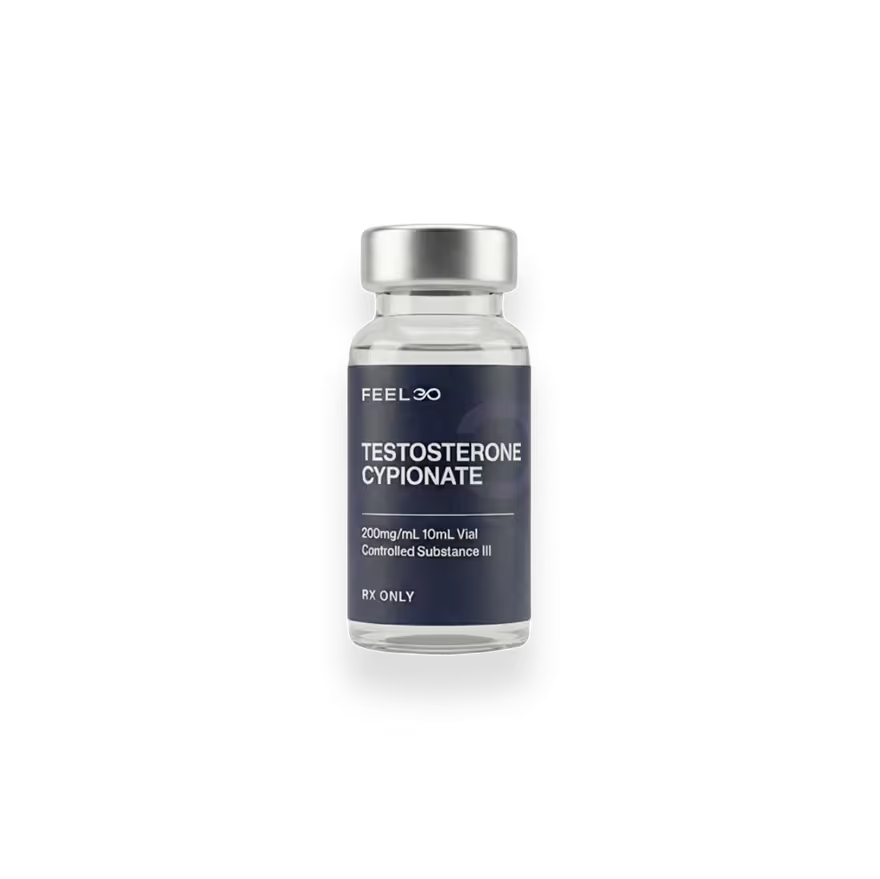
Supports energy, focus, sexual health, and overall wellbeing
Shop NowExperts say it’s not necessary to eliminate dietary iron completely, but it is recommended that you avoid taking iron supplements unless they’ve been prescribed by your doctor (DeLoughery et al., 2024). It's more important to stay hydrated and follow a heart-healthy diet than to avoid certain foods.
A small human study by Robbins et al. (1988) suggested that a daily dose of grapefruit may reduce elevated hematocrit; notably, it reduced hematocrit in subjects who had abnormally high levels, but didn’t affect those with normal baseline levels. However, this has not been confirmed by modern clinical trials, and current medical guidelines do not recommend grapefruit or naringin supplements for the treatment of elevated hematocrit.
It can also affect other medications, so you should consult your medical provider before taking grapefruit supplements.
There is no single hematocrit level that predicts a stroke. Overall cardiovascular risk depends on many factors, such as your age, whether you smoke, and if you have high blood pressure, diabetes, or a heart condition. For men on TRT, the Endocrine Society Clinical Practice Guidelines (2018) recommend intervention if hematocrit reaches 54% or higher.
Yes, it can temporarily lower hematocrit because donating blood reduces the number of red blood cells. Your healthcare provider may recommend therapeutic phlebotomy (controlled blood removal) as part of a management plan, but it's still important to identify the underlying cause of the elevated hematocrit.
It’s important to note that therapeutic phlebotomy and donating blood are not interchangeable, and you should always consult your healthcare provider before beginning any routine blood donation.
Also, regular blood donations can deplete your iron stores; therefore, your ferritin (iron stores) and hematocrit levels should be regularly monitored if you are donating blood.
The five most common signs of a stroke are a sudden, severe headache with no obvious cause, abrupt vision changes, facial drooping, trouble speaking, and arm weakness.
If you experience any of these symptoms, call emergency services immediately.
Understanding how to lower hematocrit is actually about managing TRT smartly.
Elevated hematocrit doesn't automatically mean that your testosterone therapy has failed or that you have to stop the treatment. A rise in hematocrit is a recognized physiologic response to testosterone therapy. The important thing is to ensure that your body's response stays within a safe, effective range.
At Feel30, treatment is guided by regular monitoring, evidence-based dose adjustments, and individualized care. Testosterone replacement therapy is not a one-size-fits-all solution; it's an individual journey.
Ultimately, successful treatment means maintaining long-term vitality while still protecting your heart health.
Take the first step toward renewed energy and confidence with Feel30’s expert care.




4.9 out of 5 · 2,400+ reviews


Always Tired, Gaining Weight? Low T Was the Real Reason
Is Low T Hurting Your Relationship?
This gaming laptop is a powerhouse, equipped with the latest graphics card and a high-refresh-rate display.
Jane Smith
Feel30 has completely changed the game for me. I feel more energized, focused, and confident like I did years ago.
Emily Johnson
This smartphone offers an exceptional camera experience, with stunning low-light performance and vibrant colors.
John Doe
What are you waiting for?
Take the first step toward renewed energy and confidence with Feel30’s expert care.


Feel 30 again with physician-supervised treatment that restores the energy, confidence, and performance you remember. No hassle or hidden fees.