Stay informed with expert insights on testosterone therapy, men's health, and performance optimization.

Both sermorelin and hexarelin are growth hormone peptides, but which one is actually right for you? Do you want stronger stimulation of your growth hormone, or do you prefer a more natural production that aligns with your body’s own rhythm?
When you compare sermorelin vs hexarelin, you’ll quickly notice that these two synthetic peptides share a similar purpose, but they work through different mechanisms. They also differ in terms of receptor activity and duration of action.
In this blog, we’ll give you a detailed comparison of hexarelin and sermorelin and point out key considerations that you should discuss with a licensed healthcare professional.
Hexarelin is a highly potent synthetic growth hormone-releasing peptide. Peptides are short chains of amino acids, the building blocks your body uses to make proteins. Hexarelin is made up of six of these amino acids, and it acts through the growth hormone secretagogue receptor, commonly called GHS-R1a.
That may sound a little technical, but the job of hexarelin is quite simple:
Many people are drawn to hexarelin due to its potency. A study by Massoud et al. in healthy adult men confirmed that hexarelin triggers a strong release of growth hormone, and that it may also increase levels of prolactin and cortisol in some individuals. This is basically because when hexarelin stimulates your body to release growth hormone, it also influences other hormones and processes that act through similar pathways.
Helps support lean muscle and fat metabolism
Shop NowSermorelin is also a synthetic peptide, an analog of Growth Hormone Releasing Hormone (GHRH), made up of 29 amino acids. It mimics GHRH and signals your pituitary gland to release growth hormone naturally in a pulsatile pattern that matches the body’s rhythm.
Unlike hexarelin that triggers a massive spike of growth hormone, sermorelin is more moderate. Healthcare professionals often discuss it for appropriate patients focused on anti-aging, better sleep and body composition, and overall wellness.
Since sermorelin acts through the GHRH pathway instead of ghrelin receptors like hexarelin, it generally has little effect on levels of cortisol and prolactin. Providers also view it as a better option for long-term use in patients whose goal is to improve steadily.
Expert Insight: Hexarelin is more potent than sermorelin, but that doesn’t mean it’s better.
Both hexarelin and sermorelin stimulate your body to release its own growth hormone. They don't supply external HGH. Instead, they signal your system to produce more of its own growth hormone through different pathways.
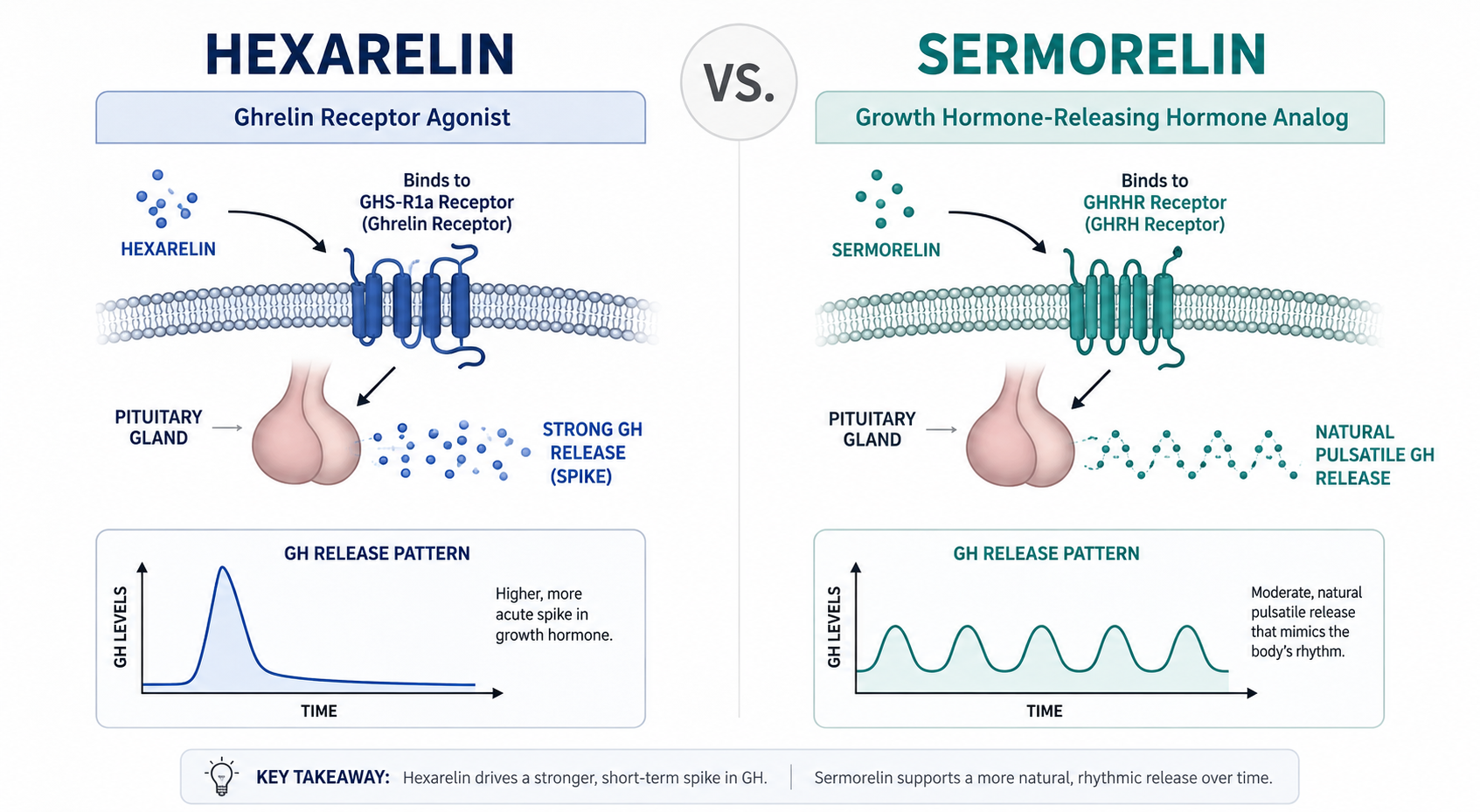
The main difference between hexarelin and sermorelin is the potency. None among the two is a shortcut or DIY performance tool. What works for your body will depend on your symptoms, labs, health history, goals, and how your provider wants to monitor your response.
Hexarelin and sermorelin are both evaluated as growth hormone–releasing peptides, but they differ in their receptor activity and overall pharmacologic profile.
Hexarelin has been studied for its relatively strong stimulation of growth hormone release in experimental settings. Because of this, it is sometimes discussed in contexts where more pronounced short-term growth hormone signaling is being evaluated. Its use requires careful medical consideration due to its broader effects on other hormonal pathways.
Sermorelin is a growth hormone–releasing hormone (GHRH) analog that acts through a pathway similar to the body’s natural signaling system. It is generally discussed in the context of supporting endogenous growth hormone regulation under medical supervision.
Expert Insight: Hormonal symptoms such as changes in energy, recovery, body composition, or motivation are not specific to growth hormone alone. In many cases, these symptoms may also be influenced by testosterone levels, sleep quality, stress, insulin sensitivity, thyroid function, and overall metabolic health.
That’s why peptide therapy should not be viewed in isolation. A clear plan starts with the basics:
Note that more GH release doesn't automatically mean better results. Your baseline labs, sleep, training, nutrition, testosterone levels, stress, metabolic health, and overall lifestyle all shape the outcome. A peptide can support the process, but it does not replace the fundamentals of a healthy lifestyle.

Hexarelin’s potency is also its trade-off. Common side effects may include:
More serious concerns may include elevated prolactin and cortisol levels, hormonal imbalance, cardiovascular or metabolic changes, headache, nausea, and dizziness. Massoud et al.'s research has shown hexarelin can influence other hormones beyond GH, including prolactin, ACTH, and cortisol, depending on context.
The main long-term side-effect of hexarelin is desensitization. With prolonged stimulation, receptors can become less responsive. For this reason, some clinicians view hexarelin as a therapy that may warrant careful patient selection, monitoring, and consideration of treatment duration rather than routine long-term use.
Sermorelin is generally considered milder than hexarelin, but milder does not mean risk-free. Because it still affects growth hormone signaling, your response should be monitored by a healthcare provider. Common side effects may include:
Most of the above are usually discussed as temporary or minimal side effects, but they still matter. If symptoms continue, become more intense, or feel unusual for you, they should be discussed with your provider. More serious risks may include overstimulation of GH, cardiovascular or metabolic concerns, blood sugar changes, neurological symptoms such as persistent headaches or vision changes, and allergic reactions.
Contact your provider if symptoms worsen or new symptoms appear. This is especially important if you notice chest discomfort, significant swelling, shortness of breath, severe dizziness, vision changes, or signs of an allergic reaction.
Peptide therapy may not be appropriate for everyone. A full medical evaluation (including labs and health history) is required before starting any protocol. These therapies may not be appropriate for people with:
That determination should be made by a licensed provider. Avoid unverified sources. These compounds require proper evaluation and should not be self-directed.

The better fit between sermorelin and hexarelin depends on your labs, symptoms, health history, risk factors, and what your provider is trying to address. Neither peptide should be selected based on potency alone. The goal is to match the therapy to the right clinical situation.
In clinical and research settings, it may be discussed in contexts where more pronounced modulation of growth hormone signaling is being evaluated under close medical supervision.
Because it may also influence other hormonal pathways, including cortisol and prolactin in some studies, its use requires careful risk assessment and ongoing monitoring.
Considerations that may be part of clinical decision-making include:
It is generally evaluated as part of broader discussions around supporting physiologic growth hormone signaling under medical supervision.
Considerations that may be relevant include:
Many men discover peptide therapies while looking at the bigger hormone picture.
Note: Growth hormone and testosterone don't do the same job, but they can influence overlapping outcomes, including energy, recovery, lean muscle, fat metabolism, mood, performance, and overall vitality.
If testosterone is low, focusing only on GH release may leave a major gap in the plan. You may be comparing peptides when the first question should be: where are your testosterone levels right now?
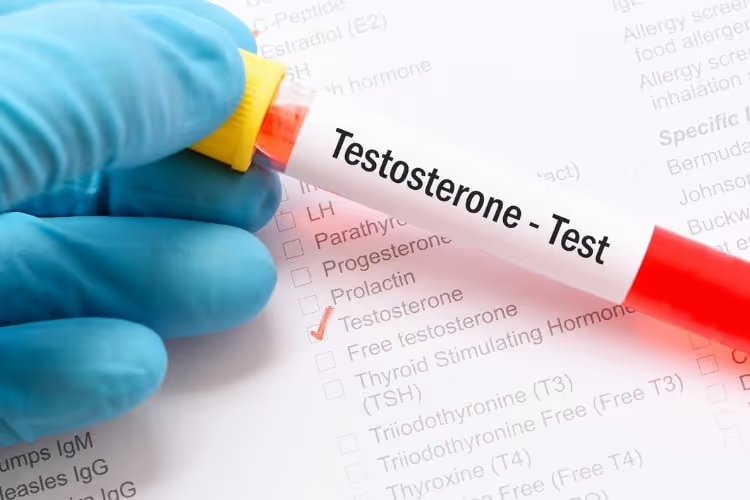
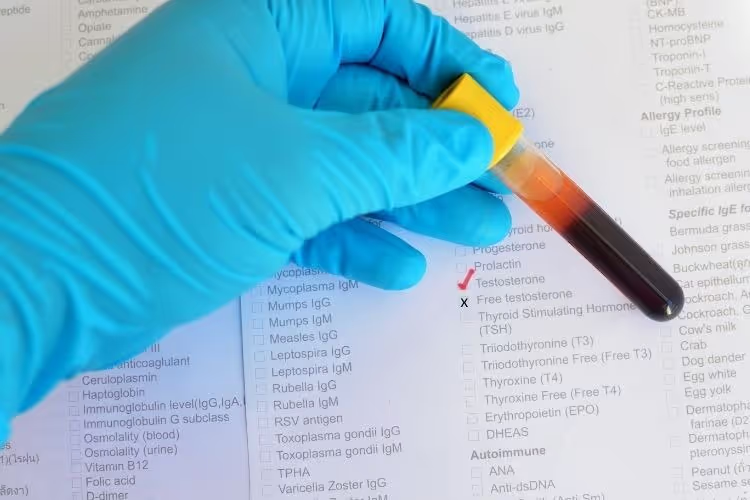
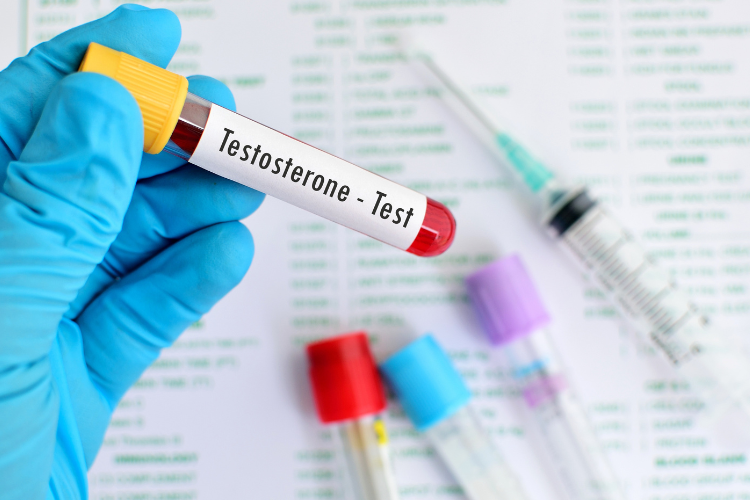
Feel30’s at-home testosterone test gives you a clear starting point without the clinic runaround. You collect your sample at home, get your numbers reviewed, and understand whether testosterone may be part of the bigger picture.
From there, the conversation gets sharper. If your testosterone is healthy, peptide therapy may be worth discussing as a separate option. If it’s low, your provider can help you understand whether testosterone replacement therapy (TRT) should come first or alongside a peptide-focused plan.
Hexarelin is generally considered the more potent option for peak GH secretion. It can produce a stronger and faster growth hormone pulse than sermorelin. Sermorelin, on the other hand, works more gradually and follows a pathway closer to the body’s natural growth hormone-releasing hormone system. The most appropriate option depends on your labs, goals, health history, and how your provider wants to monitor your response.
In some clinical settings, licensed providers may consider using hexarelin and sermorelin together because they work through different pathways. Hexarelin acts through ghrelin receptors, while sermorelin mimics natural growth hormone-releasing hormone. However, a combined protocol is not right for everyone. A licensed healthcare provider should prescribe and monitor any combined peptide protocol. These therapies should not be stacked, adjusted, or started without medical guidance.
Changes in body composition, fat metabolism, or lean muscle support vary widely from person to person. Your response depends on several factors, including baseline GH levels, age, sleep, training, nutrition, testosterone levels, metabolic health, and medical history. Progress is usually assessed through symptoms, follow-up conversations, and lab monitoring rather than guesswork.
Hexarelin may influence cortisol levels. Research by Massoud et al. has shown that hexarelin can stimulate GH release while also affecting other hormones like prolactin and cortisol in certain settings.
Sermorelin was previously FDA-approved under the brand name Geref for diagnosing and treating growth hormone deficiency in children. That original branded product is no longer actively marketed. Today, sermorelin is available as a compounded medication through licensed pharmacies. Compounded medications are regulated by state pharmacy boards and may be produced in FDA-inspected facilities, but they are not FDA-approved and do not undergo the same FDA premarket review.
No. Hexarelin is not FDA-approved. Unlike sermorelin, which was previously FDA-approved under the brand name Geref, hexarelin remains investigational and has not been approved as a prescription drug. If a clinic or website claims hexarelin is FDA-approved, treat that claim with caution. It should not be purchased from research chemical sites or used without medical oversight.
Both peptides may support fat metabolism because growth hormone plays a role in lipolysis, which is the breakdown of stored fat. However, neither peptide should be treated as a standalone fat loss solution. Nutrition, training, sleep, stress, blood sugar control, testosterone levels, and overall metabolic health all matter. If those foundations are off, peptide therapy may not deliver the outcome you’re looking for.
When you stop using hexarelin, GH activity may move back toward baseline over time. Any change should be discussed with your provider, especially because hexarelin may affect cortisol, prolactin, appetite, water retention, and metabolic markers. Your provider can help decide whether to pause, adjust, or consider another approach.
Learn more about what happens when you stop taking sermorelin here.
In the U.S., hexarelin and sermorelin require a prescription from a licensed provider. They're not meant for casual self-purchase or unguided use. Avoid unverified online sources, especially research peptide vendors. Quality, sterility, dosing accuracy, and safety oversight matter. A legitimate peptide therapy plan should start with a medical evaluation, appropriate labs, and a provider who can monitor your response.
Hexarelin and sermorelin are typically administered by injection in clinical settings. The exact administration method, technique, and treatment plan should be explained by a healthcare provider.
Peptide therapy and TRT work on different hormone systems. GH peptides target the growth hormone axis, while testosterone replacement therapy addresses clinically low testosterone.
The symptoms can overlap. Low energy, slower recovery, reduced lean muscle, increased fat, lower libido, and mood changes may be related to testosterone, GH signaling, lifestyle factors, or a mix of all three.
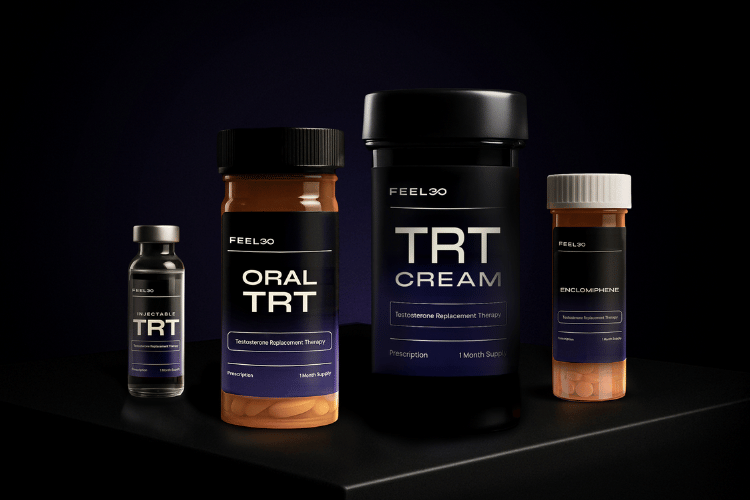
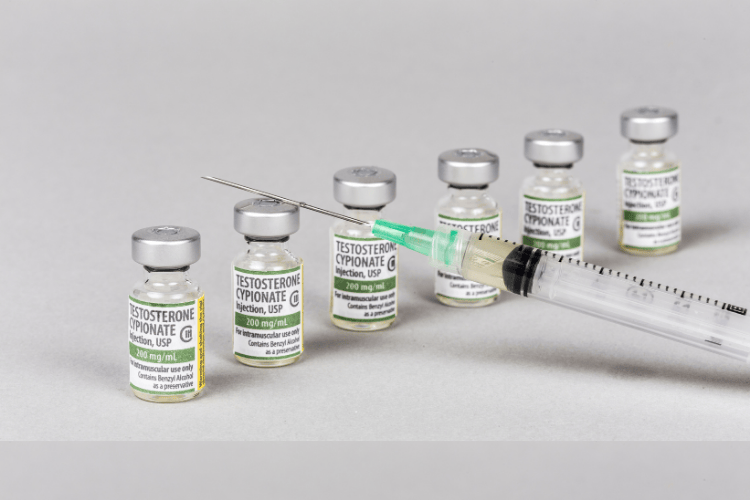
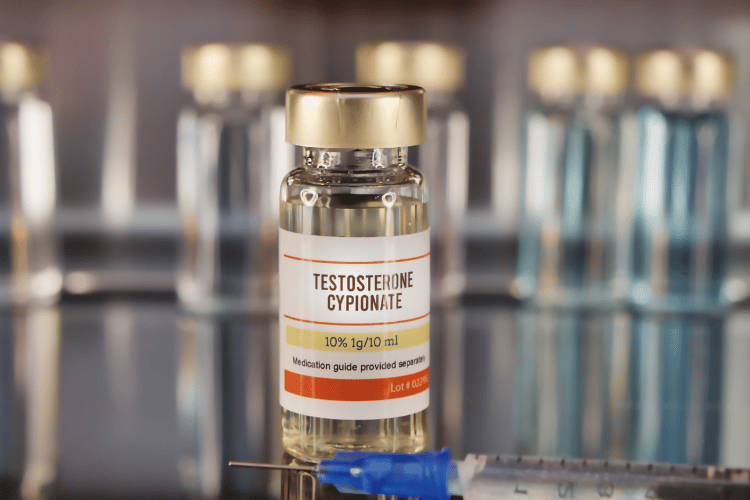
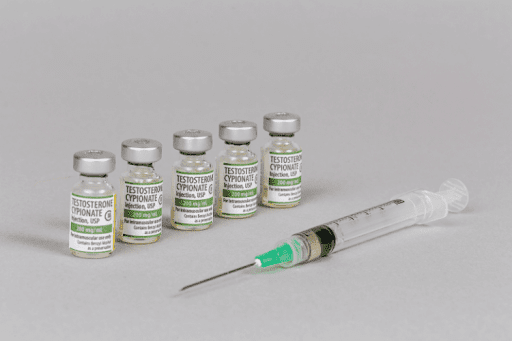
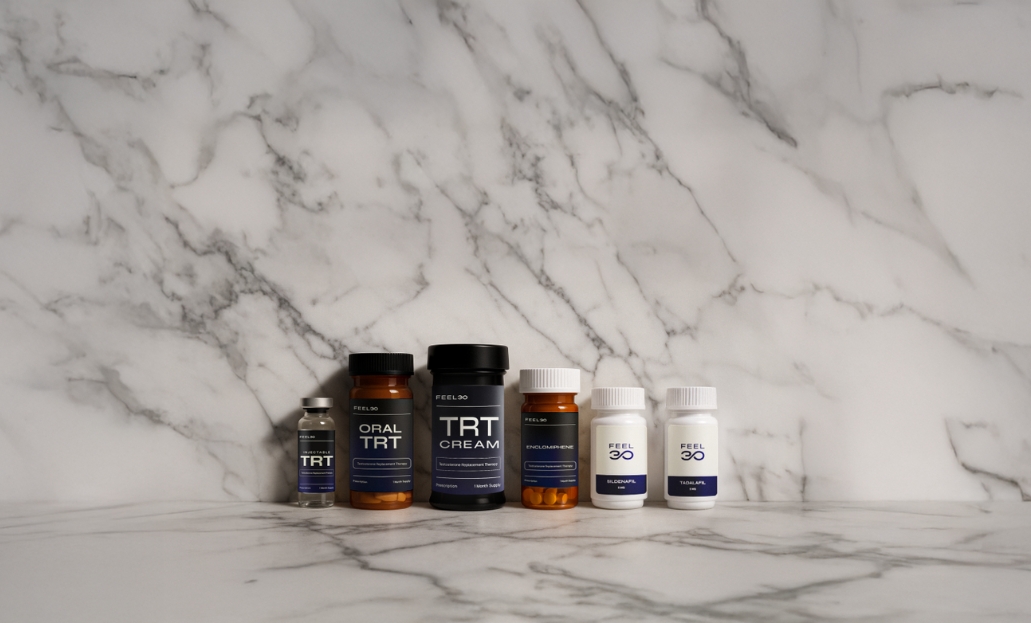
For men who qualify, Feel30 offers medically guided testosterone options, including testosterone cypionate and enclomiphene. The right option depends on labs, symptoms, goals, and clinical fit.
If you’re not sure where to start, begin with your numbers. Feel30’s at-home testosterone test can help you understand whether testosterone may be part of the bigger picture before you discuss peptide therapy.
The hexarelin vs sermorelin decision is not about picking the “strongest” peptide. It’s about shared decision-making with your provider to determine the right approach for your body, goals, and risk profile.
Hexarelin is generally positioned as the more potent option, with faster, higher-peak GH stimulation. Sermorelin is the steadier option, working through a pathway that more closely aligns with your body’s natural growth hormone rhythm.
But GH is only one part of the hormone picture. If low testosterone is contributing to your symptoms, peptide therapy alone may not address the full issue.
Start with your baseline, know your numbers, then build the plan around what your body actually needs. Feel30’s at-home testosterone test gives you a clear first step before discussing peptide therapy, TRT, or a broader hormone optimization plan.
References
Take the first step toward renewed energy and confidence with Feel30’s expert care.




4.9 out of 5 · 2,400+ reviews


Always Tired, Gaining Weight? Low T Was the Real Reason
Is Low T Hurting Your Relationship?
This gaming laptop is a powerhouse, equipped with the latest graphics card and a high-refresh-rate display.
Jane Smith
Feel30 has completely changed the game for me. I feel more energized, focused, and confident like I did years ago.
Emily Johnson
This smartphone offers an exceptional camera experience, with stunning low-light performance and vibrant colors.
John Doe
What are you waiting for?
Take the first step toward renewed energy and confidence with Feel30’s expert care.


Feel 30 again with physician-supervised treatment that restores the energy, confidence, and performance you remember. No hassle or hidden fees.