Stay informed with expert insights on testosterone therapy, men's health, and performance optimization.

Finasteride can help slow hair loss, but what does it do to your testosterone? And more importantly, what does that mean for your energy, libido, and overall performance?
These are fair questions. For many men, the hesitation is not about the medication itself. It’s the fear of trading one problem for another. Some report changes in how they feel. Others don’t notice anything at all. In many cases, it also raises a bigger question. If something feels off balance, is it finasteride, or is it an underlying testosterone issue that hasn’t been addressed yet?
For some men, that’s where conversations around testosterone replacement therapy begin, not because of finasteride itself, but because it brings existing hormonal issues into focus.
This article explains how finasteride affects testosterone levels, what role Dihydrotestosterone (DHT) plays, and why some men experience side effects while others don’t.
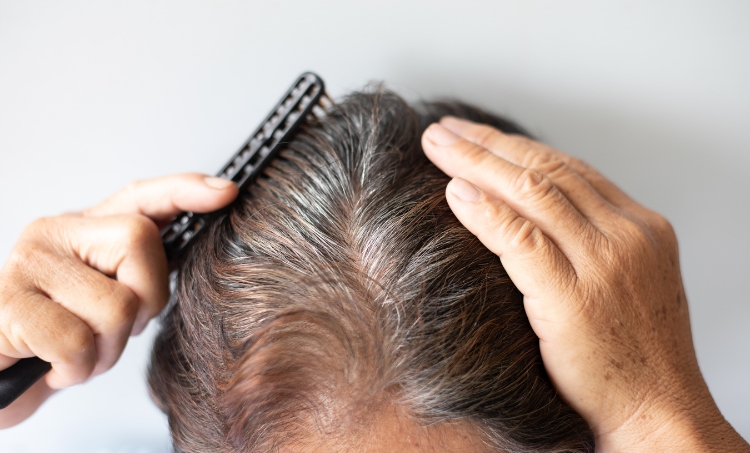
![Man with male pattern baldness showing hair thinning linked to DHT and conversion of testosterone. [Photo by Africa images on Canva.]](https://cdn.prod.website-files.com/6904c08e4e2ef68a82460e5e/6a0b4ab4c6abeac509bdb1fc_f11adb79.jpeg)
No, finasteride doesn't lower testosterone levels. In fact, in many cases, testosterone levels stay the same or rise slightly.
DHT, or dihydrotestosterone, is a hormone your body creates from testosterone. An enzyme called 5-alpha-reductase converts testosterone into DHT. Finasteride works by blocking this conversion.
So instead of reducing testosterone, it reduces how much of it gets converted into DHT. DHT isn’t inherently “bad.” It plays a role in male development, libido, and overall androgen activity. But in the scalp, it has a very specific effect.
Finasteride is a prescription medication used to treat hair loss and prostate-related conditions. It’s taken as an oral tablet and is typically used as a long-term treatment.
At a lower dose, it’s commonly prescribed for male pattern hair loss (androgenetic alopecia), to encourage hair growth. At a higher dose, it’s used to treat benign prostatic hyperplasia (BPH), a condition where the prostate enlarges with age. Both uses are tied to the same underlying mechanism: reducing the effects of DHT.
For men concerned about hair loss, finasteride is one of the few treatments that targets the root cause rather than just the symptoms. It works at the hormonal level, which is why questions about testosterone levels and side effects come up so often.
Caution: Finasteride shouldn’t be used in women, particularly during pregnancy, as it can interfere with normal male fetal development.
![Man undergoing scalp examination while taking finasteride for hair loss treatment and monitoring potential sexual side effects. [Photo by pixelshot on Canva.]](https://cdn.prod.website-files.com/6904c08e4e2ef68a82460e5e/6a0b4ab4c6abeac509bdb202_9df02752.jpeg)
In men who are genetically prone to hair loss, DHT binds to androgen receptors in the scalp.
Over time, this causes hair follicles to shrink.
This process is known as androgenetic alopecia, or male pattern baldness. Finasteride prevents male pattern baldness from progressing by blocking the conversion of testosterone into DHT.
Beyond hair loss, DHT also:
When you reduce DHT, you’re not removing testosterone; you’re changing how your body uses and responds to androgens. That’s why the effects can feel different, even when your testosterone levels stay the same.
To understand the effects of finasteride, you need to look at how testosterone and DHT interact.
While total testosterone levels often stay stable or rise slightly, free testosterone may change in some men. This can happen due to changes in SHBG (sex hormone-binding globulin). In practice, these changes are usually small, but they can be relevant when your symptoms don’t match your total testosterone levels.
This is why finasteride is effective for hair loss. It targets DHT, which is responsible for shrinking hair follicles.
Because less testosterone is being converted to DHT, more testosterone is available in your bloodstream. So the concern isn’t testosterone loss; it’s rather how reduced DHT affects how you feel.
The dose also has an impact. For hair loss, finasteride may be prescribed at 1 mg daily. At higher doses, like 5 mg for benign prostatic hyperplasia, DHT suppression is stronger and may exceed 90%.
With that increased suppression comes a slightly higher likelihood of side effects, particularly those related to sexual function. This is why dosing should always match the intended use and be guided by a medical provider.
You can have normal testosterone levels and still feel off balance.
Even though testosterone gets most of the attention, low DHT levels also contribute to sexual dysfunction.
When DHT drops, some men notice:
These potential side effects are often mild, but they can happen.
Expectation also plays a role. In one study, men told about possible sexual side effects reported them more often than men who weren’t told (Belknap et al., 2012). This doesn’t mean symptoms are imagined, but it does show how perception and physiology can overlap.
You may have come across the term post-finasteride syndrome, or PFS. It’s used to describe a group of symptoms that some men report continuing after stopping finasteride. These can include ongoing sexual dysfunction, low libido, fatigue, or mood changes. Estimates suggest a low incidence, but exact rates remain debated and under investigation.
PFS is still debated. There are documented patient reports describing persistent symptoms. At the same time, large clinical trials have not consistently shown a clear causal link. They haven't shown a link between finasteride and long-term adverse side effects.
The symptoms are real for those who have them, but the cause (and how often it happens) isn't fully understood.
Finasteride is generally well-tolerated when men take it under medical supervision. When side effects occur, they are typically mild and resolve after stopping treatment.
But if you want to approach this properly:
Clinical evidence is consistent.
Men taking finasteride typically show:
Testosterone remains in the normal range for nearly all men. For many men, there’s no measurable impact on muscle mass, strength, or overall performance.
For men with healthy testosterone levels, finasteride won’t meaningfully impact performance. Where things change is when testosterone levels are already low, especially if it’s untreated.
In these cases, finasteride isn’t the cause of your symptoms. It simply exposes an underlying hormone issue.
If your testosterone levels are already optimized through TRT or medical support, you can expect:
If you're treating male pattern hair loss with finasteride and you want to promote higher testosterone, you need a good routine.
These factors can have significant effects on testosterone in conjunction with supplements and medications.
Track:
If you’re using finasteride for prostate-related conditions, your clinical team should monitor your PSA (prostate-specific antigen). Finasteride can reduce PSA levels by around 50%, which can affect how results are interpreted in prostate screening.
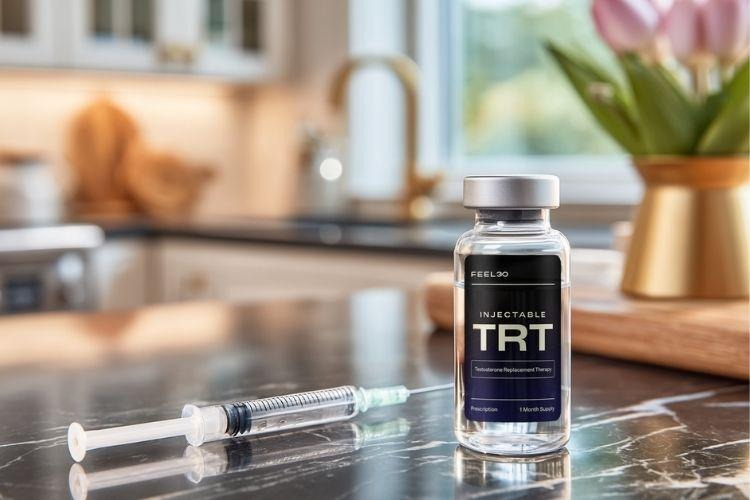
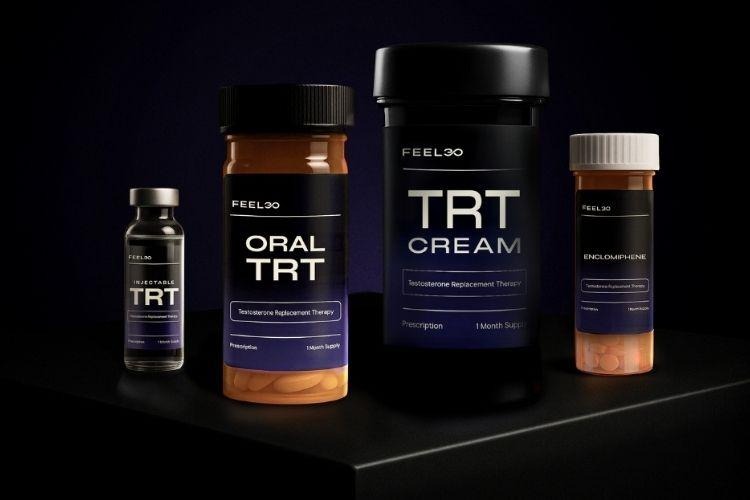
If your testosterone levels aren’t where they should be, you have treatment options.
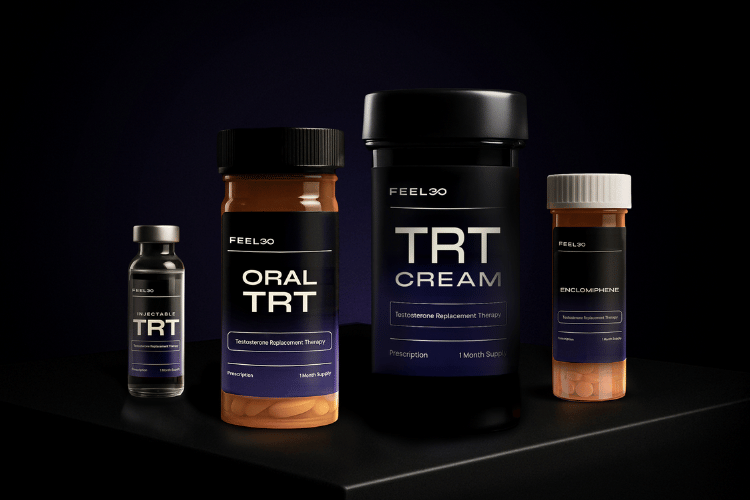
Depending on your baseline and goals, options may include:
These are tools, and when used correctly, they can bring your hormone profile and performance back into alignment.
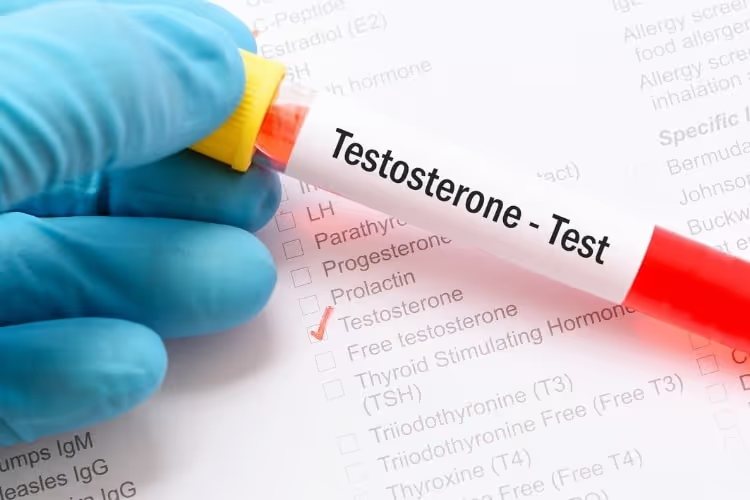
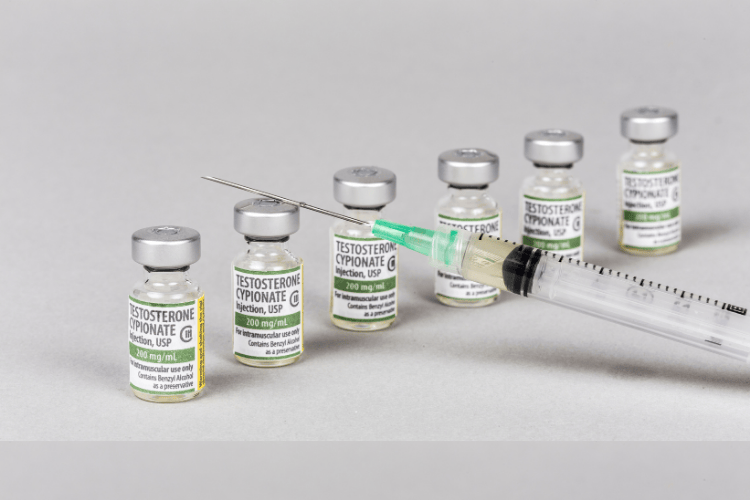
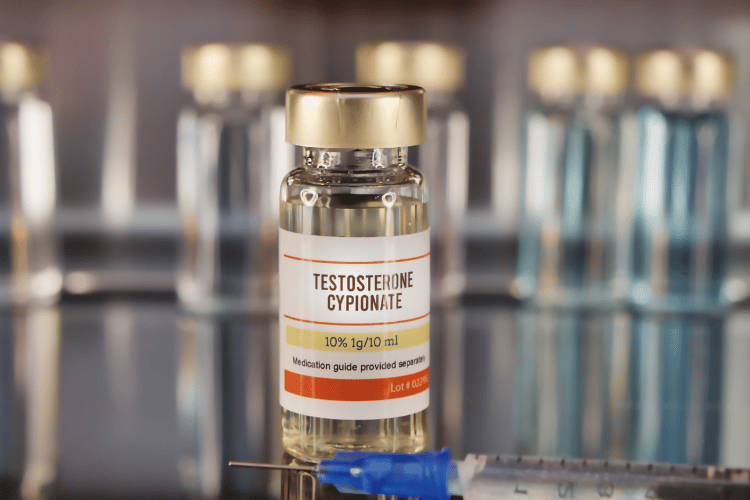
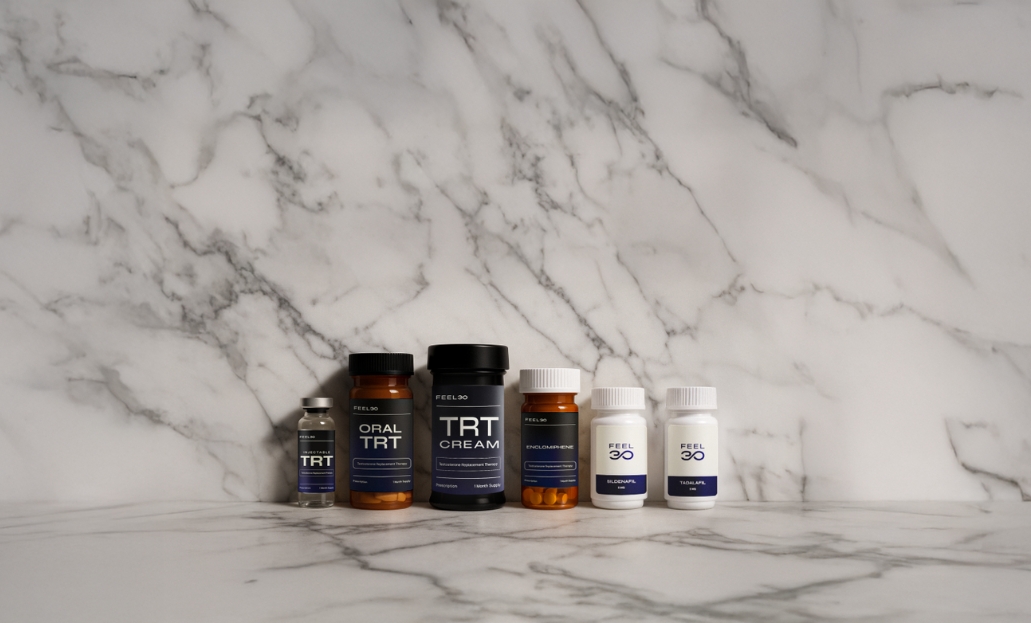
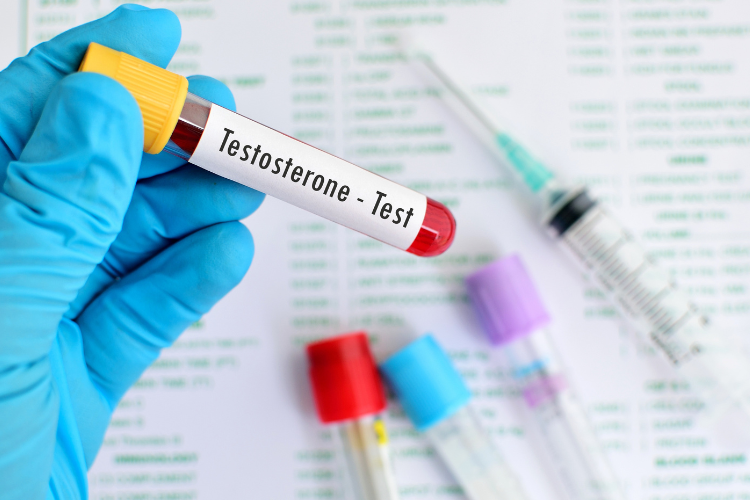
At Feel30, we offer at-home blood testing, so you can understand your hormone levels without disrupting your routine.
From there, treatment is medically guided and tailored to you, whether that involves testosterone therapy, support for natural production, or performance-focused solutions like sildenafil or tadalafil.
No. Finasteride does not lower testosterone levels in most men. Clinical trials show finasteride can slightly raise testosterone because it blocks testosterone from turning into DHT (Corona et al., 2010). This means more testosterone remains available in the bloodstream, often staying well within the normal range.
Libido changes are usually linked to reduced DHT, not lower testosterone.
DHT is a potent androgen that plays a role in sexual desire. When finasteride lowers DHT, some men notice a drop in libido, even though testosterone levels remain stable.
Yes, but it’s uncommon. Erectile dysfunction is more complex than libido. While reduced DHT may contribute, erectile function also depends on blood flow, nerve signaling, and overall hormonal balance.
In a small percentage of men taking finasteride, changes in erectile function can occur. These side effects are typically mild and often resolve after stopping the medication.
Finasteride can slightly shift hormone balance by increasing testosterone, which may lead to a small rise in estradiol. Estradiol also plays an important role in men’s health, including bone strength and sexual function. However, these changes are usually minor and not clinically significant. In rare cases, this shift may contribute to side effects like gynecomastia.
Yes. Finasteride treatment has been studied extensively in clinical trials and is considered safe for long-term use in most men. It is commonly prescribed for androgenetic alopecia and benign prostatic hyperplasia, with a well-established safety profile when monitored appropriately.
Not directly. Androgenic hair loss is primarily driven by DHT (dihydrotestosterone), which is converted from testosterone. While higher testosterone can lead to more DHT production in some men, the key factor is how sensitive your hair follicles are to DHT.
If you’re genetically prone to male pattern hair loss, higher DHT levels may accelerate the process. If you’re not, high testosterone alone won’t necessarily cause hair loss.
Read this article, “Does High Testosterone Cause Hair Loss?” for a deeper explanation on how testosterone, DHT, and hair loss interact.
Yes, and many men use finasteride alongside testosterone replacement therapy to help manage hair loss while maintaining optimal testosterone levels. This combination allows you to support hair growth without compromising performance.
There is no strong evidence that finasteride negatively affects muscle growth or muscle mass. Since testosterone levels typically remain stable or increase slightly, many men maintain strength and performance.
If adverse side effects occur, they usually resolve after stopping the medication. Hormone levels, including DHT and testosterone, return toward baseline as your body resumes normal conversion processes.
Alternatives include topical treatments like minoxidil, as well as newer approaches such as topical finasteride.
Topical formulations aim to reduce DHT locally in the scalp, with less impact on systemic DHT levels. Early data (Caserini et al., 2022) suggest this may lower the risk of side effects, although long-term evidence is still developing.
Does finasteride lower testosterone levels? No, it reduces DHT, but you may feel that change, depending on your baseline. For most men, testosterone remains stable. Strength, energy, and performance stay intact. Hair loss slows, often significantly.
Where things become unclear is when underlying hormone levels aren’t optimal to begin with.
In those cases, finasteride often brings an underlying problem into focus. That’s why the real advantage isn’t just understanding the medication. It’s understanding your baseline. Test your levels, monitor how you respond, and make decisions based on data, not assumptions.
Belknap, S. M., Aslam, I., Avorn, J., et al. (2012).
Adverse event reporting in clinical trials of finasteride: The nocebo effect. JAMA Dermatology, 148(11), 1303–1309.
Caserini, M., Radicioni, M., Leuratti, C., et al. (2022).
Topical finasteride in the treatment of androgenetic alopecia: A systematic review and meta-analysis. Journal of Dermatological Treatment.
Corona, G., Rastrelli, G., Maseroli, E., Sforza, A., Forti, G., & Maggi, M. (2010).
Hormonal changes associated with finasteride use. Clinical Endocrinology, 72(2), 232–238.
Drake, L., Hordinsky, M., Fiedler, V., Swinehart, J., Unger, W. P., Cotterill, P. C., Thiboutot, D., Lowe, N., Jacobson, C., & Whiting, D. (1999).
The effects of finasteride on scalp skin and serum androgen levels in men with androgenetic alopecia. Journal of the American Academy of Dermatology, 41(4), 550–554.
Kaufman, K. D., Olsen, E. A., Whiting, D., Savin, R., DeVillez, R., Bergfeld, W., Price, V. H., Van Neste, D., Roberts, J. L., Hordinsky, M., Shapiro, J., Binkowitz, B., & Gormley, G. J. (1998).
Finasteride in the treatment of men with androgenetic alopecia. Journal of the American Academy of Dermatology, 39(4), 578–589.
McConnell, J. D., Bruskewitz, R., Walsh, P., Andriole, G., Lieber, M., Holtgrewe, H. L., Albertsen, P., Roehrborn, C., Nickel, J. C., Wang, D. Z., Taylor, A. M., & Waldstreicher, J. (2003).
The effect of finasteride on the development of prostate cancer. New England Journal of Medicine, 349(3), 215–224.
Take the first step toward renewed energy and confidence with Feel30’s expert care.




4.9 out of 5 · 2,400+ reviews


Always Tired, Gaining Weight? Low T Was the Real Reason
Is Low T Hurting Your Relationship?
This gaming laptop is a powerhouse, equipped with the latest graphics card and a high-refresh-rate display.
Jane Smith
Feel30 has completely changed the game for me. I feel more energized, focused, and confident like I did years ago.
Emily Johnson
This smartphone offers an exceptional camera experience, with stunning low-light performance and vibrant colors.
John Doe
What are you waiting for?
Take the first step toward renewed energy and confidence with Feel30’s expert care.


Feel 30 again with physician-supervised treatment that restores the energy, confidence, and performance you remember. No hassle or hidden fees.