Stay informed with expert insights on testosterone therapy, men's health, and performance optimization.
Testosterone influences many psychological and physical characteristics of the male sex. For men with low testosterone (low T), the discomfort of joint pain can feel more intense and harder to recover from. The relationship between testosterone and joint pain has been a point of interest, with many experts researching to see if the male sex hormone can provide joint pain relief.
In addition to being a steroid hormone, testosterone also preserves the structure of the body. According to Yeap et al. (2019), it helps maintain bone health, preserves cartilage quality, and controls inflammatory processes that, if unchecked, can exacerbate joint degeneration.
Over time, normal testosterone levels affect these underlying systems to lessen pain, increase mobility, and preserve joint function.

Sometimes low testosterone, also known as hypogonadism or testosterone deficiency, is not immediately apparent. Most people know that TRT is a common cause of low libido and that it's linked to erectile dysfunction, but it affects more than just sexual function.
Men often notice subtle changes first: weight gain occurs despite good lifestyle habits. Mood can shift, and joint stiffness can all appear as hormone levels decline (Basaria, 2014).
Testosterone levels drop naturally as men age. For most men, this transition doesn't produce noticeable symptoms. Low testosterone, or testosterone deficiency in hypogonadal men, however, can cause uncomfortable side effects.
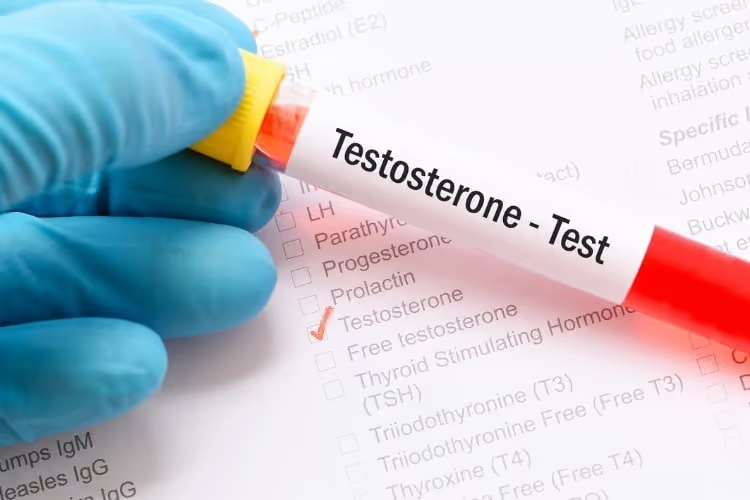
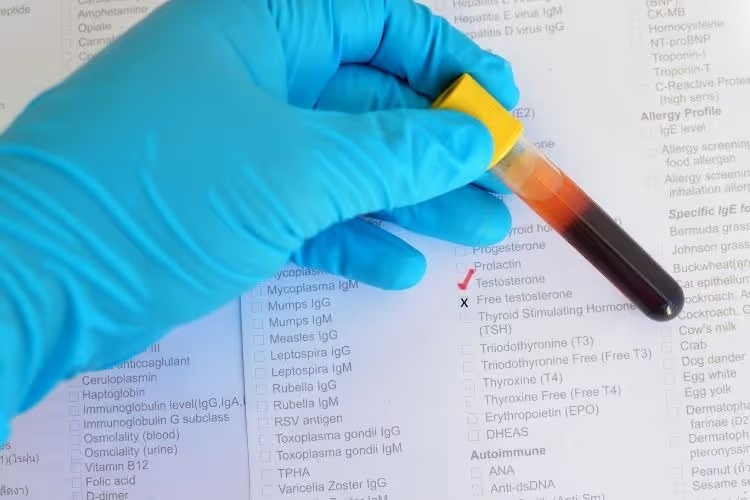
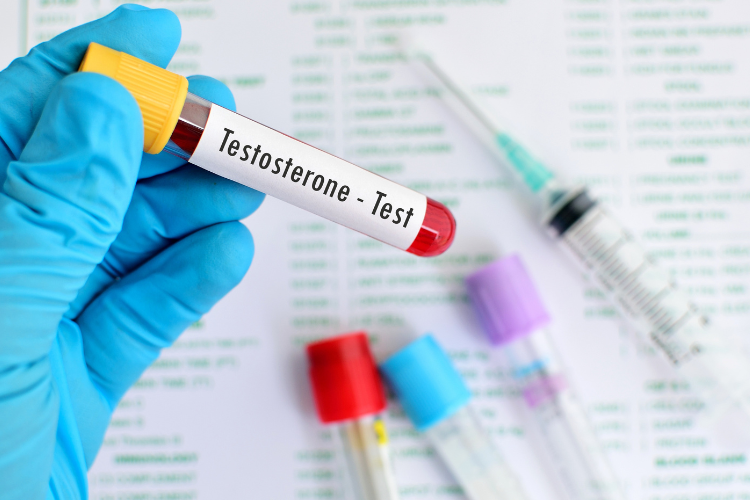
Doctors confirm a low testosterone diagnosis by taking blood samples, usually in the morning when testosterone levels should peak (NIH, n.d.). A consistent lack of morning erections (something that’s normal and healthy for most men) can be an early sign of low testosterone and may indicate the need for testing. If both total and free testosterone levels are consistently low, and symptoms are impacting daily life, doctors may consider testosterone replacement therapy as a treatment option.

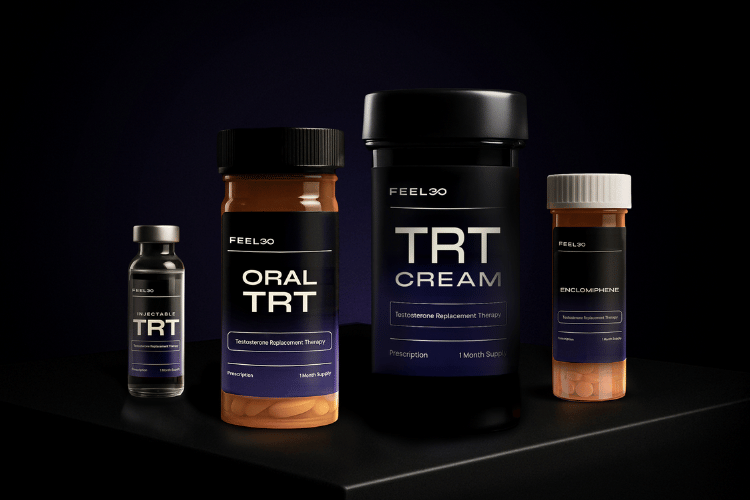
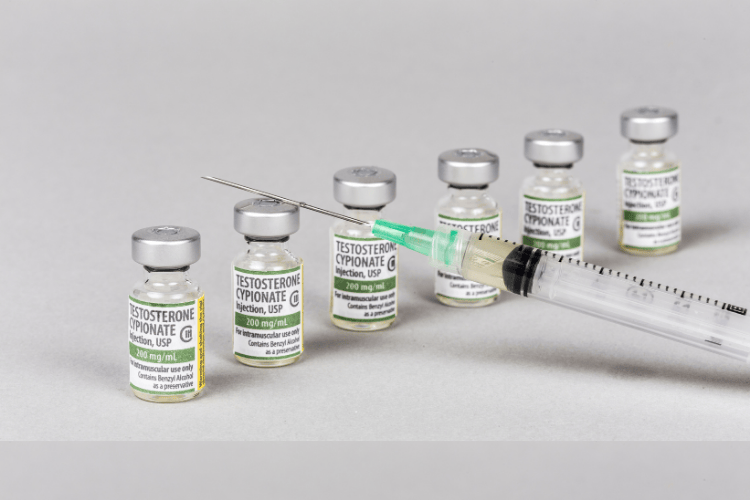
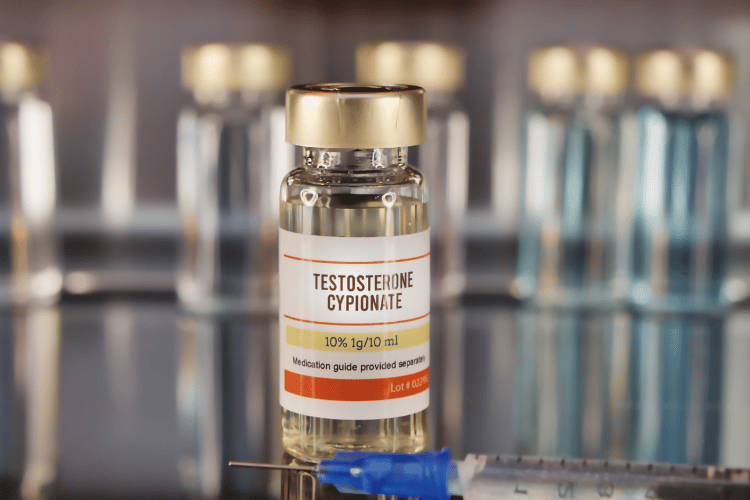
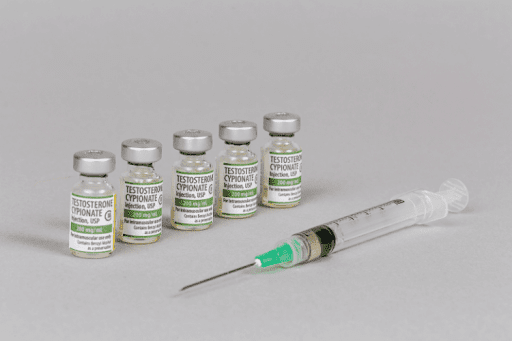
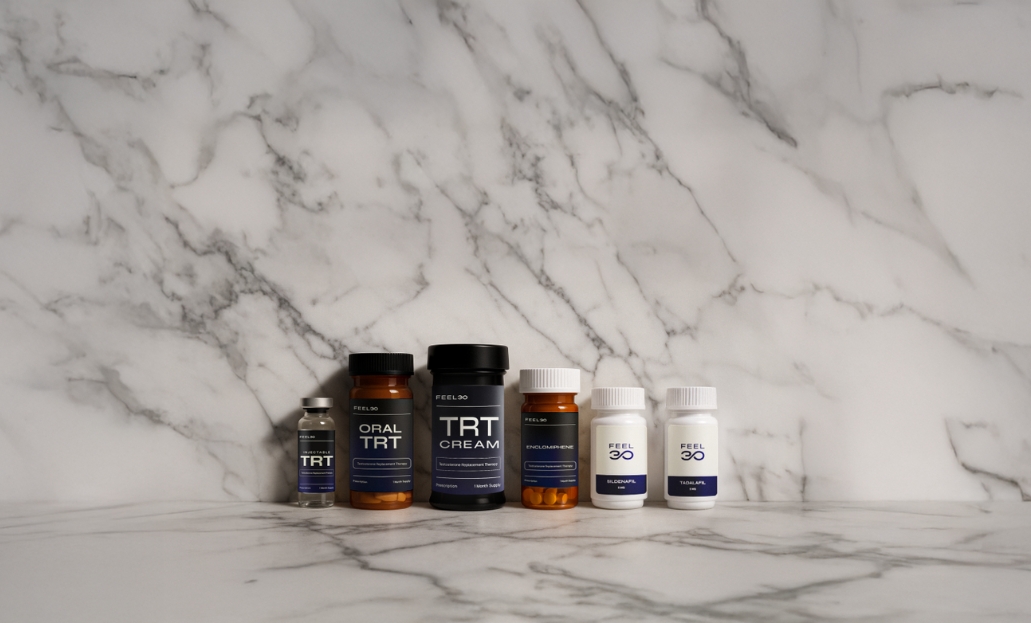
Testosterone injections, gels, pills, or patches restore balance through hormone therapy. While the initial goal might be to improve energy or libido, many men also report that their joints feel less stiff once testosterone levels normalize.

Healthy bones prevent fractures and protect joints. If your bones weaken, your joints take more strain, which can lead to joint pain. Normal testosterone levels maintain bone mineral density and support the constant process of bone rebuilding (Snyder et al., 2017).
When testosterone levels decrease, bones can lose density. That loss increases the risk of developing osteoarthritis and bone fractures.
Testosterone replacement therapy improves bone density in men with low testosterone, often bringing it closer to the levels seen in younger men (Yeap et al., 2019). When bone health improves, joints have a more stable foundation, which can mean less joint pain over time.
Researchers have discovered that rheumatoid arthritis (RA) is more likely to develop in men with lower testosterone levels. RA is an autoimmune condition that causes joint pain, swelling, and stiffness. Testosterone helps regulate the immune system and keep inflammation in check.
Low testosterone is believed to weaken this immune defense layer, creating an environment where joint inflammation is more likely to develop or worsen (Cutolo et al., 2004).
While testosterone therapy isn’t a primary treatment for rheumatoid arthritis, restoring healthy levels in men with both low testosterone and RA has, in some cases, helped reduce discomfort and improve mobility when used with standard medical care, and in conjunction with a healthy lifestyle (which incorporates balanced nutrition, restful sleep, and regular physical exercise).

Strong joints need muscles that can absorb impact, ligaments that hold everything in place, and cartilage that cushions movement. Testosterone supports all three. It keeps the surrounding support system in good condition (Yeap et al., 2019).
Men with testosterone deficiencies are more likely to have chronic inflammation in their joints, as well as cartilage wear that leads to stiffness and pain. If this is not managed, it can contribute to developing rheumatoid arthritis or worsen existing joint problems (Basaria, 2014).
Restoring hormonal balance through testosterone replacement therapy may help by calming inflammation and improving tissue repair.
Weight management is important too. Maintaining a healthy weight has a positive impact on your overall well-being and puts your joints under less physical pressure.
Any extra weight puts force on joints like the knees, hips, and lower back. This can accelerate cartilage wear and increase inflammation. Over time, that added stress can turn mild discomfort into persistent joint pain.
Even modest weight loss can make a noticeable difference. Dropping just 10 to 15 pounds can reduce pressure on your joints, easing joint pain and discomfort and improving mobility.

Testosterone replacement therapy isn’t advertised as a treatment for arthritis symptoms, and it doesn’t replace disease-specific medications. However, many patients, especially those who associate low testosterone with joint pain, experience a noticeable difference with TRT. Reports often mention:
The improvements in joint pain are most consistent when pain stems from a hormonal imbalance rather than purely mechanical damage from injury. Some men on long-term testosterone therapy have managed to maintain mobility and reduce their reliance on over-the-counter pain relief (Snyder et al., 2017).
A single factor seldom causes chronic joint pain. It is a combination of structural alterations and risk factors, such as hormones, inflammation, nerve sensitivity, and the immune system. According to Basaria (2014), low testosterone can intensify the perception of pain, making joint pain more difficult to control and more persistent.
All of that cannot be improved by testosterone replacement therapy, but it can alter the way hormones work in a way that makes managing pain simpler. The advantages multiply dramatically when you combine regular exercise, stretching, and a diet that promotes joint health.
Fatigue feeds joint pain. When you’re tired, you move less. When you move less, you lose muscle strength, your joints stiffen, and the joint pain gets worse. When you're exhausted, your tolerance for pain also decreases.
Men with low T frequently report fatigue and low energy as symptoms. Testosterone therapy restores energy levels and motivation, helping men break that cycle.
Joint pain is complicated, but for men with confirmed low testosterone, it’s worth asking whether hormones are part of the problem. Testosterone replacement isn't a substitute for arthritis medication, but it can strengthen the systems that support joint function, bones, muscles, and cartilage.
Basaria, S. (2014). Male hypogonadism. The Lancet, 383(9924), 1250–1263.
Endocrine Society. (2018). Testosterone Therapy in Men with Hypogonadism: An Endocrine Society Clinical Practice Guideline. The Journal of Clinical Endocrinology & Metabolism, 103(5), 1715–1744.
Khera, M., et al. (2011). Testosterone replacement therapy: Myths and realities. The Aging Male, 14(1), 5–15.
Mayo Clinic. (2021). Testosterone therapy: Potential benefits and risks as you age. Mayo Foundation for Medical Education and Research.
NIH. (n.d.). Testosterone. MedlinePlus, U.S. National Library of Medicine.
Snyder, P. J., et al. (2017). Effects of Testosterone Treatment in Older Men. The New England Journal of Medicine, 374, 611–624.
Yeap, B. B., et al. (2019). Testosterone and bone health in men: Clinical implications and therapeutic strategies. Endocrine Connections, 8(9), R103–R120.
Cutolo, M., Balleari, E., Giusti, M., Monachesi, M., & Accardo, S. (2004). Sex hormone status of male patients with rheumatoid arthritis: evidence of low serum concentrations of testosterone at baseline and after human chorionic gonadotropin stimulation. Arthritis & Rheumatism, 41(11), 1961–1969.
Take the first step toward renewed energy and confidence with Feel30’s expert care.




4.9 out of 5 · 2,400+ reviews


Always Tired, Gaining Weight? Low T Was the Real Reason
Is Low T Hurting Your Relationship?
This gaming laptop is a powerhouse, equipped with the latest graphics card and a high-refresh-rate display.
Jane Smith
Feel30 has completely changed the game for me. I feel more energized, focused, and confident like I did years ago.
Emily Johnson
This smartphone offers an exceptional camera experience, with stunning low-light performance and vibrant colors.
John Doe
What are you waiting for?
Take the first step toward renewed energy and confidence with Feel30’s expert care.


Feel 30 again with physician-supervised treatment that restores the energy, confidence, and performance you remember. No hassle or hidden fees.