Stay informed with expert insights on testosterone therapy, men's health, and performance optimization.
There's no single number that answers how long testosterone stays in your body. The timeline depends on the type of testosterone replacement therapy (TRT) you take, the ester or delivery method, the dose, and other individual factors. A short-acting injection may decline within days, and a long-acting formulation can release testosterone for weeks or months.
Healthcare providers prescribe testosterone treatment for men who have confirmed male hypogonadism (low T). They may diagnose low T when a man has symptoms and consistently low testosterone levels based on blood tests. Before you start TRT, your healthcare provider should look at the underlying cause and assess whether testosterone levels are lower than the relevant normal range.
If you want to know how long testosterone will stay in your body to time a blood test or are thinking about stopping TRT, there's a data range to consider. The range becomes easier to understand once you know what drives testosterone release and elimination.

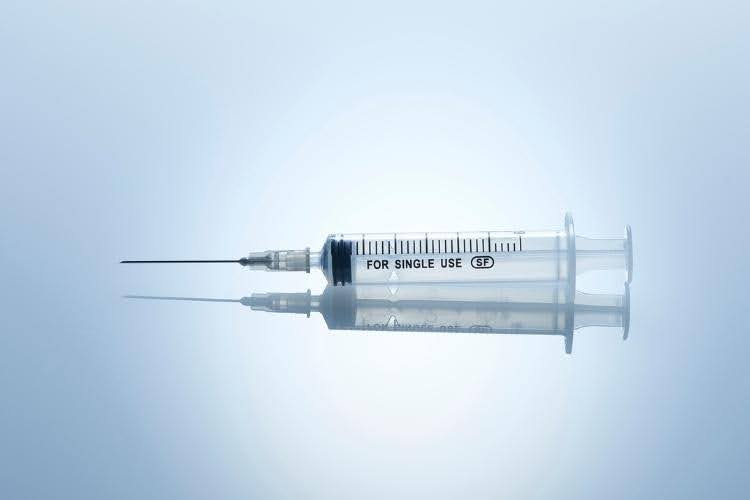
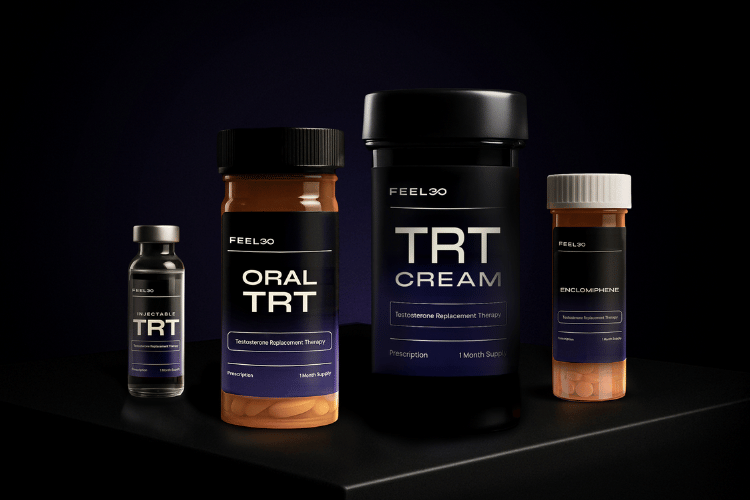
Testosterone therapy options include injections, transdermal gels or creams, patches, pellets, and oral products. The patient typically administers testosterone shots themselves, according to a schedule. Men apply transdermal (topical) products more often.
Testosterone replacement therapy can stay in your system for days, weeks, or even months. The timeline depends mainly on the formulation, ester, route of administration, dose, and timing of the last dose.
These windows come from one property of each form of testosterone: its half-life.
This table shows the most common forms of testosterone:
Important: These figures are estimated based on published data. They don't show when testosterone will become undetectable or when natural testosterone production will recover. The product formulation, dosing history, testing methods, and individual physiology can all affect the practical timeline.
Half-life is the time your body takes to clear half a dose of medication. After one half-life, half the testosterone level remains. After two, a quarter. As a general rule, your body clears most of a medication after about five half-lives. This is when approximately 97 per cent has cleared.
Natural testosterone has a very short half-life, down to minutes once it reaches the bloodstream (Walpurgis et al., 2022). Because the body clears unmodified testosterone too quickly for effective treatment, manufacturers attach an ester to testosterone to slow its absorption from the injection site. An ester is a fatty acid chain that slows its release from the injection site. The longer the ester, the slower the release, and the longer the medication is in your system.
This principle works in both directions. It takes about five half-lives for most of a medication to leave the body, and a similar period for testosterone concentrations to approach steady state after treatment begins. However, clinical benefits do not necessarily wait until steady state. Some men may notice changes in symptoms earlier, while effects on body composition, muscle mass, or bone density generally take longer. Learn more about how long TRT takes to work and when different changes may appear. This is one reason healthcare professionals monitor symptoms, bloodwork, and side effects during the early weeks rather than adjusting treatment too quickly.
The ester is the main variable in the different forms, so here's how long the common forms of TRT stay in the body for.
Propionate has a half-life of 0.8 days, or about twenty hours (Walpurgis et al., 2022). It clears within four to five days after the last injection. That's why you dose it every other day. It leaves quickly, but you need regular injections to keep testosterone levels steady.
The body clears most enanthate within 20 to 25 days, or about three weeks, after the last dose. Patients may clear it faster or more slowly. Healthcare professionals prescribe testosterone enanthate once or twice a week as a standard injectable TRT option.
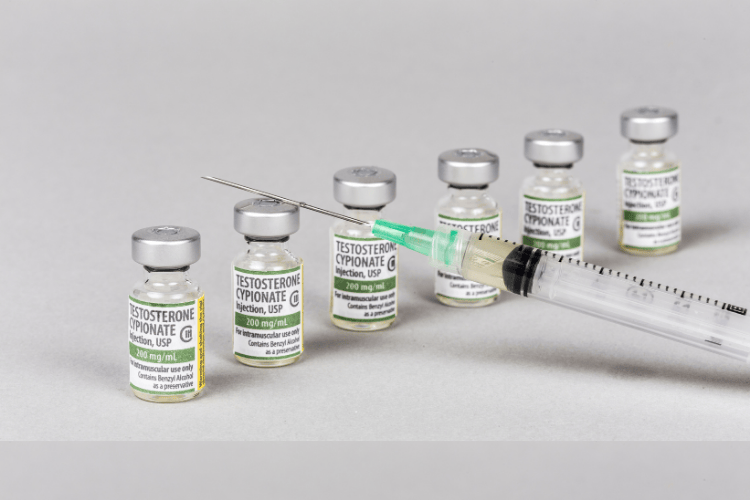
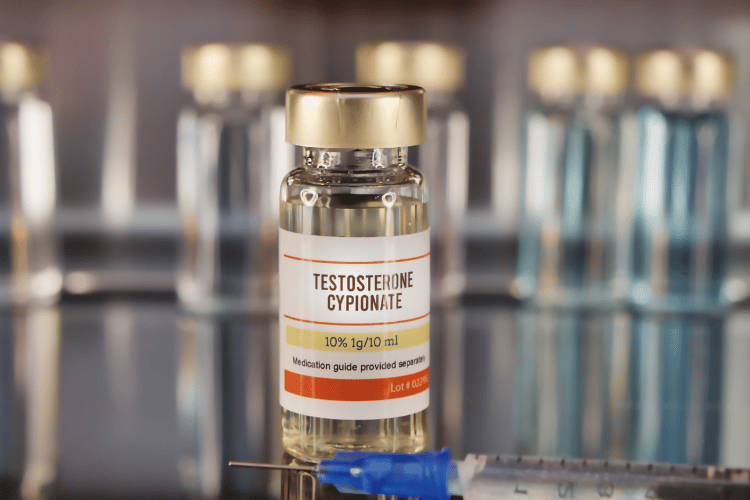
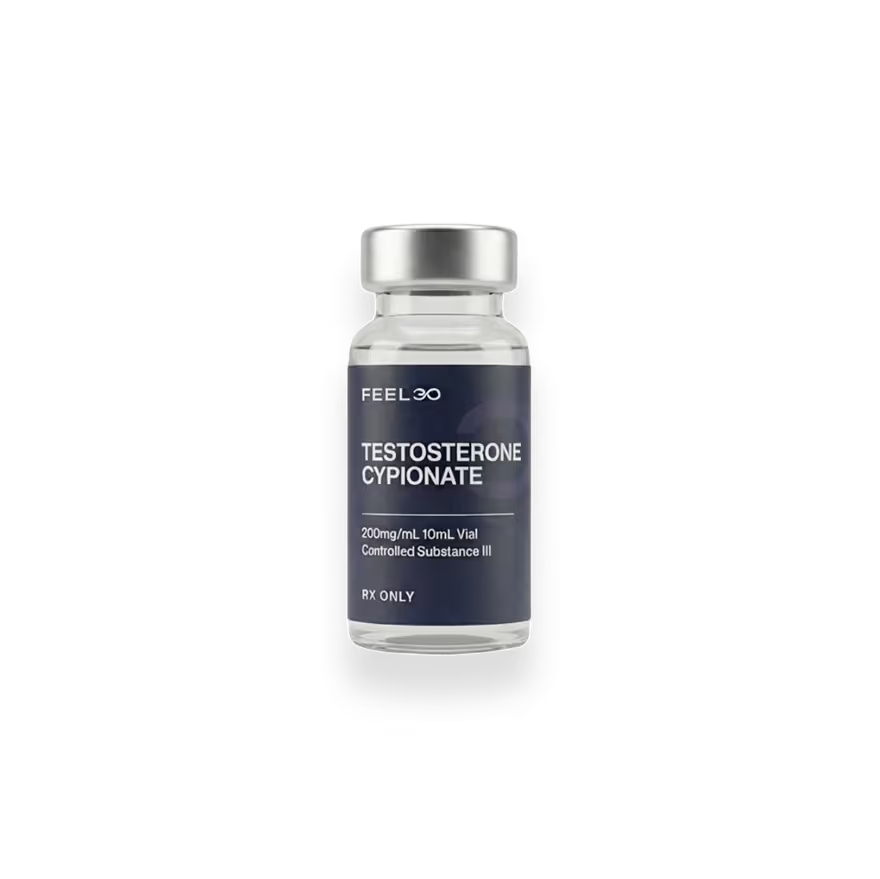
Cypionate is also a form of injectable testosterone. It's similar to enanthate, though its half-life runs a little longer, around eight days. It takes four to six weeks to clear after the final dose.
Like enanthate, men usually inject it weekly or split into smaller twice-weekly doses if they need steadier levels. If you want the full comparison, read our guide on testosterone enanthate versus cypionate.
Supports energy, focus, sexual health, and overall wellbeing
Shop NowIntramuscular testosterone undecanoate is a long-acting, oil-based formulation that forms a depot in the muscle and releases testosterone gradually. In its castor-oil formulation, it has a reported half-life of around 34 days (Polet et al., 2024). Injection intervals vary by the specific product and prescribed protocol, with some formulations administered every 10 to 14 weeks after the initial loading schedule. Because the medication continues to leave the injection depot gradually, it may remain in the body for several months after the final injection.
Oral testosterone undecanoate has different absorption and dosing characteristics. It’s absorbed primarily through the lymphatic system and converted to testosterone after absorption. Depending on the specific product, patients generally take it every day, often in morning and evening doses with food. It doesn’t form a long-acting intramuscular depot, so the 34-day half-life and several-month clearance estimate for injectable testosterone undecanoate do not apply to the oral form. Patients should follow the product-specific dosing, blood-test timing, and monitoring instructions provided by their clinician.
Transdermal testosterone is unmodified testosterone. It doesn't have an ester, so it follows testosterone's own short half-life. Testosterone levels increase within hours of applying it and drop toward baseline within a day or two of stopping. Of all the TRT options, gels and creams clear the fastest, one of the practical differences covered in our article on testosterone cream versus injections.

Testosterone prescribed as replacement therapy for male hypogonadism isn't the same as nonmedical steroid use for bodybuilding or athletic performance. Medical testosterone treatment aims to restore testosterone levels to an appropriate range, and healthcare providers monitor its effectiveness and potential health risks throughout the treatment protocol.
Certain testosterone enanthate products also have labeling for carefully selected adolescent males with clearly delayed puberty, but that's a specialist pediatric use that is separate from adult TRT.
After an injection, testosterone levels generally rise toward a peak and then decline toward a trough before the next dose. Not everyone notices these fluctuations, but some patients may experience higher energy after an injection followed by flatter or lower-energy days as testosterone levels fall.
When clinically appropriate, a provider may divide the prescribed weekly dose into smaller, more frequent injections to help reduce peak-to-trough fluctuations. This may support steadier testosterone levels and a more consistent response, although individual experiences vary.
If you miss or delay a dose, testosterone levels may decline, and some people notice symptoms such as fatigue, lower energy, or low mood returning. Don’t change your dose or injection schedule without speaking to your healthcare provider.

Testosterone levels don't usually move from low to stable straight away. The rate that they stabilize at depends on the formulation and your dosing schedule.
Most patients don't experience every potential effect of testosterone treatment at the same time. Some patients begin to notice symptom changes within a few weeks or several weeks, while changes to muscle mass, body composition, or bone density may need to be reviewed over a longer period.
Some of the potential positive effects can include changes in sexual desire, sexual function, mood, or energy in appropriately diagnosed men, but results vary. Not every patient will experience more energy, and testosterone therapy won't necessarily resolve erectile dysfunction, which can have vascular, neurological, psychological, medication-related, and hormonal causes.
Your provider should review your testosterone levels, symptoms, side effects, and overall health before changing your dosage or injection frequency.
Published half-lives are averages. The most important variables include the testosterone formulation, route of administration, dose, dosing interval, and length of treatment. Higher doses or repeated dosing may take longer to fall below a particular blood concentration, even though the medication’s elimination half-life remains essentially unchanged.
Age, body weight, liver function, overall health, injection technique, and treatment consistency may also influence the practical clearance timeline. Some studies suggest that body weight and body mass index (BMI) can affect testosterone concentrations, although these factors cannot predict an individual’s exact clearance time.
The liver is central to testosterone metabolism, as it converts testosterone into metabolites that the body can eliminate. Liver impairment may affect hormone metabolism, but liver function can’t be used to calculate a personal clearance date.
The underlying cause of low T must also be taken into account when interpreting what happens after treatment ends. Symptoms such as fatigue, depressed mood, reduced libido, or loss of muscle strength may relate to low testosterone, but they may also overlap with other health issues, chronic disease, medication effects, sleep disorders, obesity, or some inflammatory conditions.
Regular exercise supports muscle, metabolic health, and overall health, but it doesn't flush testosterone out of the body faster.
If you stop or pause testosterone replacement therapy, the exogenous testosterone leaves according to the formulation and timing of the final dose.
Medication clearance, symptom changes, and hormonal recovery follow different timelines. The active testosterone may have largely cleared, while natural testosterone production, sperm production, mood, sexual function, or other physiological effects are still adjusting.
While you are receiving testosterone treatment, the external hormone can suppress the signals from the hypothalamus and pituitary gland that normally support testicular testosterone and sperm production. When stopping TRT, those signals may take time to recover. The timeline varies according to treatment duration, age, dosage, baseline hormone levels, the underlying cause of low T, and other individual factors.
As testosterone levels fall, some men may notice fatigue, low mood, reduced sexual function, mood changes, or a return of the symptoms that existed before treatment. There's no universal week in which these changes begin. What is sometimes called testosterone withdrawal may instead reflect returning low testosterone levels, continued suppression of natural hormone production, or the return of the original health issue.
Sperm count can follow a different recovery timeline from blood testosterone. In an analysis of hormonal male-contraception studies, the estimated probability of returning to a sperm concentration of 20 million per milliliter was 67% within six months and 90% within 12 months (Liu et al., 2006). These figures aren't guaranteed recovery rates for every TRT patient, however, and recovery may take longer in some men.
A 2025 review found that most men recover some degree of spermatogenesis (sperm production) after stopping exogenous testosterone. Recovery may take months or years and doesn't always return to the previous baseline. The timeline depends on factors such as treatment duration, androgen exposure, baseline fertility, and the underlying hypothalamic–pituitary–gonadal axis function (Naelitz et al., 2025).
Plan any decision to stop treatment with your healthcare provider. Don't just stop testosterone shots or change your dosage on your own. Blood tests and symptom monitoring can help determine whether hormone levels are recovering or whether the symptoms of male hypogonadism are returning.
This is a common worry, and for most men it's not an issue. Standard workplace drug panels, including the common five-panel screen, don't screen for testosterone. They look for substances such as cannabis, cocaine, opioids, and amphetamines, not hormones.
Anti-doping organizations screen for testosterone mainly in competitive sports. Athletes who use prescribed testosterone therapy generally need to arrange a therapeutic use exemption in advance and document their treatment as medically necessary.
The length of time testosterone stays in your system depends on the testosterone formulation, ester, dose, and timing of your last dose. Short-acting products may clear within days, while longer-acting injections can stay active for weeks or months.
Testosterone levels, symptoms, natural hormone production, and sperm production may recover on different timelines. Work with your healthcare provider when deciding whether to start or stop TRT, and use bloodwork and ongoing monitoring to guide the decision.
Bhasin, S., Brito, J. P., Cunningham, G. R., Hayes, F. J., Hodis, H. N., Matsumoto, A. M., Snyder, P. J., Swerdloff, R. S., Wu, F. C., & Yialamas, M. A. (2018). Testosterone therapy in men with hypogonadism: An Endocrine Society clinical practice guideline. The Journal of Clinical Endocrinology & Metabolism, 103(5), 1715–1744.
Endocrine Society. (2026, July 16). Statement on testosterone replacement therapy.
Polet, M., Swiss Laboratory for Doping Analyses, & Sport Integrity Australia. (2024). Investigations in carbon isotope ratios of pharmaceutical steroid preparations and complementary serum ester profiles in sports drug testing. Drug Testing and Analysis, 16(2), 142–155.
Liu, P. Y., Swerdloff, R. S., Christenson, P. D., Handelsman, D. J., Wang, C., & the Hormonal Male Contraception Summit Group. (2006). Rate, extent, and modifiers of spermatogenic recovery after hormonal male contraception: An integrated analysis. The Lancet, 367(9520), 1412–1420.
Naelitz, B. D., Momtazi-Mar, L., Vallabhaneni, S., Cannarella, R., Vij, S. C., Parekh, N. V., Bole, R., & Lundy, S. D. (2025). Testosterone replacement therapy and spermatogenesis in reproductive age men. Nature Reviews Urology, 22, 703–719.
Walpurgis, K., Thomas, A., Geyer, H., & Thevis, M. (2022). Detection of testosterone and its prohormones in human sports drug monitoring: Integration of the steroidal module of the Athlete Biological Passport and Isotope Ratio Mass Spectrometry. Biomedical Reports / German Journal of Sports Medicine, 51(11), 378–382.
Take the first step toward renewed energy and confidence with Feel30’s expert care.




4.9 out of 5 · 2,400+ reviews


Always Tired, Gaining Weight? Low T Was the Real Reason
Is Low T Hurting Your Relationship?
This gaming laptop is a powerhouse, equipped with the latest graphics card and a high-refresh-rate display.
Jane Smith
Feel30 has completely changed the game for me. I feel more energized, focused, and confident like I did years ago.
Emily Johnson
This smartphone offers an exceptional camera experience, with stunning low-light performance and vibrant colors.
John Doe
What are you waiting for?
Take the first step toward renewed energy and confidence with Feel30’s expert care.


Feel 30 again with physician-supervised treatment that restores the energy, confidence, and performance you remember. No hassle or hidden fees.