

Stay informed with expert insights on testosterone therapy, men's health, and performance optimization.

For men over the age of 50, especially those who are used to performing at a high level in every facet of their lives, changes in sexual function are unexpected and disruptive. Erectile dysfunction (ED) is a symptom and one of the first ways your body tells you that something else might need attention. ED can be a sign of an underlying health problem or health condition, and is considered a form of male sexual dysfunction. The imbalance could be caused by your hormones, vascular (vein) health, or psychological well-being.
There is good news, though: ED is an easily treatable condition. The first step towards finding the right treatment is to understand what’s going on and why it's happening. This article explains the primary symptoms and scientifically supported treatments of erectile dysfunction, most importantly phosphodiesterase type 5 inhibitors like Sildenafil and Tadalafil.
Key Takeaways:
Erectile dysfunction does not develop by itself. Often, erection problems are a reflection of psychological and physical stressors that build up. High-functioning men who have substantial work-life responsibilities may ignore or mask these stressors.
Factors that can contribute to ED include
Men who have these health problems, including heart disease, have an increased risk of developing erectile dysfunction. These health concerns can affect blood flow and contribute to sexual health problems. Men may also have more than one condition, and so the effects can accumulate over time.
Being able to recognize the symptoms of erectile dysfunction can put you on the path to treatment. ED affects your body's sexual response process, which means you can have recurring problems with erections and your sexual health. This may be connected to psychological and physical factors.
You should share any other symptoms you experience with your healthcare provider, as they could provide important information about your diagnosis and give greater insight into your sexual health.
If you are experiencing difficulties getting an erection, it could be due to inadequate blood flow to the erectile tissue in the penis. This could indicate a broader problem with your vascular health that needs to be addressed.
If you can get an erection but can't maintain it during sexual intercourse, it could be a sign of an autonomic imbalance, a venous (vein) leak, or performance anxiety.
Reduced erection firmness is often due to the blood vessels not widening enough. Nitric oxide is the body's signal to the blood vessels to relax and widen, to let more blood through.
A low sex drive is often linked to hormone imbalances, mental health conditions, and stress. Some men can experience a lower sex drive along with the symptoms of erectile dysfunction and other mental health concerns. Other men experience a low libido for some time, and then notice other physical ED symptoms.
As men get older, their vascular health can decline, revealing any underlying condition that may affect sexual health. They may start the early stages of atherosclerosis or experience symptoms of metabolic syndrome or diabetes.
For some men, ED may have psychological causes, or the psychological cause might be worsening the physical causes. Getting and maintaining an erection is complex. It’s a process that can affect psychological and physical aspects of the body, including the brain, spinal cord, muscles, nerves, hormones, and emotions. If you also go through chronic or heightened physical stress, mood disorders, or burnout, these can compound and affect your sexual function.
Men who have chronic illnesses like obesity, sleep apnea, and renal insufficiency are more likely to experience erectile dysfunction. These conditions increase inflammation in the body and dysregulate hormones, which can both contribute to erectile dysfunction.

Only a healthcare provider can diagnose erectile dysfunction. This would be done after a full clinical workup, which would include:
Getting a quick diagnosis is important because you may need treatment for symptoms and root causes. Your medical provider needs to know about any medication you're taking, including over-the-counter medicines, as these can affect erectile function too.
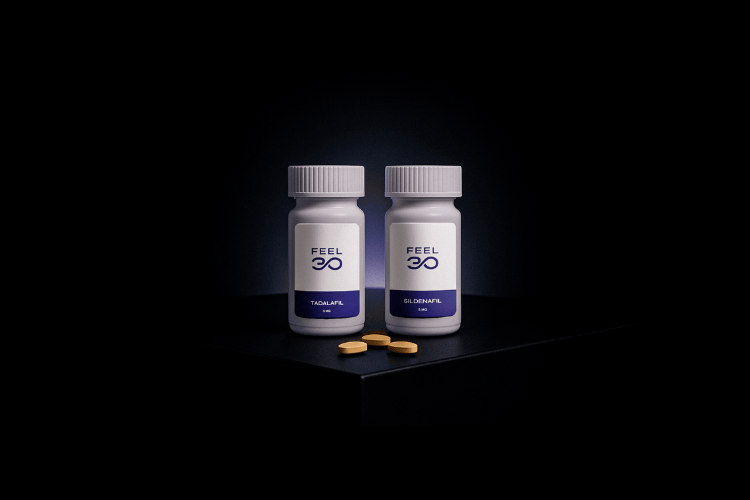
Treating erectile dysfunction is easy once you have a diagnosis. The treatment plan usually incorporates lifestyle and medical interventions, depending on your personal needs. The goal of medical interventions is to address erectile dysfunction and restore sexual health.
Tadalafil and Sildenafil are two effective treatment options that increase blood flow to the penis.
Tadalafil, a generic form of Cialis, has an extended half-life of around 17.5 hours and can work for up to 36 hours. This makes it popular because it gives you more flexibility and takes away the pressure to perform on a schedule. It has been approved for daily use, making it ideal for men who engage in regular sexual activity and those with coexisting benign prostatic hyperplasia (an enlarged prostate unrelated to cancer).
Sildenafil, a generic form of Viagra, is a frontline treatment for ED as it was the first approved PDE5 inhibitor on the market. It has a shorter acting timeframe of around four to six hours, and it works well for situational use. Sildenafil supports blood flow during sexual arousal, supporting healthy erections.
Both Tadalafil and Sildenafil are oral medications with robust safety profiles. Taking the medication by itself won't cause an erection automatically; you will still need sexual stimulation for them to work. Both medical treatments address erectile dysfunction by increasing blood flow to the penis.
Another treatment option for erectile dysfunction is a penis pump, which works manually by creating a vacuum to draw blood into the penis. Men who don’t respond to medication may be able to use penile implants or a penile prosthesis to support natural erectile function.
An experienced healthcare provider should create your treatment plan based on your individual needs. If you have low testosterone symptoms, your healthcare provider may recommend testosterone therapy.
Erectile dysfunction may not be preventable, but there are steps you can take to reduce the chances of it developing. These include

Today, developing ED is a lot different from previous decades. Thanks to advances in medical treatments, PDE5 inhibitors like Tadalafil and Sildenafil, managing erectile dysfunction much more straightforward. For men who are navigating relationships and leadership positions, treating ED brings fulfillment and control to different areas of their lives.
You need a full medical evaluation to determine the underlying cause of your erectile dysfunction. Based on that diagnosis, your doctor may prescribe evidence-based treatments like Tadalafil and Sildenafil. You may also be able to accelerate your progress by making lifestyle changes to your stress levels, diet, and exercise plan.
It is normal to feel frustrated, embarrassed, or have lower self-confidence if you're struggling with ED. Even so, your healthcare provider is there to help, and you have a better chance at successful treatment if you get help sooner rather than later. Erectile dysfunction is a medical condition, and your provider has the training and experience to treat you, not judge you.
The best treatment for ED comes down to the underlying cause. Oral medications like Tadalafil and Sildenafil have been clinically approved and are highly effective. If your erectile dysfunction is caused by a vascular issue, you may want to compare the onset and duration of potential treatments. Your healthcare provider will be able to recommend the best option for your health profile.
Erectile dysfunction is a clinically significant condition that tells your medical provider a lot about the state of your health. For high-performing men over 50, recognizing erectile dysfunction symptoms early on may reveal other important health insights, leading you towards an effective treatment. Tadalafil and Sildenafil are two proven treatment options that are popular among men.
Burnett AL, Nehra A, Breau RH, et al. Erectile Dysfunction: AUA Guideline. The Journal of Urology. 2018.
Mayo Clinic. Erectile dysfunction – Symptoms and causes. [Accessed for medical background].
NIH: National Institute of Diabetes and Digestive and Kidney Diseases. Erectile Dysfunction. [Reviewed for clinical causes and treatment overview].
Jackson G, Boon N, Eardley I, et al. Erectile dysfunction and coronary artery disease prediction: Evidence-based guidance and consensus. International Journal of Clinical Practice. 2010.
Buvat J, Maggi M, Gooren L, et al. Endocrine aspects of erectile dysfunction. The Journal of Sexual Medicine. 2010.
Hackett G. The burden and extent of comorbid conditions in patients with erectile dysfunction. International Journal of Clinical Practice. 2009.
FDA.gov – Safety profiles and approval data for Tadalafil and Sildenafil.
Harvard Health Publishing. Treating erectile dysfunction naturally and medically.
Cleveland Clinic. Erectile Dysfunction: Overview, Risk Factors, and Treatment Options.
Take the first step toward renewed energy and confidence with Feel30’s expert care.




4.9 out of 5 · 2,400+ reviews


Always Tired, Gaining Weight? Low T Was the Real Reason
Is Low T Hurting Your Relationship?
This gaming laptop is a powerhouse, equipped with the latest graphics card and a high-refresh-rate display.
Jane Smith
Feel30 has completely changed the game for me. I feel more energized, focused, and confident like I did years ago.
Emily Johnson
This smartphone offers an exceptional camera experience, with stunning low-light performance and vibrant colors.
John Doe
What are you waiting for?
Take the first step toward renewed energy and confidence with Feel30’s expert care.


Feel 30 again with physician-supervised treatment that restores the energy, confidence, and performance you remember. No hassle or hidden fees.

















%20Symptoms.webp)
