

Stay informed with expert insights on testosterone therapy, men's health, and performance optimization.
![Fit man preparing injection for hormone therapy and performance enhancement [Photo by Drazen Zigic from Getty Images.]](https://cdn.prod.website-files.com/6904c08e4e2ef68a82460e5e/6a0b3dbfff2e4f9e75efa732_9c9c68b1.png)
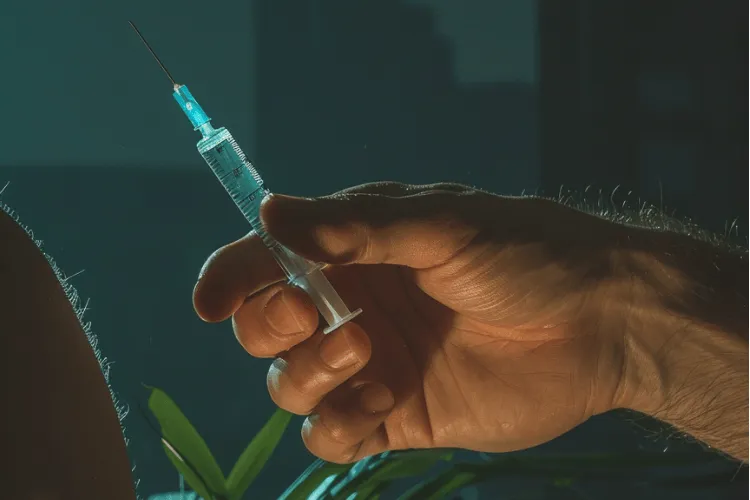
Sermorelin’s action on muscle growth, recovery, and performance has led some to believe it’s a steroid. It often appears in the same conversations as anabolic steroids, testosterone replacement therapy (TRT), human growth hormone (HGH), and anti-aging therapies. So, what exactly is it?
In this guide, we explain what sermorelin is, how it works, how it’s different from steroids, and why people often misunderstand it. More importantly, we help you see where it can fit in your health and wellness goals.
Sermorelin is not a steroid. Instead, it's a synthetic peptide. According to the 2020 Sermorelin Acetate report to the Food and Drug Administration (FDA) by Gianturco et al., sermorelin is a growth hormone-releasing hormone analog. It mimics the action of the body’s own growth hormone-releasing hormone, or GHRH.
Sermorelin is part of a larger group known collectively as growth hormone secretagogues. It helps trigger the release of growth hormone (GH) from the pituitary gland rather than supplying it directly.
Think of sermorelin as a signal. Don’t confuse it with human growth hormone (HGH), which is a synthetic form of growth hormone (GH). HGH therapy directly introduces GH into your body.
Sermorelin is usually delivered through a subcutaneous injection route rather than oral administration. It then binds to receptors in the anterior pituitary gland, where growth hormone is produced and secreted. That binding triggers growth hormone secretion in a way that follows your body’s own endocrine architecture.
GHRH is the natural signaling molecule that tells the pituitary to release growth hormone. Sermorelin mimics that signal. That’s why healthcare providers describe it as a growth hormone-releasing hormone analogue, or releasing hormone GHRH analogue. It’s modeled after the active portion of the natural hormone responsible for triggering growth hormone release.
The released growth hormone supports several processes tied to performance and recovery. A review in BioDrugs notes that sermorelin influences protein synthesis, fatty tissue metabolism, bone density, tissue repair, and body composition.
Important: Sermorelin’s mechanism depends on your body's ability to respond. If pituitary function is severely impaired, simply sending the signal may not produce the desired response. That is one reason diagnosis and monitoring matter.
![Syringe and vial next to text about anabolic steroids AAS on medical document [Photo by Hailshadow from Getty Images Signature.]](https://cdn.prod.website-files.com/6904c08e4e2ef68a82460e5e/6a0b3dbfff2e4f9e75efa735_a922656b.png)
Anabolic-androgenic steroids (AAS), often shortened to "steroids," "anabolic steroids," or "androgens," are the most widely misused appearance and performance enhancing drugs (APEDs). They are synthetic hormones modeled after testosterone, the primary male sex hormone.
According to the National Institute on Drug Abuse (NIDA), anabolic steroids create two main effects in the body:
People often assume sermorelin is abused because of its potential benefits for muscle development, fat loss, improved energy levels, faster muscle recovery, and a sharper physique.
Those results sound identical to what unmonitored anabolic steroids promise. In performance and anti-aging circles, people often discuss those outcomes together, so the products often get lumped together too.
Sermorelin, HGH, TRT, and anabolic steroids all involve hormones or hormone-related pathways. However, that doesn't make them the same.
For men already addressing testosterone, sermorelin peptide therapy can fit into a bigger hormone optimization plan. In some cases, that means pairing GH-pathway support with alternative treatments like Testosterone Cypionate, or considering Enclomiphene when preserving natural testosterone production matters.
Some men prefer convenience on the testosterone side through Oral TRT. The smarter strategy is the one you can follow consistently, with expert oversight, over the long term.
Both sermorelin and anabolic steroids appear in performance-focused conversations, but they operate in completely different ways:
Note: When we use the term “steroids” here, we’re referring to what most people commonly mean, high-dose, unmonitored use of anabolic-androgenic compounds for performance or physique enhancement. Medically, this category does include hormones like Testosterone, which can also be prescribed safely and appropriately under provider supervision.
This is the biggest separation point. Sermorelin works through the growth hormone pathway by signaling the pituitary gland. Steroids act through androgen receptors and testosterone-related signaling pathways. Both have different pathways, targets, and result profiles.
Synthetic androgens are known for rapid increases in muscle mass and strength (NIDA, 2024). Sermorelin is not built for that kind of speed. Its effects tend to be more gradual and are usually discussed in terms of improved body composition, lean body mass support, recovery, and sleep-linked restoration. These effects are typically seen when combined with consistent training, proper nutrition, quality sleep, and overall healthy lifestyle habits.
Both can influence protein synthesis, but not in the same way. Medically-unmonitored steroid use can directly increase protein synthesis through androgenic signaling. Sermorelin works further upstream by improving GH release, thereby supporting recovery, tissue repair, and body composition over time.
Abuse of anabolic steroids can suppress the body’s own hormone production, especially with misuse or supraphysiologic dosing. Sermorelin works differently. It stimulates the body’s natural release of growth hormone, rather than replacing it, and is generally used to support the body’s own hormone signaling pathways.
Misuse of anabolic steroids, for instance, unmonitored TRT usage, carries adverse effects and health risks, including infertility, psychiatric effects, cardiovascular complications, and endocrine disruption, according to NIDA. Sermorelin’s side-effect profile is usually milder, with injection site reactions, swelling, or discomfort among the more common complaints. Sermorelin misuse, poor product quality, and lack of supervision can also create real risks.
Sermorelin and unmonitored anabolic steroids also differ in how they’re regulated and used. Sermorelin was previously FDA-approved in branded forms for limited pediatric and diagnostic uses. However, the versions commonly used today are typically compounded. Compounded medications are not FDA-approved and do not go through the same premarket review for safety, effectiveness, or quality.
In contrast, certain anabolic androgenic steroids, such as testosterone, are FDA-approved for specific medical conditions and can be used safely. However, these medications are also frequently used outside of medical supervision or at higher than prescribed doses, which can increase the risk of adverse effects.

While sermorelin isn’t a steroid, it may support several health-related areas through its effects on growth hormone signaling. Responses can vary, and any potential effects typically develop gradually over time. Outcomes depend on factors such as individual physiology, consistency, and lifestyle.
Potential benefits may include:
Important: With sermorelin therapy, medical supervision is paramount. You need to know your baseline labs, track symptoms, maintain dosing precision, and follow up on your hormone levels. That’s how you separate real optimization from random hormone use.
Neither. Sermorelin is a peptide hormone analogue that stimulates the release of growth hormone. It's not an anabolic-androgenic steroid, and it's not similar to direct HGH, which is synthetic growth hormone.
If you compete under WADA-style anti-doping rules, growth hormone-releasing factors are prohibited at all times. That means compounds in this category can create eligibility issues for tested athletes.
Testosterone acts on androgen pathways. Sermorelin acts on growth hormone-releasing pathways. Risk depends on the product, dose, supervision, and whether treatment is appropriate in the first place. Consult a healthcare provider to know your specific risks.
Not inherently, but it can be if you misuse it, source it badly, or take it without medical supervision. Compounded products deserve extra caution because they are not FDA-approved.
You stop getting the signaling effect. Any benefits tied to treatment, such as sleep, recovery, or body composition support, may fade over time if the underlying issue remains.
Older branded versions were FDA-approved for limited uses, but the sermorelin commonly sold through compounding pharmacies today is not FDA-approved as a compounded drug product. Compounded medications are regulated by state pharmacy boards and must meet certain quality and safety standards. Some facilities are also registered with and inspected by the FDA. However, compounded medications are not FDA-approved and do not undergo the same premarket review as commercially available medications. This is why working with a trusted provider who uses reputable compounding pharmacies is important.
It may support lean body mass and recovery through improved GH signaling, but it does not behave like anabolic steroids and should not be expected to produce rapid steroid-like muscle growth. A healthy lifestyle that includes consistent training, proper nutrition, quality sleep, stress management, and long-term consistency is essential to see these effects.
Results are usually gradual. Some men notice sleep or recovery changes within weeks, while physique and body composition changes generally take longer and depend on training, diet, and consistency.
Anyone with significant endocrine disease, unexplained symptoms, a history that changes risk, or medications that complicate hormone management needs proper medical evaluation first. That includes men already using other hormone-active therapies.
So, is sermorelin a steroid? No. It's not an anabolic-androgenic steroid. Instead, it's a synthetic form of GHRH that works by stimulating the release of growth hormone. Supraphysiologic or unsupervised steroid use, on the other hand, can replace or override normal signaling. One supports a physiologic pathway. The other pushes a direct hormonal effect.
For the right man, sermorelin can play a role in a smarter performance and longevity strategy. Potential benefits include better recovery, sleep, and body composition, as well as a more measured approach to age-related decline. But it still needs real medical supervision, not forum advice and guesswork.
Take the first step toward renewed energy and confidence with Feel30’s expert care.




4.9 out of 5 · 2,400+ reviews


Always Tired, Gaining Weight? Low T Was the Real Reason
Is Low T Hurting Your Relationship?
This gaming laptop is a powerhouse, equipped with the latest graphics card and a high-refresh-rate display.
Jane Smith
Feel30 has completely changed the game for me. I feel more energized, focused, and confident like I did years ago.
Emily Johnson
This smartphone offers an exceptional camera experience, with stunning low-light performance and vibrant colors.
John Doe
What are you waiting for?
Take the first step toward renewed energy and confidence with Feel30’s expert care.


Feel 30 again with physician-supervised treatment that restores the energy, confidence, and performance you remember. No hassle or hidden fees.

















%20Symptoms.webp)
