

Stay informed with expert insights on testosterone therapy, men's health, and performance optimization.
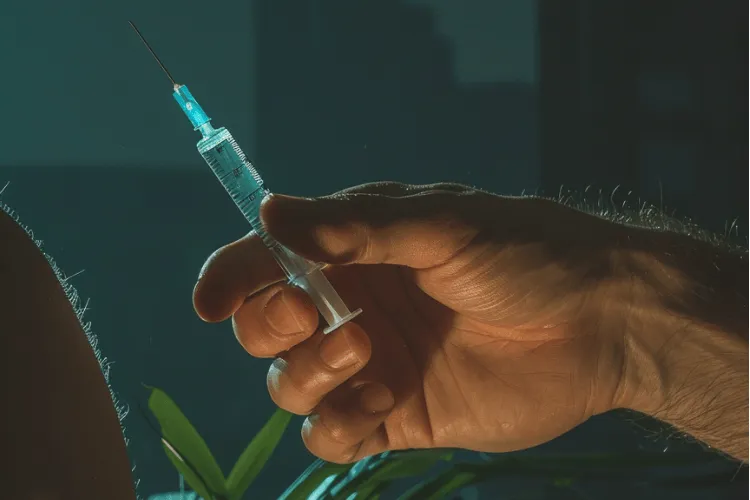
![Subcutaneous injection with insulin syringe preparing dose of sermorelin peptide [Photo by Aflo Images via Canva.]](https://cdn.prod.website-files.com/6904c08e4e2ef68a82460e5e/6a0604463e0f37f120247eb5_b3a018df.png)
Healthcare providers often prescribe sermorelin once nightly. The right sermorelin dosage depends on your goals, your response, the concentration in your vial, lifestyle factors, and the protocol your clinician is using.
In this guide, we give you a practical answer without overcomplicating it. You’ll understand what a typical daily dose looks like, why bedtime dosing is common, how to read mcg, mg, mL, and syringe units, where to inject sermorelin, and when a healthcare provider may adjust your plan.
Let’s get started!
Sermorelin is a synthetic version of the growth hormone-releasing hormone (GHRH). It signals the pituitary gland to release your own growth hormone naturally instead of replacing it directly, the way human growth hormone (HGH) therapy does.
That's why providers consider it a growth hormone secretagogue rather than synthetic HGH itself.
Currently, there's no universal official dosage guideline for sermorelin. That doesn’t mean dosing is random. Rather, it’s clinician-directed and protocol-based. It's not standardized under a single national guideline.
Older literature and past labeled use included weight-based dosing in children with idiopathic growth hormone deficiency. According to the Sermorelin Acetate summary report by Gianturco et al., for the Food and Drug Administration (FDA), sermorelin was previously sold under the brand-name product Geref. That product was FDA-approved and included a pediatric dosing recommendation, roughly 0.2–0.3 mcg/kg/day. It was delivered via intravenous (IV) infusion in growth hormone-deficient children.
That version is no longer marketed in the U.S. More importantly, that dosing model doesn't apply to modern adult use.
Today’s protocols are different in four key ways:
Individually-tailored doses (compounded formulations) mean you’ll see slightly different ranges across clinics. They’re working from the same general playbook, just applied to different patients. This is common in clinical endocrinology, where treatment is often individualized for optimal outcomes.
Sermorelin dosing is individualized and determined by a healthcare provider based on factors like patient goals, lab results, and overall health.
In many protocols, it’s administered once nightly (through a subcutaneous injection) to align with the body’s natural growth hormone rhythm, which peaks during sleep. Treatment typically starts conservatively and is adjusted over time based on response and tolerability.
Because treatment approaches can vary, dosing should always be guided by a qualified provider rather than generalized recommendations.
Important: "Once nightly” means one injection in the evening around bedtime. Some patients take it after the last meal or on a relatively empty stomach. That timing is common, but it's still not universal. Your actual prescription label is the final authority.
According to the FDA's summary report, providers often schedule sermorelin at bedtime because natural GH pulses are strongest during sleep. Night dosing is meant to align the medication with your body's natural rhythm. It's a timing strategy, and consistent dosing is absolutely important.
While there are general patterns in how sermorelin is prescribed, there are no universally established guidelines for its use in adults. As a result, treatment is individualized and should be guided by a provider experienced in this area, with appropriate monitoring.

A good clinician reviews what your labs, symptoms, recovery, sleep, body composition, and treatment goals actually support. That is how you get a dosage protocol that fits.
Many healthcare professionals start with a lower or moderate dose, then adjust after seeing how you respond. That process is called titration. You start with a sensible dose, monitor the results, and move only if the data indicate so.
A maintenance dose may end up being the same as the starting dose. It may also change if benefits are weak, side effects arise, or follow-up labs suggest the current plan is off-target.
Several variables can affect the appropriate dose in both healthy and growth-hormone-deficient adults:
One patient’s dose may look “higher” or “lower” on paper and still be completely irrelevant to you. Different patients have different:
The above factors affect dosage in the following ways:
It's easy to confuse the drug amount, liquid volume, and markings on the syringe when self-administering sermorelin for the first time. If you get this wrong, your sermorelin dosage can be off even when you think you followed the chart perfectly.
Important: 1 mg = 1,000 mcg.
So when someone says 0.3 mg, that means 300 mcg. However, that doesn't tell you how many units to draw unless you know the vial concentration.
Let’s make this simple using a real-world example.
If your vial says 0.9 mg/mL, that means:
Let’s say your sermorelin dose is 300 mcg. To convert your dose to mL, divide the dose (mcg) by the concentration (mcg per mL). For example:
If you’re using a U-100 insulin syringe:
Final Answer: You would draw to 33 units on the syringe
Note: That same 300 mcg dose could be 33 units in one vial, 20 units in another, or 50 units in another. It all depends on the concentration. Always confirm your:
If anything doesn’t line up, ask your pharmacist or healthcare provider before injecting. Getting the dosage right is crucial. Potential benefits of sermorelin therapy at the optimal dose include better recovery, deeper sleep, and improved body composition.
A sermorelin dosage chart is only useful when it matches your exact formulation.
One pharmacy’s chart may be built around 0.9 mg/mL. Another may use a different concentration. Copy the wrong chart, and your units can be wrong from day one. That is especially relevant with compounded medication.
Before you inject:
![[Photo by Stefanut Sava via Canva.]](https://cdn.prod.website-files.com/6904c08e4e2ef68a82460e5e/6a0604463e0f37f120247eb2_69d3e4ce.png)
Sermorelin is usually administered as a subcutaneous injection. That means it goes into the fatty tissue just under the skin, not deep into muscle. Common sermorelin injection sites include the abdomen, thigh, and sometimes the upper arm, depending on provider guidance.
Learn more about sermorelin injections in our comprehensive guide: Where to inject sermorelin
Rotating injection sites helps reduce soreness, bruising, and irritation. It also helps keep the tissue healthier over time. Repeatedly using the exact same spot can increase the chance of local injection site reactions or scar tissue.
Many protocols pair bedtime dosing with a gap after the last meal. You may see directions such as taking sermorelin 60 to 90 minutes after eating. That kind of timing shows up often, but the real instruction to follow is the one on your label.
Storage rules can vary by formulation and pharmacy. Some products may require refrigeration, while others have specific handling instructions on the label. Don’t generalize. Read the vial and follow the pharmacy directions exactly.
The 2024 review, Sermorelin Medical Evidence, states that sermorelin therapy does effectively increase the concentration of serum growth hormones, but it also may lead to adverse effects.
The most common issues are injection-site reactions, such as pain, redness, swelling, irritation, or bruising. These are often local rather than systemic, but they still matter.
More rare but serious side effects include allergic reactions, changes in blood sugar, fluid retention, joint or nerve-related symptoms, persistent headaches or vision changes, and other hormonal changes.
If you notice any new or worsening symptoms after starting this medication, please reach out to your healthcare provider. Ongoing monitoring is an important part of safe and effective sermorelin treatment.
Providers may monitor:
Follow-up is crucial because changes in growth hormone signaling can affect more than one system.
A provider might adjust the dose because:
If you miss a dose, don't double up unless your prescriber specifically tells you to. Follow the prescription label or ask your healthcare provider for your exact schedule. Call your provider if you experience:
Sermorelin is generally well tolerated, but it doesn’t operate in isolation. Because it influences hormone signaling and growth hormone production, certain medications and conditions can affect how your body responds to it.
Drugs that may blunt or alter the effect of sermorelin include, but are not limited to:
Sermorelin is sometimes used alongside other forms of hormone therapy. For example:
These combinations should always be clinician-guided, not self-directed. And before starting sermorelin therapy, your healthcare provider should know:
This allows for safer sermorelin dosing, better outcomes, and fewer surprises.
A typical sermorelin dosage for adults is a once-nightly injection. The important part is that your recommended sermorelin dosage should come from your prescriber, not from a generic chart.
Often, yes. Many plans use nightly dosing. Some clinics may use 5 nights per week or another schedule based on the formulation and the provider’s protocol. The answer is not universal. Follow your actual prescription instructions.
Inject sermorelin in the evening or at bedtime to align with normal overnight GH release. Still, your label takes priority.
Use your vial concentration to convert your prescribed dose into syringe units. For example, if your vial is 0.9 mg/mL (900 mcg/mL) and your dose is 300 mcg, that equals 0.33 mL, or about 33 units on a U-100 insulin syringe. The exact number of units will change based on your prescribed dose and your vial concentration. Always check your label before measuring your dose.
It can, but adult dosing is usually based on the whole clinical picture, not body weight alone. Body composition, symptom profile, labs, and tolerability all matter. Older pediatric standards used weight-based dosing, but adults should not borrow those numbers.
Do not take extra to catch up unless your clinician tells you to. A missed dose usually calls for following the prescription instructions, not doubling the next injection.
The most common side effects are usually local injection site reactions such as redness, pain, swelling, bruising, or irritation. If those reactions persist or worsen, your healthcare provider may review your technique, injection sites, or dose.
Sermorelin is a synthetic version of growth hormone–releasing hormone (GHRH). It’s designed to work with your body’s existing signaling system rather than replace it.
How much sermorelin per day is appropriate varies by person. For many adults, the answer lies in once-nightly dosing. But the correct dose is never just a number pulled from a chart. It depends on the formulation, concentration, your labs, goals, and how your body responds under supervision.
Take the first step toward renewed energy and confidence with Feel30’s expert care.




4.9 out of 5 · 2,400+ reviews


Always Tired, Gaining Weight? Low T Was the Real Reason
Is Low T Hurting Your Relationship?
This gaming laptop is a powerhouse, equipped with the latest graphics card and a high-refresh-rate display.
Jane Smith
Feel30 has completely changed the game for me. I feel more energized, focused, and confident like I did years ago.
Emily Johnson
This smartphone offers an exceptional camera experience, with stunning low-light performance and vibrant colors.
John Doe
What are you waiting for?
Take the first step toward renewed energy and confidence with Feel30’s expert care.


Feel 30 again with physician-supervised treatment that restores the energy, confidence, and performance you remember. No hassle or hidden fees.
















%20Symptoms.webp)
