Stay informed with expert insights on testosterone therapy, men's health, and performance optimization.

If you're interested in peptide therapies or weight loss treatments, it’s likely you’ve come across both sermorelin and GLP-1 medications before now. Both of these are peptides, and they come up in conversations relating to body fat and lean muscle. Because of this, it’s easy to assume they’re similar. However, they’re actually very different.
So, is Sermorelin a GLP-1?
The short answer is no.
Both of these peptides affect hormone signaling, but they work through entirely different biological pathways. On top of this, they’re used to achieve different goals.
While both affect hormone signaling, they work through entirely different biological pathways and are generally used for different goals. GLP-1 receptor agonists primarily influence appetite regulation and blood sugar control, while sermorelin stimulates the body's natural growth hormone (GH) signaling pathway.
Understanding that distinction can help give you some context about which approach may be more relevant to your health goals.
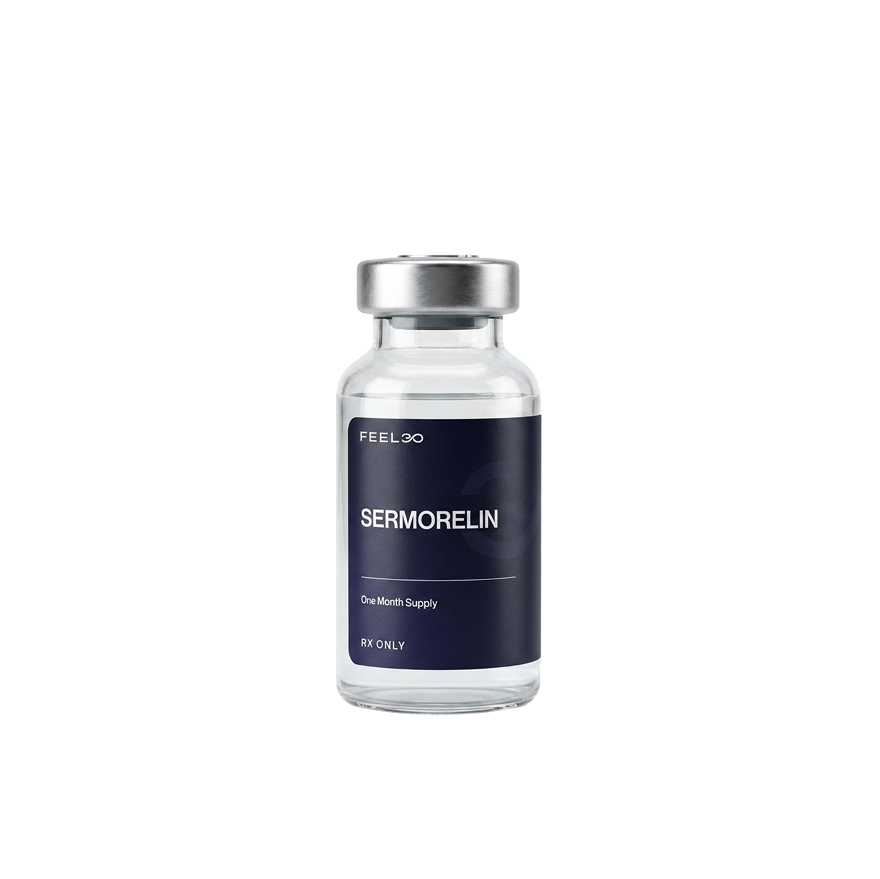
Helps support lean muscle and fat metabolism
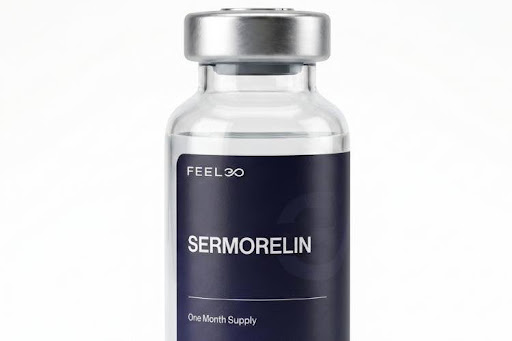
Shop NowSermorelin is a synthetic peptide that mimics growth hormone-releasing hormone (GHRH), a naturally occurring hormone the body produces (National Center for Biotechnology Information [NCBI], 2026).
GHRH acts as a signal to the pituitary gland, telling it to release growth hormone. Rather than supplying human growth hormone (HGH) directly, sermorelin works by encouraging the body's own GH production through its normal physiological pathways (Ezzat et al., 1999; Ho, 1997).
Sermorelin doesn’t provide growth hormone directly. Instead, it acts as a growth hormone-releasing hormone analogue by stimulating the pituitary gland to secrete endogenous growth hormone when pituitary function is preserved. This differs from growth hormone replacement therapy, which supplies exogenous growth hormone (exogenous means from an outside source). However, stimulating growth hormone secretion doesn’t necessarily mean that every proposed benefit of sermorelin is supported by the same level of clinical evidence. Evidence for adult outcomes such as improved body composition, sleep, recovery, or general well-being is still limited and varies by outcome.
GH plays a role in several normal physiological processes, including:
These physiological functions help explain why sermorelin is sometimes considered in hormone-focused care. However, the normal roles of growth hormone don’t establish that stimulating GH secretion with sermorelin will result in clinical benefits. Evidence for many of the benefits of sermorelin in healthy adults is limited, as much of the relevant adult research has focused on patients with diagnosed growth hormone deficiency.
It’s also important to understand that sermorelin is different from FDA-approved GLP-1 medications. While several GLP-1 receptor agonists have received FDA approval for specific medical indications, there’s currently no commercially marketed FDA-approved sermorelin product available in the United States. When providers prescribe sermorelin, it’s typically provided through a compounded formulation under the supervision of a licensed healthcare provider. Compounded medications aren’t FDA-approved, even when they’re prepared in accordance with applicable compounding requirements. This means the FDA doesn’t review individual compounded products for safety, effectiveness, or quality before they are provided to patients (U.S. Food and Drug Administration, 2025, 2026).

GLP-1 stands for glucagon-like peptide-1, a hormone the intestines release after eating.
This hormone helps regulate:
GLP-1 receptor agonists are medications designed to mimic the effects of natural GLP-1. These medications are commonly prescribed for specific medical indications under the supervision of a licensed healthcare provider.
GLP-1 receptor agonists work through several mechanisms:
GLP-1 receptor agonists slow the movement of food through the stomach, which may increase satiety, reduce appetite, and support portion control by helping people feel fuller for longer (Holst, 2024).
GLP-1 receptor agonists increase glucose-dependent insulin secretion and reduce glucagon secretion, helping regulate blood sugar levels (Holst, 2024).
GLP-1 receptor agonists also act on appetite-regulating centers in the brain, which can reduce hunger and food intake (Holst, 2024).
Because these mechanisms influence appetite and calorie intake, certain GLP-1 receptor agonists are used as part of clinically supervised weight-management strategies (Garvey et al., 2022).
Although both sermorelin and GLP-1 receptor agonists are peptides, the similarities largely end there.
Sermorelin and GLP-1 receptor agonists are not interchangeable. They act on different hormonal pathways and are used or considered for different clinical purposes: sermorelin targets the GHRH–growth hormone pathway, while GLP-1 receptor agonists target the incretin pathway involved in appetite and glucose regulation.
Another important difference is the quality and quantity of available clinical evidence. GLP-1 medications have been studied extensively in large clinical trials evaluating weight management and metabolic health outcomes (Wilding et al., 2021). In contrast, the evidence supporting sermorelin use in adults is more limited, particularly for body composition and wellness-related outcomes. As a result, the expectations, goals, and clinical rationale for each therapy are different.
Both therapies require medical supervision and carry potential risks.
Common side effects reported with sermorelin may include injection-site reactions, flushing, headache, dizziness, or nausea (Mayo Clinic, 2026). To find out more, read this article on sermorelin side effects.
GLP-1 receptor agonists commonly cause gastrointestinal symptoms such as nausea, vomiting, diarrhea, or constipation. These side effects often begin or become more noticeable during dose escalation and generally improve after the maintenance dose is reached, although their severity and duration vary between patients (Gorgojo-Martínez et al., 2023).
Discuss the potential benefits and risks of any treatment with a qualified healthcare provider before starting therapy.
Some people searching for sermorelin are interested in weight loss. However, sermorelin isn’t a fat loss or fat reduction drug. It shouldn’t replace therapies made for weight loss management.
Instead, sermorelin's potential effects are generally discussed in terms of:
Although therapies that boost natural growth hormone are sometimes linked to body composition, evidence is limited. Sermorelin itself has not shown clinically meaningful changes in healthy adults. Nutrition, exercise, sleep, and metabolic health also play important roles in body composition (Dominikowski et al., 2026). To find out more about this topic, read our article on Sermorelin for Weight Loss.
Weight loss and body recomposition aren't necessarily the same thing. Weight loss usually means losing total body weight. Body recomposition focuses on changing your body fat and lean mass ratio.
For example, someone may reduce body fat while preserving lean muscle mass, resulting in noticeable physical changes even if the weight changes on the scale are modest.
Weight loss with GLP-1 receptor agonists can involve reductions in both fat mass and lean mass. However, lean mass includes muscle and other nonfat tissues. So, a measured drop in lean mass may not mean the same loss in strength or function.
Recent reviews have found that GLP-1-based treatments generally reduce substantially more fat mass than lean mass. The amount of lean mass lost varies by medication, study group, and body composition measurement method. The long-term clinical impact is still being studied (Karakasis et al., 2025; Neeland et al., 2024).
Maintaining muscle during weight loss may help support strength, mobility, and physical function. Adequate protein intake and resistance exercise are often recommended in a clinically supervised weight-management plan. Evidence about the best ways to preserve muscle in people taking GLP-1 medications is still emerging. Neeland et al. (2024) discuss this. Muscle-preservation strategies specifically for people using GLP-1 medications is still developing (Neeland et al., 2024).

The appropriate approach depends on the condition being addressed and the strength of evidence supporting each treatment. Certain GLP-1 receptor agonists are FDA-approved for long-term weight management in eligible patients. Large clinical trials support their use. Sermorelin is not FDA-approved for weight management. Evidence of meaningful weight or body-composition benefits in healthy adults is very limited.
Lifestyle interventions remain the foundation of weight management, whether or not medication is prescribed. These may include sustainable dietary changes, regular physical activity, adequate sleep, and strategies for managing stress and other behavioral factors.
A healthcare provider may also decide if an FDA-approved weight-management medication is right for you. They will assess your body mass index, weight-related health conditions, medical history, and current medications. They will also consider your treatment goals. When prescribed, GLP-1 receptor agonists approved for weight management are intended to be used alongside a reduced-calorie diet and increased physical activity, not as replacements for those measures.
Some people ask about therapies that stimulate endogenous growth hormone secretion when their goals include:
These are commonly discussed treatment goals, but the strength of supporting clinical evidence varies. Evidence for many proposed benefits of sermorelin in healthy adults is still limited. They shouldn’t be presented as guaranteed treatment effects.
A comprehensive medical evaluation can help determine whether sermorelin or another approach is appropriate based on symptoms, health history, laboratory findings, and overall goals.

Persistent tiredness, reduced motivation, changes in overall physique, decreased libido, and reduced exercise recovery can have many possible causes. Adult growth hormone deficiency is relatively uncommon, and its symptoms are often nonspecific. It is usually tested when there is a medical reason to suspect a problem with the pituitary or hypothalamus. Fatigue or weight changes alone are not enough to justify testing (Yuen, 2023).
Depending on your symptoms, medical history, and initial test results, a healthcare provider may evaluate:
A full evaluation is important. Common symptoms like fatigue and weight changes can also happen with other health issues. These include thyroid problems, sleep issues, metabolic conditions, medication side effects, stress, or other concerns.
While GLP-1 medications and growth hormone-support therapies get a lot of attention. They are only two parts of a bigger metabolic and hormonal picture.
In some men, symptoms such as weight gain, reduced exercise performance, fatigue, low libido, and difficulty maintaining a healthy body composition may be associated with low testosterone levels. Because testosterone plays an important role in fat distribution, energy levels, and overall metabolic health, a comprehensive hormone evaluation may be appropriate when these symptoms are present.
Rather than assuming one treatment is the answer, healthcare providers usually review testosterone levels and other health markers. They also consider lifestyle habits, sleep quality, and overall health goals before recommending a treatment plan.
Using a GLP-1 receptor agonist and sermorelin together isn’t an established standard-of-care treatment approach, and clinical evidence evaluating this combination is limited. The fact that the therapies act on different hormonal pathways doesn’t necessarily mean they should be combined or that using both will provide additional benefit.
Whether concurrent use is safe or appropriate would require an individualized medical assessment based on the reason each therapy is being considered, the patient’s medical history, current medications, laboratory findings, and monitoring needs. Patients should not combine these therapies without guidance from a licensed healthcare provider
Sermorelin mimics growth hormone-releasing hormone (GHRH) and stimulates the pituitary gland to release more of the body’s own growth hormone.
Unlike human growth hormone therapy, which supplies growth hormone directly, sermorelin stimulates endogenous growth hormone secretion. This can increase GH secretion and may subsequently increase insulin-like growth factor-1 (IGF-1), although individual responses vary (National Center for Biotechnology Information, 2026; Dominikowski et al., 2026).
Significant weight loss can sometimes be accompanied by a reduction in lean body mass, particularly during periods of rapid weight loss or calorie restriction (Wolfe et al., 2008).
For this reason, healthcare providers often recommend adequate protein intake and resistance training during a weight loss journey. These strategies may help preserve lean muscle mass while reducing body fat and stored fat.
No. Sermorelin and semaglutide act on different hormone systems. Sermorelin stimulates GH signaling, while semaglutide is a GLP-1 receptor agonist that affects appetite and blood sugar control (Davies et al., 2021).
Sermorelin isn't intended to regulate appetite, and appetite suppression isn't considered its primary mechanism of action.
Sermorelin isn't generally classified as a weight loss treatment. Discussions around sermorelin focus more commonly on growth hormone support, recovery, sleep, and body composition.
Growth hormone plays an important physiological role in muscle metabolism. However, this doesn’t mean that sermorelin has been shown to preserve or increase lean muscle mass. Evidence supporting clinically meaningful improvements in lean body mass with sermorelin in otherwise healthy adults remains very limited. Much adult research focuses on people with diagnosed growth hormone deficiency. It also studies growth hormone replacement, not sermorelin (Young et al., 2022; Dominikowski et al., 2026).
Sermorelin isn't a GLP-1 medication. Although both are peptides, they target different hormone systems and are generally used for different purposes.
GLP-1 receptor agonists primarily influence appetite regulation, blood sugar control, and weight management. Sermorelin works through the growth hormone pathway by signaling the pituitary gland to release more of the body's own GH.
If you're interested in addressing symptoms that may be related to hormonal changes, the best first step is a comprehensive medical evaluation.
At Feel30, treatment decisions are based on symptoms, laboratory testing, medical history, and long-term health goals. Depending on the individual, this may involve evaluating options such as testosterone therapy, enclomiphene, sermorelin therapy, or other provider-guided treatments selected to help address specific symptoms and treatment goals.
Take the first step toward renewed energy and confidence with Feel30’s expert care.




4.9 out of 5 · 2,400+ reviews


Always Tired, Gaining Weight? Low T Was the Real Reason
Is Low T Hurting Your Relationship?
This gaming laptop is a powerhouse, equipped with the latest graphics card and a high-refresh-rate display.
Jane Smith
Feel30 has completely changed the game for me. I feel more energized, focused, and confident like I did years ago.
Emily Johnson
This smartphone offers an exceptional camera experience, with stunning low-light performance and vibrant colors.
John Doe
What are you waiting for?
Take the first step toward renewed energy and confidence with Feel30’s expert care.


Feel 30 again with physician-supervised treatment that restores the energy, confidence, and performance you remember. No hassle or hidden fees.