Stay informed with expert insights on testosterone therapy, men's health, and performance optimization.

If your recovery feels slower than it used to, you're struggling with a consistent sleep routine, or finding stubborn body fat is harder to lose, age-related hormone changes may be contributing. It's a normal part of the aging process for growth hormone (GH) production to decrease (Hartman et al., 1992). This decline can affect body composition, sleep, energy, and recovery (Veldhuis et al., 2005). Ultimately, it could be contributing to why you're not feeling your best.
The pursuit of peak performance has brought up peptide therapy, and specifically ipamorelin vs sermorelin.
Ipamorelin and sermorelin are growth hormone secretagogues that stimulate your body’s natural GH release. Instead of replacing growth hormone directly, they encourage the pituitary gland to release more of the growth hormone your body already makes (Bowers, 1997). Both peptides support growth hormone signaling, but they work through different pathways and are often used for different goals.
If you’re comparing ipamorelin vs sermorelin, the most appropriate option depends on you and your providers’ health goals, medical history, and lifestyle. Because these medications work through different mechanisms, a healthcare provider can help determine which approach best aligns with your needs and overall treatment plan.
Ipamorelin and sermorelin are both growth hormone secretagogues (Bowers, 1997). In simple terms, they help your body release growth hormone rather than replacing it.
For men who are interested in anti-aging support, fat loss, better post-exercise recovery, or metabolic health, this can feel like a safer approach than using synthetic growth hormone.
Still, peptide therapy isn't a shortcut. Peptide therapy is not a substitute for healthy lifestyle habits. Adequate sleep, regular physical activity, balanced nutrition, and ongoing medical supervision remain important components of overall health and treatment success.

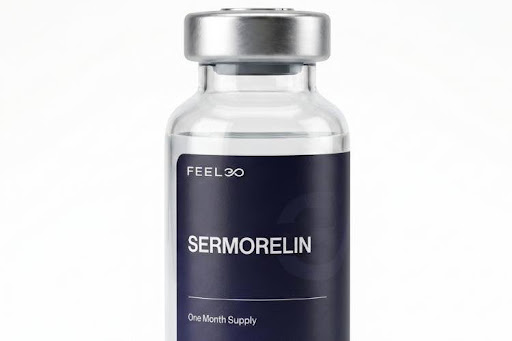
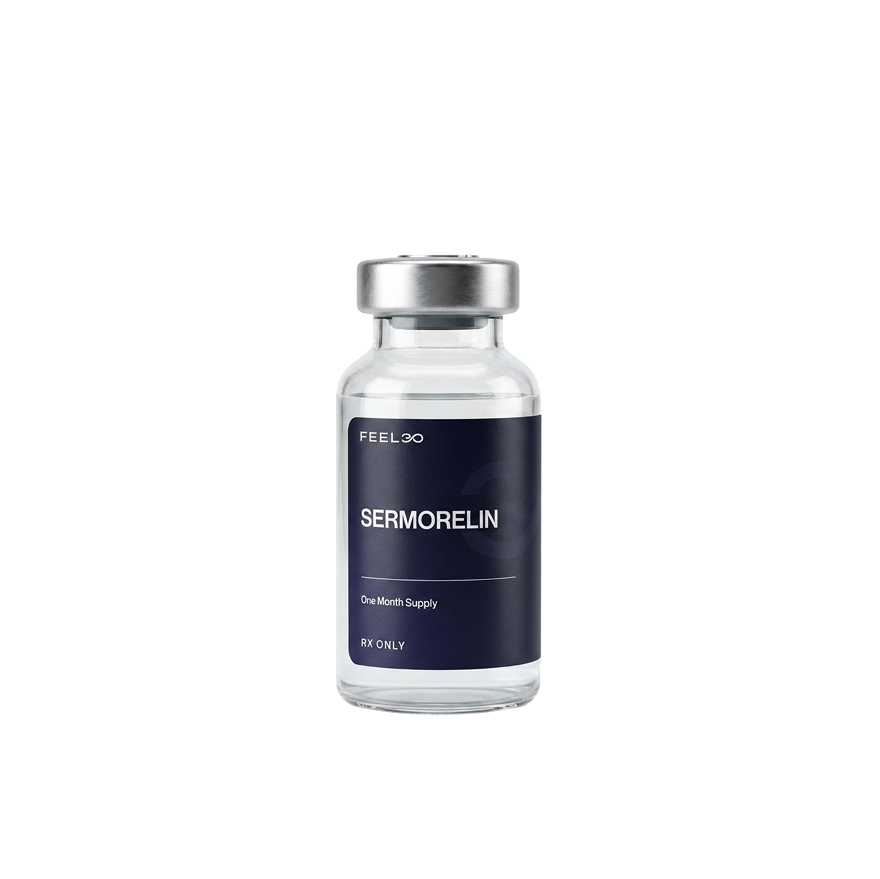
Sermorelin is a synthetic version of growth hormone-releasing hormone (GHRH). It stimulates the pituitary gland to release GH in pulses that mimic the body’s natural rhythm (Thorner et al., 2016; Hartman et al., 1992). It’s commonly used for sleep support, recovery, and long-term hormone optimization.
At Feel 30, we offer sermorelin as a clinically-guided treatment option for men experiencing age-related hormone decline.
Helps support lean muscle and fat metabolism
Shop NowIpamorelin stimulates growth hormone through ghrelin receptors rather than GHRH receptors (Kojima & Kangawa, 2005; Smith et al., 2001). Because of this selective signaling profile, it’s often discussed in recovery- and performance-focused peptide protocols.
Ipamorelin is commonly discussed for its benefits for:
You may see ipamorelin mentioned alongside CJC 1295 or in protocols using ipamorelin and sermorelin together. CJC-1295 is a long-acting analog of growth hormone–releasing hormone (GHRH). Because it works through a different pathway than ipamorelin, some clinicians may use these therapies together with the goal of supporting growth hormone release through complementary mechanisms. Treatment approaches vary, and the safety, effectiveness, and appropriateness of combination therapy should be evaluated by a qualified healthcare provider.

GH levels decline as men get older (Hartman et al., 1992; Veldhuis et al., 2005). The change is usually gradual, but the effects can show up in frustrating ways:
These changes can occur for many reasons and are not necessarily caused by declining growth hormone levels alone. Growth hormone also contributes to protein synthesis, metabolic function, bone formation, tissue repair, and body composition. However, growth hormone is only one factor that influences these processes, and higher growth hormone levels don’t necessarily lead to better health outcomes. A qualified healthcare provider can help determine whether hormone evaluation or treatment is appropriate based on your individual health status and symptoms.
Both peptides promote GH release, but they do it through different biological pathways.
Patients may be interested in sermorelin or ipamorelin for a variety of reasons, including concerns related to healthy aging, body composition, exercise recovery, or overall wellness. However, treatment outcomes vary among individuals, and neither therapy is guaranteed to produce specific results. A healthcare provider can help determine whether either option is appropriate based on your individual circumstances.
Sermorelin may be better suited for:
Potential benefits and treatment outcomes vary among individuals and should be discussed with a qualified healthcare provider.
Both ipamorelin and sermorelin can cause side effects, although not everyone experiences them. Side effects may vary based on the individual, dosage, treatment duration, and other health factors. For this reason, treatment should be prescribed and monitored by a qualified healthcare provider.
Possible sermorelin side effects include:
Ipamorelin side effects may include:
Growth hormone-releasing peptides act differently from synthetic growth hormone. They stimulate the pituitary gland to release growth hormone rather than directly replace it (Thorner et al., 2016; Møller & Jørgensen, 2009).
That may support more natural growth hormone release and physiologic GH pulses, but “more natural” does not mean risk-free. Differences in mechanism do not necessarily translate into differences in safety or clinical outcomes.
Safety depends on dosage, monitoring, medical evaluation, medical history, health history, and existing conditions. Men with certain cancers, uncontrolled diabetes, or specific endocrine disorders may not be candidates for peptide therapy (Molitch et al., 2011).

There’s no universal winner in the ipamorelin vs sermorelin debate. The most appropriate option depends on an individual’s medical history, laboratory findings, treatment goals, and response to therapy as directed by their provider.
Sermorelin and ipamorelin both act as growth hormone secretagogues, but they stimulate growth hormone release through different receptors and signaling pathways. These differences may influence how a clinician evaluates their potential use in select patients.
In general, treatment selection is individualized and may consider factors such as:
You may also see discussions of CJC-1295 in the context of growth hormone secretagogue therapy. It is a long-acting growth hormone-releasing hormone (GHRH) analog that acts through a different pathway than ipamorelin. In some clinical or experimental contexts, different agents may be used separately or in combination, but protocols vary and should only be determined by a qualified healthcare provider.
You may also see comparisons like sermorelin vs CJC 1295 or protocols involving CJC 1295 with ipamorelin. In some clinical or experimental settings, sermorelin and ipamorelin may be discussed in combination. However, combination use should only be determined and supervised by a qualified healthcare provider.
Because they influence growth hormone signaling through different mechanisms, they are sometimes considered within broader treatment discussions. However, there is limited high-quality clinical evidence establishing whether combination therapy provides additional benefit compared to single-agent therapy in most patient populations.
Stacking can increase the risk of:
A proper medical evaluation should review your health history, medications, metabolic health, lifestyle factors, and other hormones relevant to your treatment.
Peptide therapy is highly individualized. The right protocol depends on age, body fat percentage, sleep quality, recovery capacity, medical history, and existing growth hormone levels.
Men already exploring oral TRT, testosterone cypionate, enclomiphene, tadalafil, or sildenafil may need a broader hormone optimization plan rather than adding multiple growth hormone peptides without a clear reason.
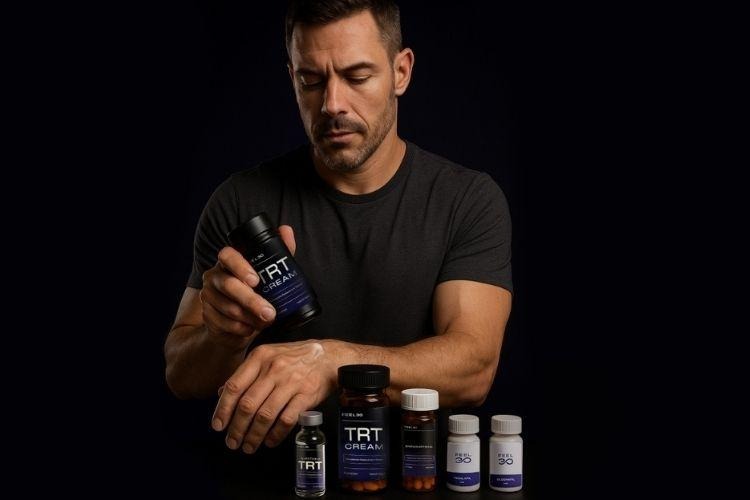
Peptide therapy is one piece of the bigger men’s hormone-health picture.
TRT replaces testosterone. Growth hormone releasing peptides stimulate GH release.
These approaches target different endocrine systems and are not interchangeable. A healthcare provider determines whether one or both may be appropriate based on diagnostic evaluation and ongoing monitoring.
Enclomiphene may be considered for men who want to encourage testosterone production while preserving fertility. Its use should be guided by a licensed healthcare provider based on individual risk–benefit assessment.
Sleep quality, stress levels, physical activity, nutrition, and body composition can all influence hormone regulation and overall metabolic health. These factors are often considered as part of a comprehensive evaluation of men’s health concerns.
Some patients notice gradual changes over time, such as differences in sleep or overall sense of well-being. However, these experiences vary from person to person, and results aren’t guaranteed. Research hasn’t consistently shown the same effects across all individuals or studies.
Changes in body composition, muscle mass, or physical performance typically take longer to become noticeable. These outcomes are also strongly influenced by lifestyle factors such as nutrition, physical activity, sleep quality, and overall health.
Ipamorelin primarily affects growth hormone release rather than testosterone directly. It may indirectly improve recovery or overall vitality for some men, but it isn’t a testosterone replacement therapy.
Usually, no. Growth hormone-releasing peptides and TRT affect different hormonal systems. Peptides promote GH release, while TRT replaces testosterone.
Sermorelin stimulates natural growth hormone release rather than replacing growth hormone directly with synthetic HGH. That may be preferable in certain clinical contexts, but all peptide therapy still requires medical supervision.
Learn more about sermorelin and HGH in our guide: What You Need to Know About Sermorelin vs HGH
Sermorelin is often associated with sleep support because it aligns with natural nighttime GH pulses. Individual responses can vary.
Most protocols use small subcutaneous injections. Many men tolerate them well, though mild irritation at the injection site can happen.
Men with certain cancers, unmanaged diabetes, or specific endocrine conditions may not be appropriate candidates. A healthcare professional should review your health history first.
When you're comparing ipamorelin vs sermorelin, the better choice depends on your lifestyle, goals, and medical history. Before you start any growth hormone peptides, TRT, or combine peptides like ipamorelin and sermorelin together, speak with a qualified medical professional.Feel 30 offers physician-guided sermorelin therapy for men who want a grounded approach to healthy aging, recovery, sleep, and hormone optimization.
Take the first step toward renewed energy and confidence with Feel30’s expert care.




4.9 out of 5 · 2,400+ reviews


Always Tired, Gaining Weight? Low T Was the Real Reason
Is Low T Hurting Your Relationship?
This gaming laptop is a powerhouse, equipped with the latest graphics card and a high-refresh-rate display.
Jane Smith
Feel30 has completely changed the game for me. I feel more energized, focused, and confident like I did years ago.
Emily Johnson
This smartphone offers an exceptional camera experience, with stunning low-light performance and vibrant colors.
John Doe
What are you waiting for?
Take the first step toward renewed energy and confidence with Feel30’s expert care.


Feel 30 again with physician-supervised treatment that restores the energy, confidence, and performance you remember. No hassle or hidden fees.