Stay informed with expert insights on testosterone therapy, men's health, and performance optimization.

When treating erectile dysfunction (ED), there are two medications that are commonly prescribed: vardenafil and tadalafil.
Vardenafil is well known for its fast onset, and tadalafil is known as "the weekend pill" because its effects can last up to 36 hours, providing a longer window for sexual activity. If you want to find out which medication is right for you, know that it depends on your general health, your personal preferences, and your lifestyle.
Our guide considers comprehensive studies and research-backed evidence to compare tadalafil vs vardenafil to see how they work, what the benefits are, and which option is best for you.
An erection doesn't happen alone; it's a complex neuromuscular event, in other words, a result of a collection of factors working together. Whether you get an erection depends on your hormones (testosterone), circulation (blood vessels), nerves, and your desire or stimulation.
The most common reason for erectile dysfunction is a reduction in blood flow to the penis. This is because when you're sexually aroused, your body releases something called nitric oxide, which activates enzymes that widen and relax the blood vessels in the penis. This process allows them to fill with blood and restricts blood from flowing back out, which causes an erection. If one of the factors is missing in this complex chain reaction, it may lead to weaker erections that don't last long or sometimes to erections not occurring at all (Yao et al., 2025).
Common conditions that cause Erectile Dysfunction (Allen et al., 2023) include:
Age can sometimes be a contributing factor to ED, but ED is not considered a "normal" part of aging. In fact, many men have healthy sex lives well into their later years.
Sometimes, ED is an early warning sign of cardiovascular disease, so you should always discuss it with a medical professional if you're experiencing persistent erectile dysfunction.
Vardenafil and tadalafil are similar, but not identical. Both are prescription medications approved by the U.S. Food and Drug Administration (FDA) to treat erectile dysfunction; vardenafil is the generic of Levitra and tadalafil of Cialis. Vardenafil also comes in the form of an orally disintegrating tablet (ODT) that dissolves on the tongue and is absorbed differently, which used to be sold under the brand name Staxyn. Both Levitra and Staxyn were discontinued; however, they are still available as generics.
ED drugs do not cause automatic erections; rather, they improve your natural responses when you are sexually stimulated, making it easier for your body to get an erection.
These drugs, known as PDE5 inhibitors, work by helping blood vessels in the penis relax, increasing the blood flow and making it easier to achieve and maintain an erection (Czapla et al., 2025).
Tadalafil is also FDA-approved (Hatzimouratidis, 2014), in a low daily dose, to treat the symptoms associated with benign prostatic hyperplasia (BPH) (an enlarged prostate). Under different brand names, some tadalafil formulations are also used to treat pulmonary arterial hypertension (high lung blood pressure) (Humbert et al., 2022).
Other examples of PDE5 inhibitors used to treat erectile dysfunction are sildenafil (brand name: Viagra) and avanafil (brand name: Stendra). Learn more about tadalafil vs. sildenafil in our guide.
To best understand the difference between vardenafil and tadalafil, you need to take a more in-depth look at how phosphodiesterase type 5 (PDE5) inhibitors function.
As discussed, nitric oxide is the next step in the chain-reaction process of an erection after sexual arousal. It stimulates the body to make more of the molecule cyclic guanosine monophosphate (cGMP) that signals the penile arteries' smooth muscles and erectile tissue to relax, boosting blood flow and resulting in an erection (Salonia et al. 2021).
Then, the PDE5 enzymes break down the cGMP, so the blood vessels narrow down again, and the erection subsides. Tadalafil and vardenafil work by blocking PDE5 temporarily, which slows the breakdown of cGMP and helps an erection not fade too quickly (Burnett, 2006).
You should be aware that these drugs won't increase your libido, and they won't cause an erection either if you're not sexually aroused. They simply make the natural erectile process more efficient.

The most significant difference between vardenafil and tadalafil is how they are taken.
Vardenafil is administered as an on-demand dose, about 30 to 60 minutes before sexual activity, and generally lasts for about four to six hours, but the onset can be slightly faster for some men (25–30 minutes). It is commonly prescribed at 5 mg, 10 mg, and 20 mg, once a day (U.S. Food and Drug Administration, 2014).
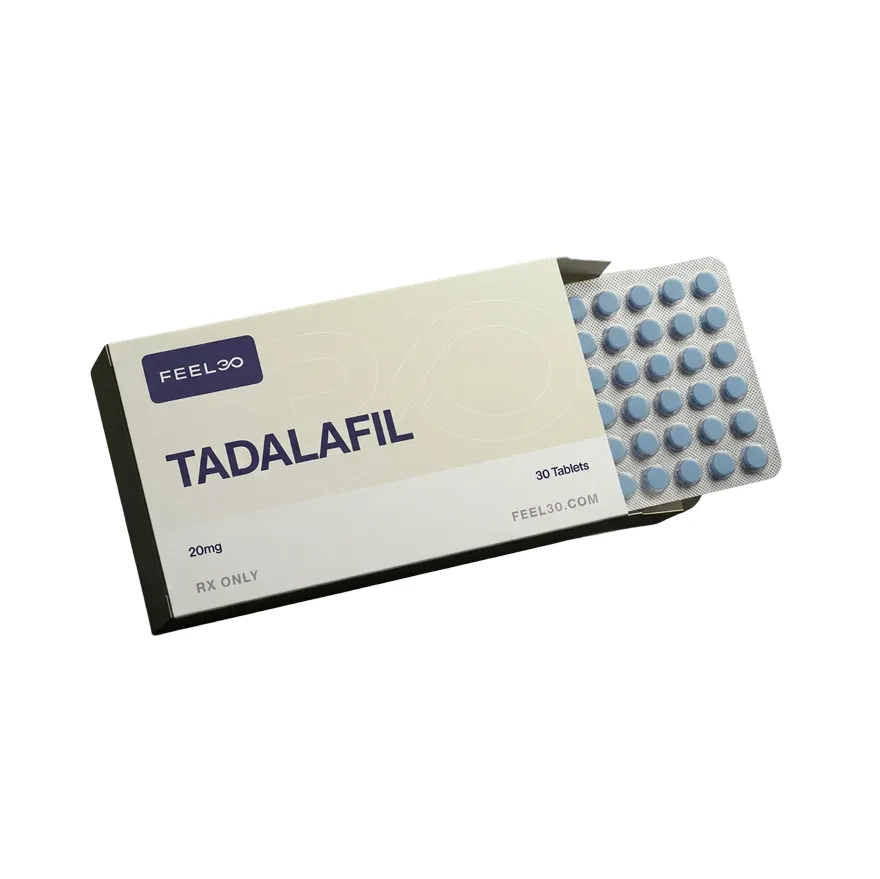
Tadalafil is much more flexible. It can be taken like vardenafil just before planned sexual activity, but it can also be prescribed as a daily, low-dose medication because it stays active for much longer, lasting up to 36 hours.
Typically, an on-demand dose would be 10 mg or 20 mg, and a daily-treatment dose would be 2.5 mg or 5 mg.
The benefit of taking tadalafil every day is that you can spontaneously engage in sexual activity without having to plan it around your medication. The drug remains steady in your bloodstream, so erections can happen naturally when you are sexually stimulated (Burnett et al., 2018).
Another difference between tadalafil and vardenafil is when you take the medication in relation to eating. Tadalafil is not affected by what you eat, but medical providers advise avoiding high-fat meals before taking vardenafil because it can slow absorption and delay how long the medicine takes to start working. That's why providers recommend taking vardenafil on an empty stomach or after a light meal, especially if you want it to work quickly (U.S. Food and Drug Administration, 2014).
Both tadalafil and vardenafil (Burnett et al., 2018):
Extensive clinical studies (Yuan et al., 2013) of randomized controlled trials have consistently shown that both drugs significantly improve erectile function when compared with a placebo in a study of different patient populations.
Since tadalafil and vardenafil are both generics, they are much more cost-effective than their brand-name versions, but tadalafil can generally be a bit cheaper than vardenafil. It depends on the provider you choose, the dose, and where you live.
Some trusted telehealth providers offer all-inclusive treatment plans that include your consultation, prescription, lab tests, home delivery, and follow-up care. You can also get treatment in-clinic if you prefer. Ultimately, the most cost-effective option is the one that considers both your health requirements and personal preferences and, of course, your budget.
If you'd like to find out more about the cost of treating erectile dysfunction and which option is best for you, visit Feel30. We offer professional ED treatment with complete medical oversight, all online.
Neither medication is better. They are both effective for treating ED, and they both usually start working within 30–60 minutes. The better option for you comes down to your lifestyle and whether you have any other medical conditions.
Some studies suggest vardenafil might produce firmer erections (in certain men) (Donatucci et al., 2004); however, when compared to other PDE5 inhibitors, the clinical difference is very small (Doggrell, 2006).
Vardenafil is best for you if you:
Tadalafil is best for you if you:
An advantage that tadalafil has over vardenafil is that its effects can last up to 36 hours. That's not to say you will have a 36-hour-long erection; rather, you likely will be able to achieve an erection naturally in that time if you are sexually stimulated.
If you want to know more about the duration of action and onset times, read our guide: How long does tadalafil take to work?

All prescription medications can cause side effects, including vardenafil and tadalafil. Most of the side effects are temporary and mild; however, there are some that need immediate medical attention.
Note: It's important to review your medical history and consider what medications you are already on with a medical professional before taking an ED medication.
According to the Mayo Clinic (2024), these are common vardenafil side effects:
Because of this potential effect on the heart's electrical activity, vardenafil should not be used by people with congenital long QT syndrome (a rare genetic condition) or those taking medications that also affect their heart rhythm (Khatib et al., 2020).
Since tadalafil is active for up to 36 hours, side effects can sometimes last longer than shorter-acting ED medications. These side effects mostly arise within 12–24 hours and resolve in 48 hrs (Mayo Clinic, 2026):
Medical professionals advise that neither tadalafil nor vardenafil should ever be taken with nitrate medications (nitroglycerin or isosorbide) typically used to treat angina (chest pain) because the combination of drugs can result in a dangerous drop in blood pressure (Mayo Clinic, 2026; Mayo Clinic, 2024).
It's also important to tell your healthcare provider if you take any over-the-counter medication or supplements.
Other medications that you need to be cautious with (Mayo Clinic, 2026; Mayo Clinic, 2024):
Drinking excessive amounts of alcohol combined with ED medications can also worsen symptoms of dizziness and lower blood pressure; it may also make it harder to get an erection.
No, doctors do not recommend taking tadalafil and vardenafil at the same time because they are both part of the PDE5 inhibitor class of drugs. Taking a combination dose may also increase the risk of side effects (Dhaliwal & Gupta, 2024).
No, the generic vardenafil has not been discontinued; however, Levitra, the brand-name version of vardenafil, was taken off the market for commercial reasons when the generic versions of it became so widely available.
One of the newer erectile dysfunction treatments is a medication called Eroxon (MED3000). It's an officially authorized, FDA-approved gel that you can get over the counter, and it works in a different way from the PDE5 inhibitors like tadalafil and vardenafil. It creates a cooling–warming effect that stimulates nerve endings and blood flow to the penis (Hellstrom et al., 2024).
Another treatment approach is low-intensity shockwave therapy (LiSWT). LiSWT uses gentle acoustic waves applied to penile tissue with the goal of stimulating blood vessel growth and improving blood flow, which may help support erectile function. In a study by Hayon et al. (2024), clinical trials have shown some promising results for men with mild ED, but it is still considered investigational by the American Urological Association (AUA).
Studies are continuously being done, and researchers are also examining regenerative therapies, platelet-rich plasma (PRP), stem cell treatment, and other oral medications; however, they are all still in the investigational stage of research (Oliveira & Ziegelmann, 2021).
In conclusion, both tadalafil and vardenafil are effective at treating erectile dysfunction, and each one has its own advantages. Vardenafil's advantage is that it's an on-demand drug that works quickly and reliably. Tadalafil's edge is that it lasts long, and it's the only PDE5 inhibitor that you can get as both an on-demand and once-a-day treatment.
If you need more information and guidance, at Feel30, we provide licensed healthcare practitioners who evaluate your medical history, assess your current medications, and guide and support you to reach your ED treatment goals.
Take the first step toward renewed energy and confidence with Feel30’s expert care.




4.9 out of 5 · 2,400+ reviews


Always Tired, Gaining Weight? Low T Was the Real Reason
Is Low T Hurting Your Relationship?
This gaming laptop is a powerhouse, equipped with the latest graphics card and a high-refresh-rate display.
Jane Smith
Feel30 has completely changed the game for me. I feel more energized, focused, and confident like I did years ago.
Emily Johnson
This smartphone offers an exceptional camera experience, with stunning low-light performance and vibrant colors.
John Doe
What are you waiting for?
Take the first step toward renewed energy and confidence with Feel30’s expert care.


Feel 30 again with physician-supervised treatment that restores the energy, confidence, and performance you remember. No hassle or hidden fees.