Stay informed with expert insights on testosterone therapy, men's health, and performance optimization.

Depression in men doesn't always come across as sadness. It can also manifest as body aches and pains, heavy drinking, irritability, and escapist behavior like overworking. And because these signs don't fit neatly under “well-known signs of depression,” they often get dismissed as someone simply experiencing a rough patch, stress, or aging (Noble, 2024).
This is the main reason why the signs of depression in men often go unrecognized and why knowing what to look out for is important. Some of these signs are also symptoms of other treatable conditions, including low testosterone, so it's definitely worthwhile determining what you're actually dealing with before assuming you simply need to push through.
Depression is sometimes mistaken for a phase or a character flaw, but it's actually a serious medical condition.
The National Institute of Mental Health (2024) says depression is a mood disorder that affects how you think, feel, eat, sleep, and function; it's more than "feeling low." According to the Institute, research shows that fewer men than women with mental illnesses get treatment, which may contribute to depression being under-recognized and under-treated in men.
One contributing factor may be the way men are taught to deal with distress. Studies show that traditional masculine norms, such as the belief that asking for help is a sign of weakness and self-reliance, are the main barriers to men's mental health care. Some men even turn to alcohol or other substances as a way of avoiding difficult emotions or distressing experiences (American Psychological Association, 2018).
During midlife, when issues such as work pressure, changing relationships, and aging parents all start to accumulate, it becomes easy to attribute changes in mood or behavior to circumstances rather than recognizing a possible mental health concern. For men in midlife, depression can also affect areas such as work and daily functioning. Research following more than 9,000 American adults found distinct patterns of depressive symptoms around ages 40 and 50, including episodic periods of higher symptoms (Dobson et al., 2023).
People are unique, and depression doesn't show up in the same way for everyone. In clinical studies, externalizing or "masculine" patterns of depression have been noted, where it arises as physical symptoms and outward behaviors rather than sadness (von Zimmermann et al., 2026).

Signs of depression tend to occur in clusters, and having one sign doesn't automatically mean you have depression; it's the combination of signs, how often they occur, how long they last, and how they affect your daily life that matters most.
Emotional signs don't necessarily manifest as obvious despair and sadness (Sawchuk, 2022). Look for:
The Male Depression Risk Scale is a recognized tool research teams use to capture these signs and treat emotional suppression and anger as the main aspect of depression in men, along with risk-taking and withdrawal (Rice et al., 2022).
Behavioral signs such as these are often the first symptoms that are noticed (Mayo Clinic, 2022):
Alcohol also plays a role in depression. Research in adults aged 50 to 75 found increases in depressive symptoms were associated with subsequent increases in alcohol consumption. This may create a difficult cycle in which alcohol is used to cope while potentially making mental health harder to manage (Yu et al., 2024).
Physical symptoms can occur alongside depression, including fatigue, sleep problems, headaches, and digestive symptoms. In a study of people with first-episode depression, these symptoms were common (Wu et al., 2023), but because many symptoms overlap with other conditions, they're easy to miss.
Depression can also show up through physical symptoms, which may be what prompts someone to seek medical care (Mao et al., 2024). These can include :
(Mao et al., 2024)
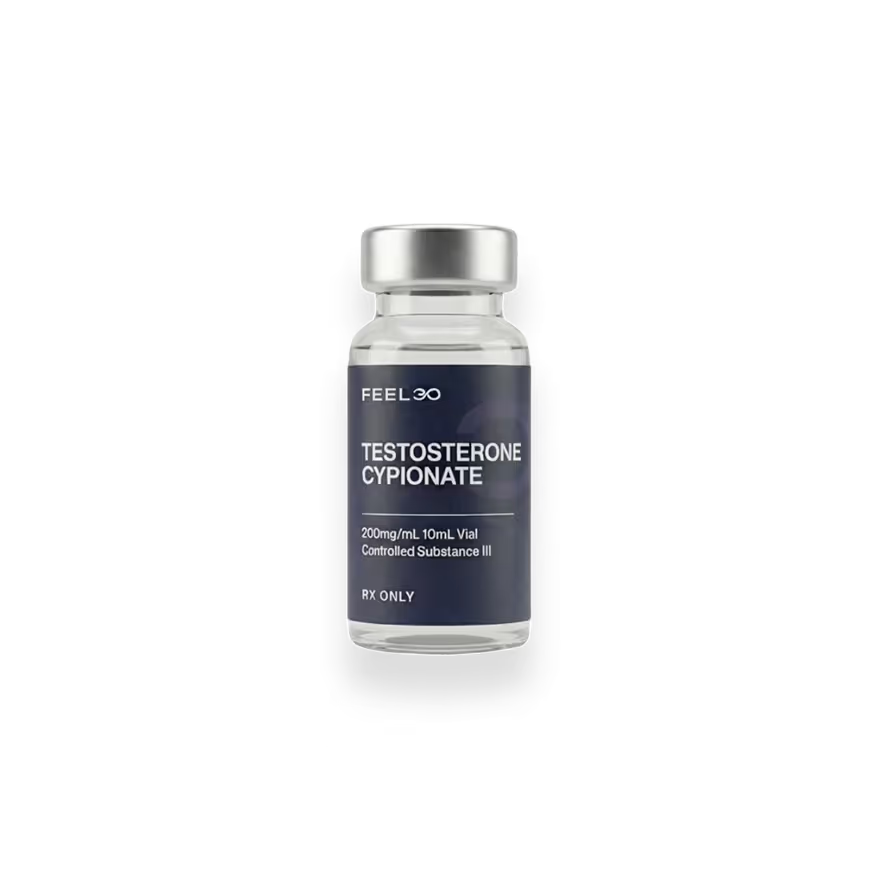
Supports energy, focus, sexual health, and overall wellbeing
Shop NowWhen left untreated, depression in men doesn't just make life harder; it can be serious.
The majority of suicide deaths in the US are by men. In 2023, the male suicide rate was 22.8 per 100,000, which is nearly four times the female rate of 5.9 per 100,000 (National Institute of Mental Health [NIMH], 2025).
Notably, depression is not a normal part of aging. The Centers for Disease Control and Prevention (2024) says that depression is a treatable condition and shouldn't be dismissed as an inevitable part of getting older. Recognizing the signs and seeking medical evaluation can help identify depression or other possible causes of symptoms.
During early evaluation, it's also important to rule out physical conditions that mimic depression; for example, low testosterone (hypogonadism) can overlap with symptoms such as low energy, depressed mood, and reduced sexual interest.
Low testosterone and depression have many similar symptoms. In fact, depression symptoms arise in approximately 35–50% of men with low testosterone (Indirli et al., 2023). The Endocrine Society lists recognized symptoms of low testosterone in men as fatigue, low libido, and depressed mood (Bhasin et al., 2018).
If these symptoms seem familiar, talking to a healthcare provider can help determine what may be contributing. A provider can evaluate your symptoms and, if appropriate, determine whether testosterone testing or other lab tests are appropriate. At Feel30, we have licensed providers who can help you understand your symptoms and determine whether further evaluation may be appropriate. For more information, take a look at our blog: Understanding Low Testosterone Symptoms.

Note: Checking your testosterone isn't a replacement for proper mental health care. Evidence indicates that testosterone replacement therapy isn't an effective treatment for depression, and guidelines to date recommend against using it to treat depression (Indirli et al., 2023). A testosterone test is just one aspect of a comprehensive evaluation, which includes talking to a mental health professional.
If you do have low testosterone, a provider will give you guidance on how to address it, including how to raise testosterone naturally.
You don't need to wait until you feel overwhelmed to get help. If you've been experiencing some of these symptoms, or if they're affecting your relationships, work, or health, contact a healthcare provider as soon as possible.
An evaluation shouldn't be a last resort. Depression usually responds well to treatment, and medication, talk therapy sessions, or sometimes a combination of both can help you establish a treatment plan to suit your specific needs. A healthcare provider can also help identify any physical contributors, for example, low testosterone or a thyroid problem (Nuguru et al., 2022; Indirli et al., 2023).
Get help immediately if you're thinking about harming yourself or ending your life. In the US, you can call or text 988 (Suicide and Crisis Lifeline) or visit 988lifeline.org. If you're in immediate danger, call 911.
Depression is treatable and often combines medication with talk therapy, such as cognitive behavioral therapy (CBT) or interpersonal therapy (IPT), stress management, and lifestyle adjustments (Karrouri et al., 2021).
Medication can also be a part of treatment. Several types of antidepressants may be used. The choice depends on factors such as symptoms, medical history, other medications, potential side effects, and individual preferences. A healthcare provider can help determine which treatment approach may be appropriate.
Treatment-resistant depression (TRD) is when standard depression treatments don't effectively relieve the symptoms. It's diagnosed after trying at least two different antidepressants for an adequate period (Oliveira-Maia et al., 2023).
Having treatment-resistant depression doesn't mean that you can't be treated; it means that the common options may not be the right fit for you.
Depending on the individual situation, a healthcare provider may consider options such as adjusting or changing medications, combining treatments, or using specialized treatments. These may include certain medication combinations, ketamine-based treatments, transcranial magnetic stimulation (TMS), or electroconvulsive therapy (ECT) (Oliveira-Maia et al., 2023).
Depression isn't a normal part of aging (Centers for Disease Control and Prevention, 2024). Yes, older men may have more health issues and life changes, but ongoing feelings of hopelessness, low mood, or loss of interest in life are treatable medical conditions, and not something you simply have to accept with age.
In conclusion, the signs of depression in men can be easy to miss. Even if you're experiencing some of the emotional, physical, and behavioral symptoms of depression, you may not realize it because the symptoms are quite similar to several other conditions, such as low testosterone, among others. That's why, if you do notice a pattern or cluster of symptoms, the best first step is to consult a healthcare provider who can confirm the cause.
Remember, depression is treatable, and reaching out is the first step in the right direction. If you're in crisis, call or text 988.
Take the first step toward renewed energy and confidence with Feel30’s expert care.




4.9 out of 5 · 2,400+ reviews


Always Tired, Gaining Weight? Low T Was the Real Reason
Is Low T Hurting Your Relationship?
This gaming laptop is a powerhouse, equipped with the latest graphics card and a high-refresh-rate display.
Jane Smith
Feel30 has completely changed the game for me. I feel more energized, focused, and confident like I did years ago.
Emily Johnson
This smartphone offers an exceptional camera experience, with stunning low-light performance and vibrant colors.
John Doe
What are you waiting for?
Take the first step toward renewed energy and confidence with Feel30’s expert care.


Feel 30 again with physician-supervised treatment that restores the energy, confidence, and performance you remember. No hassle or hidden fees.