Stay informed with expert insights on testosterone therapy, men's health, and performance optimization.
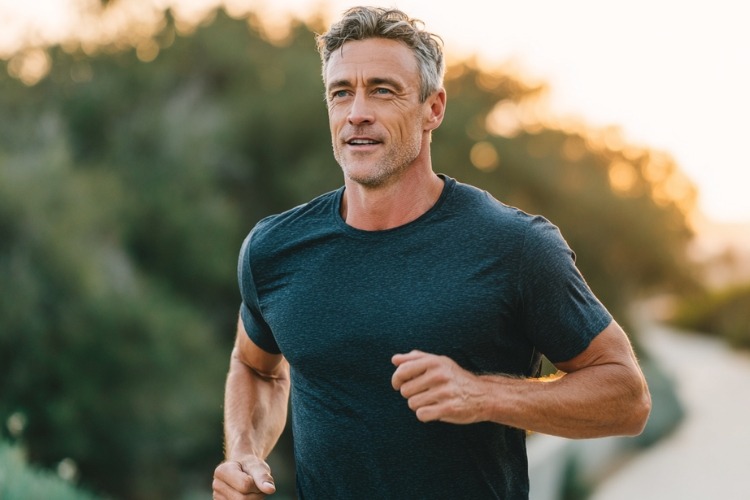
Contrary to what many might think, it’s possible to build muscle after age 60. The rules for gaining muscle mass may be slightly different for your sixth decade of life, but there's enough evidence that you can build muscle strength and size when you do the right thing. And when you do, you don't just look fit; you also enhance movement, reduce injury risk, maintain independence, and get healthier.
If you've never lifted weights before and want to learn how to build muscle after age 60, this guide will help you get started. You may also wonder how the declining testosterone levels at 60 will impact building muscle mass and what you could do about it. We'll get to that too.
Key Takeaways
Muscle loss after 60 has several contributing factors. Firstly, muscle-building hormones like testosterone and growth hormone drop steadily (Volpi et al., 2010) and may contribute to the changes in your muscle mass and body composition. However, hormones don't cause muscle loss on their own. Other factors like physical activity, nutrition, chronic illness, inflammation, and changes in muscle and nerve function all play a role, and modifying your activity level and nutrition can make a meaningful difference. Understanding the benefits of testosterone can also help explain the hormone's role in maintaining muscle mass, strength, energy, and overall health.
Furthermore, some degree of muscle loss is a common part of aging. Muscle mass decreases approximately 3–8% per decade after the age of 30, and this rate of decline is even higher after the age of 60 (Volpi et al., 2010). When age-related muscle loss crosses a certain threshold, it's called Sarcopenia (accelerated aging-related muscle loss), and it has a worldwide prevalence of 10% in adults over 60 (Shafiee et al., 2017). Sarcopenia doesn't only cause muscle loss; it's also associated with frailty, functional decline, an increased rate of falls, and mortality (Cruz-Jentoft & Sayer, 2019). Unsurprisingly, resistance training can help prevent sarcopenia in older adults when combined with a high-protein diet. (Damanti et al., 2019).
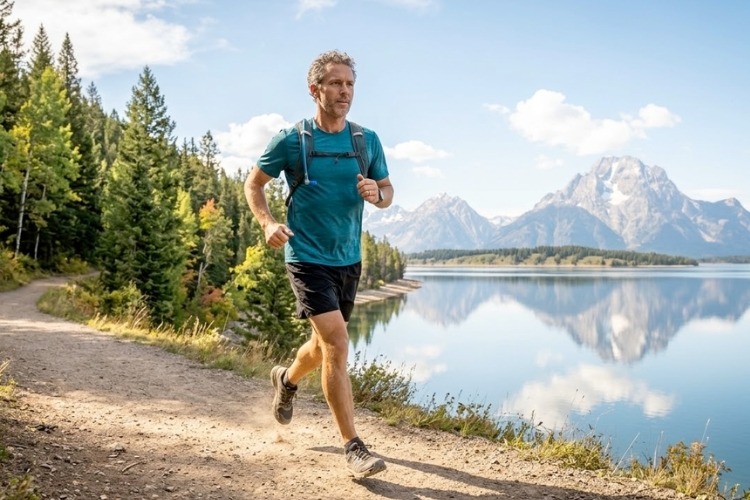
Yes. In this study, 12 weeks of progressive whole-body resistance exercise training led to increases in muscle mass, strength, and physical performance in the aging population, even in male and female adults older than 85 years (Maruzca-Nassr et al., 2023). Although you might not gain muscle at the same rate as someone younger, you can still make considerable progress in muscle building and physical function with consistent resistance training.
The first thing you’ll notice might not be increased muscle bulk in the mirror. You might just find that you're climbing stairs more easily or carrying something heavy without struggling as much as before. Those improvements in strength and function matter just as much as changes in muscle size.
Resistance training is the foundation of building and maintaining muscle at any age, including after 60. It follows the reasoning that when you challenge your muscles against resistance, you create mechanical tension that stimulates adaptations in the muscle, including growth and increased strength (Every et al., 2026). Lifting weights that are heavy enough to challenge your muscle fibers creates the necessary tension that helps them grow, although the muscle-building response may be somewhat smaller with advancing age.
If you’re new to resistance training, your ideal program will depend on your fitness level and goals, but these general guidelines can help you get started:
A well-rounded program can include movement patterns that train the major muscle groups. These are general examples, not a one-size-fits-all workout plan:
As you start, take time to learn the right movements. You don't need to train every day to make progress because you need adequate rest in between. Two or three strength-training sessions per week is a good place to start, and you can adjust your schedule as you get stronger.
As you get stronger, you’ll find that you have less difficulty lifting the same weights or doing the same exercises. At this point, you need to gradually increase the challenge; this process is called progressive overload. You don't need a gym to get started. Body-weight exercises, resistance bands, and lighter weights can all provide the resistance you need early on.
You can achieve progressive overload by adding a little more weight, doing more repetitions and sets, or doing more difficult variations of an exercise. However, you don’t have to push yourself to the limit every time you work out; rather, focus on steady progress. Progressive resistance training is an effective way for older adults to improve strength and physical function (Mende et. al., 2022)
When you train regularly, you break down muscle. To rebuild that muscle, increase your protein intake. An international team of experts appointed by the European Union Geriatric Medicine Society to create evidence-based rules for older adults’ protein intake advises that older adults (>65 years) aim for roughly 1.0 to 1.2 grams of protein per kilogram of body weight each day to maintain and regain lean body mass and function (Bauer et al., 2013). This translates to 0.45-0.55 grams of protein per pound of body weight. The group advises an even higher protein intake if you're actively exercising.
Good protein sources include animal-based foods (eggs, meat, fish, and chicken), dairy (Greek yogurt, cottage cheese), and some plant sources (tofu, tempeh, and legumes). Spread out the protein for convenience by aiming for roughly 25- 30 g of protein per meal for 3 main meals every day, which you can adjust to meet your daily protein target (Harris et al., 2025).
Unsurprisingly, combining resistance training with adequate protein produced better muscle gains than either one on its own (Voulgaridou et al., 2023).
You train to build muscle, but recovery is when the changes happen, and you need it for a sustainable routine:
A few tips can help:
Combining resistance training with adequate protein intake and recovery lays the foundation for building muscle above 60, but hormones like testosterone can affect this process. The non-specific symptoms of low testosterone levels or hypogonadism, like low energy, weaker workouts, more body fat, and lower mood (Bhasin et al., 2018), can overlap with what you might blame on aging. However, you don’t need to guess if low testosterone levels could explain why you're experiencing muscle loss. Rather, talk with a healthcare provider about checking your testosterone levels either with an at-home testosterone test or through an in-office blood test, and reviewing the results together. Clinically low testosterone may be associated with hypogonadism, which requires proper evaluation rather than relying on symptoms alone.
If your labs and symptoms do point to low testosterone, provider-led TRT at home is one supervised option worth discussing. In the meantime, it helps to learn more about the symptoms of low testosterone so you can catch an issue early.
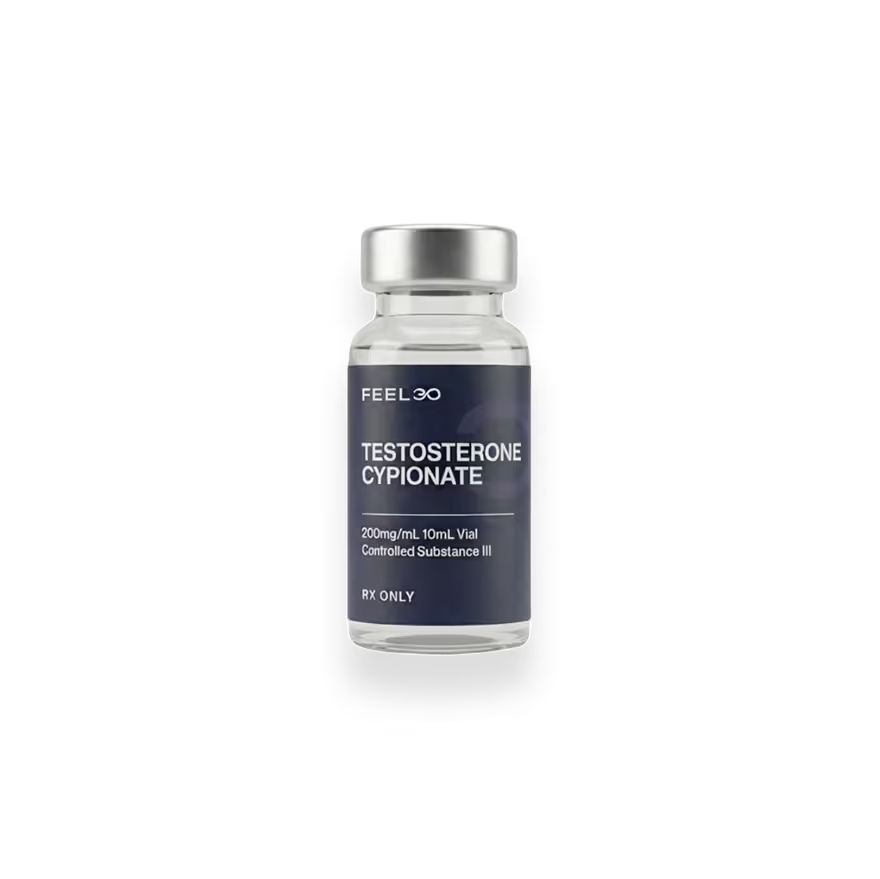
Supports energy, focus, sexual health, and overall wellbeing
Shop NowIt’s important to know that healthcare providers individualize the decision to treat consistently low testosterone levels, particularly in older men, after assessing their symptoms, the potential benefits, and risks. The TRAVERSE trial found that testosterone therapy didn’t increase the risk of major cardiovascular events when compared with placebo in a select group of men ages 45-80 with either cardiovascular disease or at high risk of the condition. However, some other adverse events occurred more frequently in the testosterone group, and this highlights the importance of a discussion about the potential benefits and risks of the treatment with a healthcare provide (Lincoff et al., 2023). Understanding what to realistically expect before and after TRT can also help put potential changes in muscle mass, energy, and body composition into perspective.
Interestingly, there are other ways to raise testosterone naturally, and working out raises your testosterone, but neither is a reliable way to substantially increase baseline testosterone levels.
Remember, hormones are only part of the picture, and after 60, initial progress might not always mean adding more muscle. Maintaining lean mass also matters for healthy aging. Having a low lean mass is associated with a 30% higher risk of death from any cause than those with a normal lean mass (Li et al., 2025).
A few tips can help you train safely. First, a gradual warm-up can increase body temperature, prepare your muscles and joints for activity, and help you transition safely into your workout. Before adding weight, practice each exercise with little or no resistance to learn the correct movement pattern, because good technique and appropriately selected resistance are important for safe, effective training.
Furthermore, starting out with a personal trainer who works with older adults can help you build your technique safely. A general safety rule is to stop any movement that causes sharp joint pain rather than pushing through it.
Your routine should also include balance and mobility exercises to help reduce injury risk and maintain independence (National Institute of Aging, 2025).
If you have a chronic health condition or any concerns about your ability to exercise safely, see your healthcare provider before starting a new resistance-training program.
You may notice improvements in strength before noticeable changes in muscle size occur. Your nutrition, starting fitness level, training routine, consistency, and overall health can all influence how quickly you see results.
No. In a small study of healthy adults, participants over 85 improved their muscle strength and physical performance after 12 weeks of resistance training, with improvements similar to those seen in adults aged 65 to 75 (Maruzca-Nassr et al., 2023). You can start where you are and slowly build from there.
You can aim for 1.0 to 1.2 grams of protein per kilogram of body weight a day, spread across meals (Bauer et al., 2013). Ask your provider about appropriate protein intake if you have kidney disease or another chronic condition.
As long as you keep making the work harder over time through progressive overload, bands, bodyweight, and machines all build muscle. Free weights and resistance bands become useful when bodyweight exercises get too easy to challenge you.
Yes, but not instead of lifting. Aerobic activity supports heart health and aerobic fitness, but keep cardio and strength training as separate priorities so your walking doesn't crowd out your lifting.
No. Supplements do not replace training and adequate protein intake, but they can help you e.g Creatine helps strength when paired with resistance training (Forbes et al, 2021). Products in the market to boost testosterone or increase muscle mass may not have strong evidence supporting their claims, so it’s important to look for products that have clinical research backing them.
Muscle loss speeds up after 60 but you can build muscle through resistance training with progressive overload, proper nutrition, adequate recovery and consistency. If you’re doing everything right yet struggling to build muscle, hormones like testosterone may be implicated. However, talk with your provider about testing rather than guessing.
Bauer, J., Biolo, G., Cederholm, T., Cesari, M., Cruz-Jentoft, A. J., Morley, J. E., Phillips, S., Sieber, C., Stehle, P., Teta, D., Visvanathan, R., Volpi, E., & Boirie, Y. (2013). Evidence-based recommendations for optimal dietary protein intake in older people: A position paper from the PROT-AGE Study Group. Journal of the American Medical Directors Association, 14(8), 542-559.
Bhasin, S., Brito, J. P., Cunningham, G. R., Hayes, F. J., Hodis, H. N., Matsumoto, A. M., Snyder, P. J., Swerdloff, R. S., Wu, F. C., & Yialamas, M. A. (2018). Testosterone therapy in men with hypogonadism: An Endocrine Society clinical practice guideline. The Journal of Clinical Endocrinology & Metabolism, 103(5), 1715-1744.
Cruz-Jentoft, A. J., & Sayer, A. A. (2019). Sarcopenia. The Lancet, 393(10191), 2636-2646.
Damanti, S., Azzolino, D., Roncaglione, C., Arosio, B., Rossi, P., & Cesari, M. (2019). Efficacy of Nutritional Interventions as Stand-Alone or Synergistic Treatments with Exercise for the Management of Sarcopenia. Nutrients, 11(9), 1991.
Derrick W. Van Every, Matthew J. Lees, Brandan Wilson, Jeff Nippard, Stuart M. Phillips, Load-induced human skeletal muscle hypertrophy: Mechanisms, myths, and misconceptions, Journal of Sport and Health Science, Volume 15, 2026, 101104, ISSN 2095-2546.
E. Mende, N. Moeinnia, N. Schaller, M. Weiß, B. Haller, M. Halle, M. Siegrist (2022). Progressive machine-based resistance training for prevention and treatment of sarcopenia in the oldest old: A systematic review and meta-analysis. Experimental Gerontology. Volume 163. 111767. ISSN 0531-5565
Forbes, S. C., Candow, D. G., Ostojic, S. M., Roberts, M. D., & Chilibeck, P. D. (2021). Meta-Analysis Examining the Importance of Creatine Ingestion Strategies on Lean Tissue Mass and Strength in Older Adults. Nutrients, 13(6), 1912.
Harris, S., DePalma, J., & Barkoukis, H. (2025). Protein and Aging: Practicalities and Practice. Nutrients, 17(15), 2461.
Lamon, S., Morabito, A., Arentson-Lantz, E., Knowles, O., Vincent, G. E., Condo, D., Alexander, S. E., Garnham, A., Paddon-Jones, D., & Aisbett, B. (2021). The effect of acute sleep deprivation on skeletal muscle protein synthesis and the hormonal environment. Physiological Reports, 9(1), e14660.
Li J, Liu X, Yang Q, Huang W, Nie Z and Wang Y (2025) Low lean mass and all-cause mortality risk in the middle-aged and older population: a dose-response meta-analysis of prospective cohort studies. Front. Med. 12:1589888.
Lincoff, A. M., Bhasin, S., Flevaris, P., Mitchell, L. M., Basaria, S., Boden, W. E., Cunningham, G. R., Granger, C. B., Khera, M., Thompson, I. M., Jr., Wang, Q., Wolski, K., Davey, D., Kalahasti, V., Khan, N., Miller, M. G., Snabes, C. M., Chan, A., Dubcenco, E., Nissen, S. E. (2023). Cardiovascular safety of testosterone-replacement therapy. New England Journal of Medicine, 389(2), 107–117.
Marzuca-Nassr, Gabriel & Alegría-Molina, Andrea & San Martín-Calisto, Yuri & Artigas-Arias, Macarena & Huard, Nolberto & Sapunar, Jorge & Salazar, Luis & Verdijk, Lex & van Loon, Luc. (2024). Muscle Mass and Strength Gains Following Resistance Exercise Training in Older Adults 65-75 Years and Older Adults Above 85 Years. International Journal of Sport Nutrition and Exercise Metabolism. 34. 11-19.
National Institute on Aging. (2025, January 14). Three types of exercise can improve your health and physical ability. U.S. Department of Health and Human Services.
Shafiee, G., Keshtkar, A., Soltani, A., Ahadi, Z., Larijani, B., & Heshmat, R. (2017). Prevalence of sarcopenia in the world: a systematic review and meta- analysis of general population studies. Journal of Diabetes and Metabolic Disorders, 16, 21.
Thiberiu Banica, Charlotte Verroken, Tim Reyns, Ahmed Mahmoud, Guy T’Sjoen, Tom Fiers, Jean-Marc Kaufman, Bruno Lapauw, Early Decline of Androgen Levels in Healthy Adult Men: An Effect of Aging Per Se? A Prospective Cohort Study, The Journal of Clinical Endocrinology & Metabolism, Volume 106, Issue 4, April 2021, Pages e1074–e1083,
Treuth MS, Ryan AS, Pratley RE, et al. Effects of strength training on total and regional body composition in older men. 1994 Aug 1;77(2):614-620.
Volpi, E., Nazemi, R., & Fujita, S. (2004). Muscle tissue changes with aging. Current Opinion in Clinical Nutrition and Metabolic Care, 7(4), 405–410.
Voulgaridou, G., Papadopoulou, S. D., Spanoudaki, M., Kondyli, F. S., Alexandropoulou, I., Michailidou, S., Zarogoulidis, P., Matthaios, D., Giannakou, K., & Papadopoulou, S. K. (2023). Increasing muscle mass in older adults: The role of dietary protein and resistance exercise. Foods, 12(6), 1198.
Yabluchanskiy, A., & Tsitouras, P. D. (2019). Is Testosterone Replacement Therapy in Older Men Effective and Safe?. Drugs & aging, 36(11), 981–989.
Take the first step toward renewed energy and confidence with Feel30’s expert care.



4.9 out of 5 · 2,400+ reviews


Always Tired, Gaining Weight? Low T Was the Real Reason
Is Low T Hurting Your Relationship?
This gaming laptop is a powerhouse, equipped with the latest graphics card and a high-refresh-rate display.
Jane Smith
Feel30 has completely changed the game for me. I feel more energized, focused, and confident like I did years ago.
Emily Johnson
This smartphone offers an exceptional camera experience, with stunning low-light performance and vibrant colors.
John Doe
What are you waiting for?
Take the first step toward renewed energy and confidence with Feel30’s expert care.


Feel 30 again with physician-supervised treatment that restores the energy, confidence, and performance you remember. No hassle or hidden fees.