Stay informed with expert insights on testosterone therapy, men's health, and performance optimization.

As you grow older, the same training, nutrition, and discipline no longer produce the same results. Lean muscle becomes harder to maintain, recovery slows, and abdominal fat may become increasingly resistant to diet and exercise. That shift can happen for several reasons, including changes in sleep, stress, nutrition, metabolic health, and hormone changes.
Tesamorelin and sermorelin both affect the body's production of growth hormone, but they're not the same. Tesamorelin is best known for its FDA-approved use in reducing excess abdominal fat in adults with HIV-associated lipodystrophy. This condition can cause abnormal changes in body fat distribution, including excess fat buildup in the abdomen. Sermorelin is a synthetic peptide that acts like growth hormone-releasing hormone (GHRH), the natural signal that tells the pituitary gland to release growth hormone.
This guide explains the differences between tesamorelin and sermorelin, including how they work, what the clinical evidence shows, and important safety considerations.
Note: It's important to distinguish between biological mechanisms and clinical outcomes. While growth hormone influences many functions throughout the body, the presence of a biologic pathway does not necessarily mean a therapy will produce a meaningful clinical benefit in every individual or population. Clinical studies help determine whether those physiologic effects result in meaningful patient outcomes.
Tesamorelin and sermorelin are often mentioned together because their names sound similar and they both relate to growth hormone (GH) production. However, they're distinct peptides with different clinical backgrounds, research areas, and potential uses.
Sermorelin is a synthetic version of growth hormone-releasing hormone (GHRH). It works by signaling the pituitary gland to release more of the body's own growth hormone. It was originally developed to evaluate or treat growth hormone deficiency in pediatric settings. The branded product Geref was later withdrawn from the market. The Food and Drug Administration (FDA) confirmed that it was not withdrawn for safety or effectiveness reasons.
In wellness settings, sermorelin is often discussed because it may support natural hormone rhythm by signaling the pituitary gland to release GH in pulses. This use is off-label and requires medical supervision.
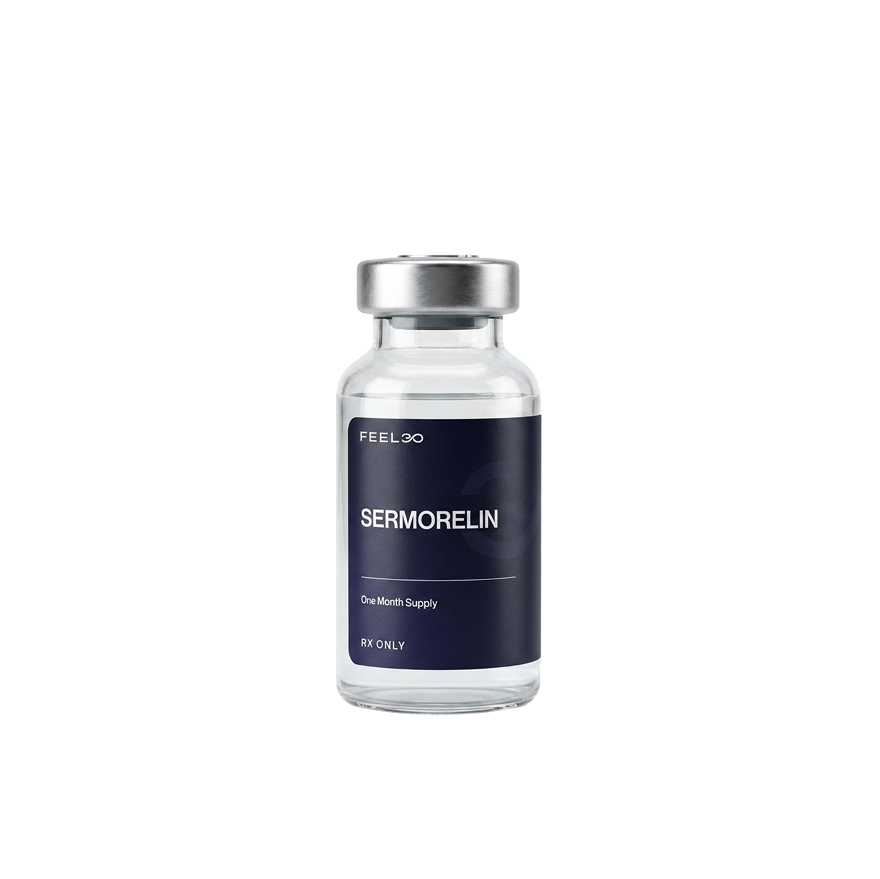
Helps support lean muscle and fat metabolism
Shop NowTesamorelin is also a synthetic peptide that helps signal the body to release growth hormone. It was developed from growth hormone-releasing hormone (GHRH), but its structure was modified so it remains active in the body for longer.
Tesamorelin is best known for its research and FDA-approved use in reducing excess abdominal fat in adults with HIV-associated lipodystrophy. It's not approved as a general weight loss treatment, and its effects may vary depending on the individual and clinical context.
GHRH is the natural signal your body uses to tell the pituitary gland to release growth hormone. Think of the pituitary gland as a control center. It doesn’t work in isolation. It responds to signals.
When GHRH binds to receptors in the pituitary gland, it signals the body to release growth hormone. Growth hormone plays a role in body composition, fat metabolism, recovery, and tissue maintenance. However, hormones work best as part of a balanced system, and more is not necessarily better.
The main difference between tesamorelin and sermorelin is how each is typically discussed clinically.
Tesamorelin has stronger clinical evidence for visceral fat reduction in HIV-associated lipodystrophy. Sermorelin is more often discussed as a gradual growth hormone support option, though evidence for broad anti-aging or muscle-building claims is less conclusive.
Sermorelin and tesamorelin both work by signaling the body to release its own growth hormone rather than replacing growth hormone directly. However, their structural differences may influence how long they remain active in the body.
Tesamorelin’s modified structure allows it to remain active longer. Differences in duration of action can influence how these therapies are studied and prescribed.
Important: Neither tesamorelin nor sermorelin should be self-directed. Treatment decisions should be based on medical history, labs, risk factors, and licensed clinical oversight.

Here’s the straight answer: neither is a direct muscle-building medication in the way testosterone replacement therapy can be for men with clinically confirmed testosterone deficiency.
That matters because many men searching for “tesamorelin or sermorelin for muscle growth” are really asking, “Which one will help me get my edge back?”
Let's start by understanding GH's role in muscle growth.
Growth hormone plays a role in several processes related to body composition. According to Moller and Jorgensen in Endocrine Reviews, it influences protein metabolism, fat metabolism, and the production of insulin-like growth factor-1 (IGF-1), a hormone involved in tissue growth and maintenance.
Because of these effects, growth hormone is often discussed in relation to muscle preservation, recovery, and overall body composition. However, growth hormone is only one piece of the puzzle.
Muscle development is influenced by many factors, including:
Lifestyle factors, overall health, and other hormonal systems all play important roles. For that reason, peptide therapy should be viewed as one potential component of a broader health and performance strategy rather than a standalone solution.
Because sermorelin signals the pituitary gland to release the body's own growth hormone, it's often discussed in relation to body composition, recovery, and muscle preservation in appropriately evaluated patients.
Growth hormone and insulin-like growth factor-1 (IGF-1) play important roles in protein metabolism and tissue maintenance. Moller and Jorgensen explain that growth hormone influences protein metabolism and other physiological processes involved in maintaining lean tissue.
However, the body's response to sermorelin can vary based on age, overall health, hormone levels, nutrition, training habits, and other individual factors.
While sermorelin is sometimes explored as part of a broader medically supervised hormone therapy, evidence supporting substantial increases in muscle mass among otherwise healthy adults remains limited. For this reason, sermorelin is generally discussed in the context of overall body composition rather than as a direct muscle-building therapy.
Tesamorelin is better known for targeted visceral fat reduction than direct lean muscle gain.
Clinical studies in adults with HIV-associated lipodystrophy have shown reductions in visceral fat, with research reviews reporting decreases of approximately 15% after 26 weeks of treatment and 18% after 52 weeks (Stanley & Grinspoon, 2015).
Reductions in visceral fat may result in changes in waist circumference and overall body composition. Less deep abdominal fat may make existing muscle more visible. But that is not the same as directly building new lean muscle mass.
While tesamorelin may influence body composition, current evidence does not support viewing it as a direct muscle-building therapy. Muscle growth remains dependent on factors such as resistance training, nutrition, recovery, and overall hormonal health.
Important: Tesamorelin is FDA-approved for reducing excess abdominal fat in adults with HIV-associated lipodystrophy. It’s not approved as a general weight loss or muscle-building treatment.
For fat loss and body composition, tesamorelin has the clearer evidence base for visceral fat specifically. That doesn’t mean it’s a general weight loss shortcut. It means the clinical conversation is more specific.
Subcutaneous fat sits under the skin. It’s the fat you can pinch. Visceral fat sits deeper, around the organs. This is the deep abdominal fat linked with metabolic health concerns, including insulin resistance and cardiovascular disease risk.
That’s why visceral abdominal fat gets so much attention.
Researchers have studied tesamorelin for reducing visceral adipose tissue in adults with HIV-associated lipodystrophy. In a placebo-controlled clinical trial reported in the JAIDS Journal of Acquired Immune Deficiency Syndromes, Falutz et al. (2010) found that participants receiving tesamorelin experienced significantly greater reductions in visceral fat than those receiving a placebo.
Other key findings include:
Note: While the FDA-approved label states that tesamorelin is indicated for reducing excess abdominal fat in adults with HIV-associated lipodystrophy, it also notes that:
That distinction matters. While tesamorelin has demonstrated meaningful effects on visceral fat in a defined clinical population, it should not be viewed as a standard fat-loss medication for everyone.
Because sermorelin signals the body to release its own growth hormone, it is sometimes discussed in relation to improving body composition and fat metabolism. Growth hormone, according to Moller & Jorgensen, plays a role in how the body utilizes and stores energy, including the breakdown and use of fat for fuel.
However, unlike tesamorelin, sermorelin has not been specifically studied or approved for targeted visceral fat loss. The evidence supporting sermorelin specifically for fat loss or targeted visceral fat reduction remains limited. Any changes in body composition are generally considered gradual and may vary based on factors such as:
For this reason, sermorelin should not be viewed as a direct belly-fat treatment. Instead, it may be discussed as one component of a broader evaluation of hormone health, body composition, and metabolic health.
Important: Evidence supporting sermorelin specifically for fat loss remains limited, and results can vary significantly between individuals.
Tesamorelin and sermorelin are both discussed in relation to growth hormone levels, which may affect:
These are possible areas of interest, not guaranteed outcomes.
Side effects can vary between tesamorelin and sermorelin and may depend on factors such as the dose, duration of treatment, and an individual's overall health. Because both therapies affect growth hormone signaling, some effects may overlap, while others may differ based on the specific peptide being used.
Potential side effects may include:
People with certain medical conditions may not be appropriate candidates. A full evaluation is needed before any treatment is considered.
This therapy should always be guided by a licensed healthcare provider and appropriately monitored. A provider may review:
The smarter question isn’t always “Which peptide is better?” It’s “What problem are we actually trying to solve?”
Sermorelin may be discussed in a medical setting when the focus is on supporting the body's natural growth hormone release as part of a broader evaluation of hormone health, recovery, sleep quality, or body composition. It may be relevant when long-term hormone support is being explored, rather than when targeted visceral fat reduction is being pursued.
Tesamorelin may be discussed when visceral fat reduction is a primary clinical concern, particularly within the context of its FDA-approved indication for adults with HIV-associated lipodystrophy. Decisions regarding treatment should be based on an individual's medical history, clinical findings, and treatment goals.
Rather than focusing solely on which peptide may be appropriate, healthcare providers typically begin by identifying the underlying factors contributing to symptoms or body composition changes. This may include evaluating sleep, nutrition, physical activity, metabolic health, hormone levels, medications, and overall medical history.
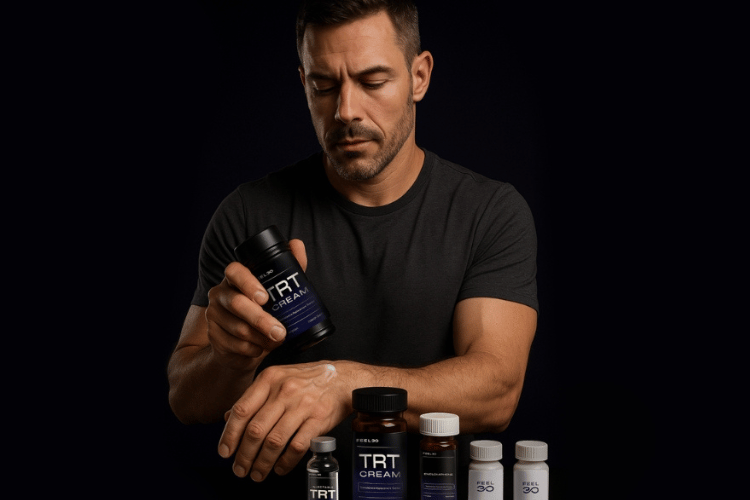
Healthier body composition is influenced by more than growth hormone alone. Testosterone also plays an important role in muscle mass, fat distribution, strength, recovery, and overall physical performance.
Because many of the concerns that lead people to explore peptide therapy can also be associated with low testosterone, healthcare providers often take a broader view of hormone health rather than focusing on a single pathway.
For individuals looking to better understand their hormone health, Feel30 offers convenient at-home testosterone testing with concierge nurse visits, making it easier to begin the evaluation process.
A comprehensive evaluation may include reviewing:
In some cases, physician-guided testosterone therapies may be part of the discussion alongside other hormone optimization strategies. Options may include Testosterone Cypionate or Enclomiphene when clinically appropriate and prescribed by a licensed healthcare provider.
For men experiencing sexual health concerns, therapies such as Sildenafil or Tadalafil may also be discussed. However, those treatments address different physiological pathways and should be evaluated separately based on an individual's symptoms, health history, and treatment goals.
Learn more about testosterone in our guide: Understanding Low Testosterone Symptoms
Neither is a direct muscle-building therapy. Body composition changes depend on factors such as training, nutrition, recovery, overall health, and, when clinically appropriate, treatment of underlying hormone deficiencies.
Learn more about sermorelin in our guide: What Is Sermorelin? Uses, Safety, Benefits, and What to Know
Direct comparisons across studies are limited, making it difficult to determine whether one consistently increases growth hormone levels more than the other in all populations.
Tesamorelin is not primarily a muscle-building medication. Clinical evidence about tesamorelin by Stanley & Grinspoon notes that it reduces visceral fat in HIV patients with lipodystrophy. Any improvement in muscle visibility may come from changes in body composition rather than direct muscle gain.
Sermorelin influences growth hormone signaling, which plays a role in fat metabolism. However, evidence supporting sermorelin as a targeted fat-loss therapy remains limited.
Peptide therapy and TRT affect different hormonal pathways. They're not interchangeable, and they should not be combined without medical oversight. Any discussion should be based on lab results, symptoms, health history, and ongoing supervision.
Timelines vary. Body composition changes depend on the therapy, baseline health, training, nutrition, sleep, and metabolic function. Be cautious of any claim that promises a specific timeline.
Coverage varies and often depends on the diagnosis, medical necessity, plan rules, and whether the use aligns with FDA-approved indications. Patients should verify coverage directly with their insurance provider and prescribing clinician.
Some men may discuss growth hormone peptide therapy as part of a broader hormone and metabolic evaluation. Age alone does not determine candidacy. A provider should review labs, health history, goals, and risk factors before treatment is considered.
Some patients report improved sleep quality with therapies that affect growth hormone signaling. However, clinical evidence remains limited, and sleep outcomes may vary between individuals. Sleep issues can also stem from stress, sleep apnea, low testosterone, thyroid problems, alcohol use, medications, or poor recovery. Evaluation comes first.
Tesamorelin is FDA-approved for reducing stubborn abdominal fat in adults with HIV-associated lipodystrophy. Sermorelin previously had FDA-approved formulations available in the United States. While those products are no longer commercially marketed, the FDA did not determine they were withdrawn for reasons related to safety or efficacy. Patients considering sermorelin should discuss its regulatory status, potential benefits, risks, and appropriateness with a qualified healthcare provider.
Conclusion
Tesamorelin has stronger clinical evidence for targeted visceral fat reduction in adults with HIV-associated lipodystrophy. Sermorelin is more often discussed for gradual growth hormone support and broader wellness conversations. It's important to note that biologic mechanisms and clinical outcomes are not always the same, and the strength of evidence differs depending on the outcome being evaluated. Whether a therapy is appropriate should be determined through an individualized discussion with a qualified healthcare provider.
For muscle growth, neither peptide replaces the fundamentals: training, protein, recovery, sleep, metabolic health, and appropriate hormone evaluation. If testosterone is part of the issue, peptide therapy alone may miss the mark.
Feel30 helps men move past guesswork with physician-guided hormone optimization and convenient at-home testosterone testing. Whether you're exploring peptide therapy, evaluating testosterone levels, or simply looking for answers, better decisions start with better data.
References
Take the first step toward renewed energy and confidence with Feel30’s expert care.




4.9 out of 5 · 2,400+ reviews


Always Tired, Gaining Weight? Low T Was the Real Reason
Is Low T Hurting Your Relationship?
This gaming laptop is a powerhouse, equipped with the latest graphics card and a high-refresh-rate display.
Jane Smith
Feel30 has completely changed the game for me. I feel more energized, focused, and confident like I did years ago.
Emily Johnson
This smartphone offers an exceptional camera experience, with stunning low-light performance and vibrant colors.
John Doe
What are you waiting for?
Take the first step toward renewed energy and confidence with Feel30’s expert care.


Feel 30 again with physician-supervised treatment that restores the energy, confidence, and performance you remember. No hassle or hidden fees.