Stay informed with expert insights on testosterone therapy, men's health, and performance optimization.

Sermorelin and NAD+ come up a lot in conversations about performance and aging, but neither is approved by the Food and Drug Administration (FDA) for general use. Yes, they’re related, but where do their differences actually come from?
In this article, we’ll compare sermorelin vs NAD+, and get down to the science of how they work and which therapy may fit your symptoms and goals. We’ll also see whether using them together makes sense for where you are right now.
Important: NAD+ and sermorelin therapies must be guided by a licensed healthcare professional with appropriate evaluation and monitoring.
Sermorelin is a synthetic peptide. Peptides are short chains of amino acids that act like signals within your body. Sermorelin, in this case, is a short chain of 29 amino acids, and it signals your body to produce its own growth hormone naturally.
Here’s more on that.
Helps support lean muscle and fat metabolism
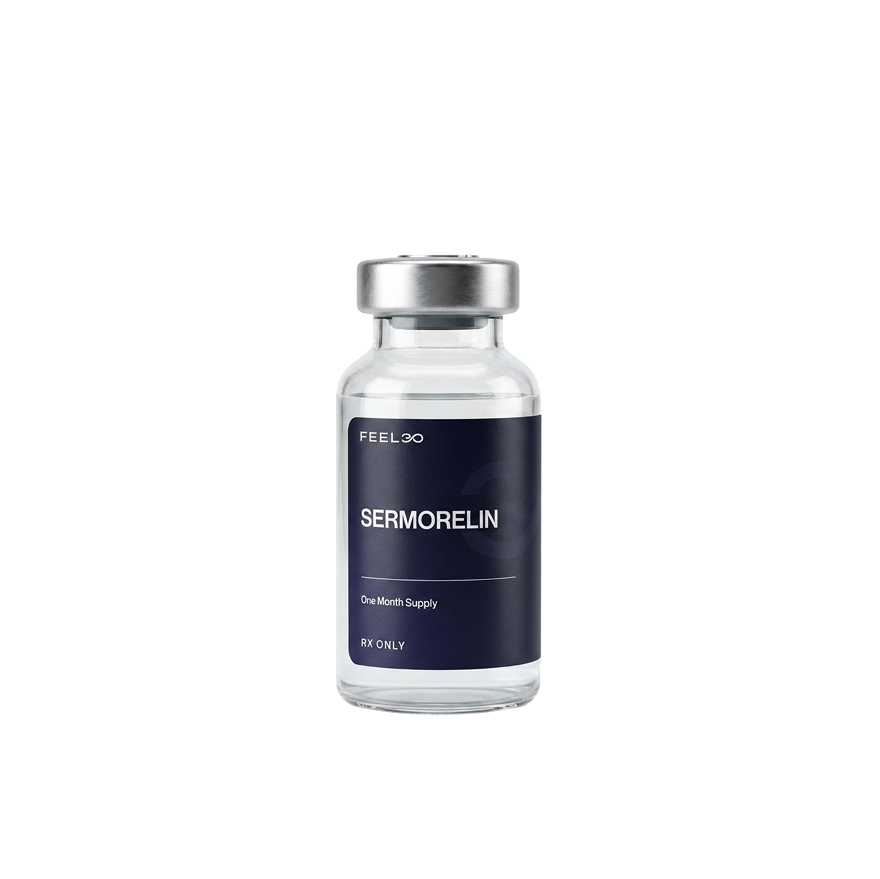
Shop NowThe pituitary gland in our brains is the “factory and storage facility” for growth hormone. So, in moments where your body needs growth hormone, it sends a signal called growth hormone-releasing hormone (GHRH) to your pituitary gland. Sermorelin is the synthetic version of GHRH, and it mimics that signal, triggering your pituitary gland to release growth hormone naturally into your bloodstream.
Note: Growth hormone itself also has a synthetic version called human growth hormone (HGH). Unlike sermorelin, HGH introduces growth hormone directly into your bloodstream, while sermorelin triggers your body to produce it naturally. This is why many researchers call sermorelin a natural growth hormone secretagogue. That simply means a compound that encourages your body to release something it also produces.
In a 2021 review by Donato et al., the researchers explain that growth hormone has a role in tissue repair, metabolism, recovery, and even body composition. As such, healthcare professionals may consider sermorelin therapy when they evaluate you and find that growth hormone signaling is part of the problem. They may discuss sermorelin in the context of:
As we age, our levels of growth hormone tend to change, and most people notice these effects more clearly after turning 35 or 40. However, that doesn’t mean that sermorelin is outright the right fit. Evaluation by a licensed provider will help you truly know whether sermorelin can address your health goals.

Now, NAD+ works at a different level. As sermorelin does the signaling of growth hormone, NAD+ helps your cells produce energy.
Let's look at that in more detail.
NAD+ stands for Nicotinamide Adenine Dinucleotide. This is a coenzyme, an important helper molecule found inside every living cell.
NAD+ helps cells convert the nutrients from your food into Adenosine Triphosphate (ATP), the energy your body uses to function. This means when NAD+ is low, cells have a harder time producing energy efficiently; however, that doesn’t imply that every case of fatigue is a problem with NAD+.
A notable 2020 review published in Nature Reviews Molecular Cell Biology notes that NAD+ is involved in many bodily processes such as metabolism, DNA repair, immune system function, and even how the body manages old or damaged cells. A lot of this evidence comes from laboratory and animal research, and some observational studies in humans.
The above review revealed three important things:
The providers who discuss NAD+ typically do so in the context of broader conversations about energy and overall metabolic health. NAD+ is not always considered as a direct treatment because symptoms such as low energy, difficulty concentrating, reduced recovery, or changes in metabolism are nonspecific and can have many different underlying causes. These may include sleep disorders, thyroid dysfunction, hormonal imbalances, nutritional deficiencies, chronic stress, medication effects, or overtraining, among others.
Low energy, brain fog, poor recovery, stubborn weight gain, and reduced muscle tone can overlap across several health issues. The goal is not to chase the newest therapy, but to match the right intervention to the right problem.
The real question is not which therapy sounds more impressive. It's which one fits your current symptoms, labs, and goals. A licensed healthcare provider can help determine whether testosterone therapy, further hormone testing, lifestyle changes, or another medical approach is most appropriate.This will depend on which one fits your current symptoms, labs, and goals. A licensed healthcare provider should evaluate you and decide whether sermorelin, NAD+, further hormone testing, lifestyle changes, or another medical approach is most appropriate.
Sermorelin may be worth discussing with a licensed provider if your main concerns look more recovery or hormone-related. That doesn’t mean that these symptoms automatically point to sermorelin. They simply suggest that a broader hormone evaluation may be useful.
That may include:
NAD+ may be worth discussing with a licensed provider if your symptoms seem more connected to energy, mental clarity, or metabolic efficiency.
And just as in the case of sermorelin therapy, that doesn’t mean NAD+ is automatically the problem; instead it means these symptoms warrant review as part of a broader evaluation. For instance, in the case where:
Some providers may discuss NAD+ and sermorelin as part of a broader review of metabolic health and hormone regulation. This does not mean these therapies are routinely used together, but rather that multiple biological systems may be considered when evaluating symptoms.
Because NAD+ is involved in cellular energy metabolism and sermorelin influences growth hormone signaling, they represent different areas of physiology that may be reviewed in a comprehensive assessment when appropriate.
A healthcare provider may explore multiple contributing factors when symptoms are persistent or involve several areas of health, such as:
These symptoms are non-specific and can be influenced by many factors, including sleep habits, stress, nutrition, thyroid function, testosterone levels, medications, and overall health status.
Important: NAD+ and sermorelin are not established combination therapies, and they should not be self-directed or combined without medical oversight. Any consideration of treatment should be based on a full clinical evaluation, appropriate laboratory testing, and ongoing supervision by a licensed healthcare provider.
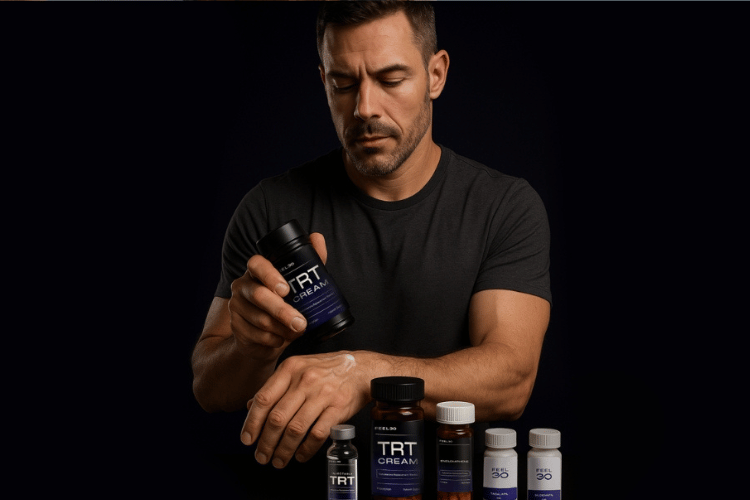
For some men, neither sermorelin nor NAD+ addresses the main issue alone. Growth hormone, cellular energy, and testosterone can all influence how a man feels, performs, and recovers. The hardest part is that the symptoms can overlap.
According to Tsujimura’s study on the relationship between testosterone deficiency and men's health, low testosterone may also contribute to:
You’ll notice that many of the above symptoms sound similar to the issues we’ve already discussed with sermorelin therapy and NAD+. That overlap makes self-diagnosis unreliable. That's why proper testing is absolutely important.
Learn more about the difference in our guide: Sermorelin vs Testosterone
At Feel30, care starts with evaluation. Labs, symptoms, goals, and medical history help guide whether testosterone replacement therapy, sermorelin, NAD+, or another option may be appropriate. Our concierge service makes that process more convenient, including at-home testosterone testing for wellness assessments.
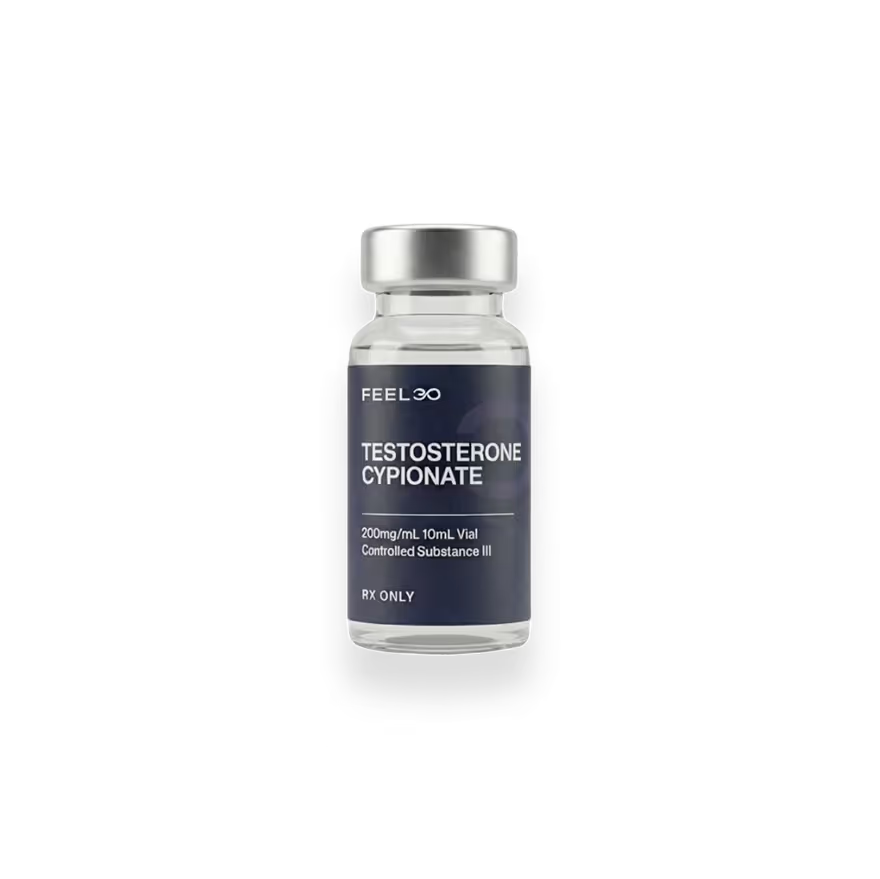
For men who need direct testosterone support, a provider may discuss options such as Testosterone Cypionate. For others who want to support their own testosterone production, Enclomiphene may be part of the conversation.
Important: Sermorelin, NAD+, and testosterone therapy are not interchangeable. They work through different systems. The right protocol depends on what your labs show, what your symptoms suggest, and what your goals actually require.
Supports energy, focus, sexual health, and overall wellbeing
Shop NowSome medically supervised protocols may include both Sermorelin and NAD+ because they work through different systems. Sermorelin relates more to growth hormone signaling, while NAD+ relates more to cellular energy production. Never use them together without medical guidance. A provider should review your labs, symptoms, health history, and goals before customizing a plan of treatment for you.
Sermorelin is different from synthetic HGH. It signals your body to release growth hormone, while synthetic HGH introduces growth hormone directly. The better option will depend on your medical history, labs, symptoms, risk factors, and the evaluation from your provider.
Read more on this in our Sermorelin vs. HGH guide.
A licensed provider may administer NAD+ through IV infusion or injection, but this will depend on the clinical setting and provider protocol. IV therapy is usually performed in a clinic or supervised environment. Injectable protocols, when used, should also be guided by a licensed provider. Don’t engage in self-directed use and avoid unverified sources.
Sermorelin results vary. Changes in body composition, when they happen, will depend on the full plan of treatment, and that includes training, nutrition, sleep, and baseline hormone health. A provider should monitor your progress and adjust care when appropriate.
Some patients may experience nausea, flushing, fatigue, headache, or discomfort during or after treatment. Please discuss any serious or unusual symptoms with a healthcare provider.
NAD+ doesn't directly replace testosterone or function like TRT. It may support cellular processes that relate to energy, metabolism, and overall health, but men with clinically low testosterone usually need a direct evaluation and prescription to raise testosterone levels.
Start with evaluation. Look at your levels of testosterone, growth hormone-related markers, metabolic markers, symptoms, medication history, and lifestyle factors. From there, a licensed provider will help differentiate whether sermorelin, NAD+, testosterone optimization, or another plan fits your goals.
These therapies may not be appropriate for everyone. People with complex medication histories, active cancer concerns, uncontrolled metabolic issues, or unexplained symptoms need careful evaluation before starting.
Compounded medications are regulated by state pharmacy boards and may be produced in FDA-inspected facilities, but they are not FDA-approved and do not undergo the same premarket review as FDA-approved drugs. If a compounded medication is used, it should come from a reputable pharmacy and be prescribed as part of a medically supervised plan.
Sermorelin and NAD+ both influence the aging process, but they work through different pathways. Sermorelin is a synthetic peptide that mimics GHRH and signals natural growth hormone release, while NAD+ helps in the production of cellular energy and repair processes.
The right therapy between NAD+ and sermorelin will depend on your symptoms, goals, baseline labs, and medical history. If you’re dealing with low energy, brain fog, slower recovery, changes in muscle tone, or changes in your body composition, start with a real evaluation. From there, a licensed provider can help build a plan for your health goals.
Take the first step toward renewed energy and confidence with Feel30’s expert care.




4.9 out of 5 · 2,400+ reviews


Always Tired, Gaining Weight? Low T Was the Real Reason
Is Low T Hurting Your Relationship?
This gaming laptop is a powerhouse, equipped with the latest graphics card and a high-refresh-rate display.
Jane Smith
Feel30 has completely changed the game for me. I feel more energized, focused, and confident like I did years ago.
Emily Johnson
This smartphone offers an exceptional camera experience, with stunning low-light performance and vibrant colors.
John Doe
What are you waiting for?
Take the first step toward renewed energy and confidence with Feel30’s expert care.


Feel 30 again with physician-supervised treatment that restores the energy, confidence, and performance you remember. No hassle or hidden fees.