Stay informed with expert insights on testosterone therapy, men's health, and performance optimization.

Although there isn't a proven way to reverse aging in humans yet, current research suggests that lifestyle choices, such as regular physical activity, a healthy diet, sufficient sleep, and maintaining a healthy weight, are associated with healthier aging and may slow aging (National Institutes of Health, 2024).
This guide discusses what science says about reversing aging and offers evidence-backed strategies that may slow it.
Some studies are investigating whether certain aspects of aging can be reversed or slowed. In one study, scientists recently injected someone with an experimental drug designed to restore more youthful gene-expression patterns in aging cells. The treatment involves injecting ER-100 (Epigenetic Reprogramming 100) into the eye of a person with glaucoma. It’s the first human study using this technique that potentially restores cells toward a more youthful state; researchers will now follow participants to evaluate the safety and effect of the treatment on vision in the coming months (Brueck, 2026).
An earlier study already showed that combinations of small chemicals could reverse several markers of cellular aging in laboratory-grown human cells while preserving their identity (Yang et al., 2023). These findings suggest that some aging-associated changes may be more flexible than once thought and provide a basis for further research, but do not establish that the approach can reverse aging in humans. However, to make sense of this, you need to understand the distinction between chronological and biological age.
Chronological age reflects the time since you were born and is a key indicator of age-related conditions, but it does not fully capture differences in health, physical function, or physiological aging among people of the same age. (Lu, 2024).
On the other hand, biological age is a broad concept describing how the body changes with age. Researchers estimate different aspects of biological aging using measures such as blood biomarkers, DNA methylation patterns, and physiological indicators of health and physical function. . However, no single standard measure of biological age exists (Johnson & Shokhirev, 2024). Healthy lifestyle behaviors like regular physical activity and a healthy diet are associated with lower mortality risk and fewer medical conditions, but researchers are still unsure how much of these health benefits are attributable to slowing the underlying biological process (Lu, 2024).
In a study of more than 6,500 adults, a higher cardiovascular health score (measuring diet, physical activity, smoking, sleep, body weight, body glucose, cholesterol, and blood pressure) was associated with slower biological aging after accounting for social, economic, and demographic factors. Those with the highest scores had a biological age that was, on average, six years younger than their chronological age, compared with those with the lowest scores. However, because the researchers measured cardiovascular health at one point in time, the study could not determine whether improvements in cardiovascular health directly slowed biological aging (American Heart Association, 2023).
So, what's the evidence backing these lifestyle choices that may slow aging?

Studies on lifestyle and aging use various biological markers and long-term health outcomes to assess aging, but these measures differ in validity. The changes in aging markers do not necessarily mean slower aging or a longer lifespan, and the strength of evidence depends on the duration and design of the study, and whether findings are replicated. With these distinctions in mind, several lifestyle factors have been studied for their potential role in healthy aging.
Physical activity outside of work could slow the rate of biological age acceleration, as measured by cellular markers (Lu, 2024). Research in sedentary adults between the ages of 40 and 65 years also shows that exercise affects age-related patterns of gene expression, and these effects may contribute to the positive health and longevity benefits associated with exercise (Lohman et al., 2023). Another study provides evidence that any amount of resistance training reduces the risk of cardiovascular disease mortality, cancer mortality, and all-cause mortality compared with no resistance training (Shaliendra et al., 2022).
One study of American adults nationwide shows that foods with a higher Dietary Inflammatory Index (DII) and/or a lower Dietary Oxidative Balance Score (DOBS) are associated with higher markers of biological aging (Wang et al., 2025).
Calorie restriction is particularly well studied for its potential to slow aging. This study showed that participants who achieved an average 12.5% calorie reduction over two years aged much more slowly, as measured by clinical blood biomarkers, than those who continued their normal diets (National Institutes of Health, 2024). However, these findings should not be interpreted as a recommendation to restrict calories as nutritional needs vary among individuals. Moreover, adequate energy and nutrient intake are essential for maintaining muscle mass and overall health. Any significant dietary changes must be tailored to individual needs.
Tobacco and alcohol consumption have been correlated with accelerated biological aging, as shown by cross-sectional studies (National Institutes of Health, 2024). In one study, smoking was associated in a dose-dependent manner with accelerated epigenetic aging in former and current smokers. Epigenetics refers to changes that influence how genes are activated or silenced without altering the underlying DNA sequence. Researchers use patterns of these changes to estimate biological age through tools called epigenetic clocks (National Institute on Aging, 2021).
Furthermore, epigenetic age acceleration declines with time since smoking cessation among former smokers (Perez-Garcia et al., 2025). This large UK study notes that higher alcohol intake was associated with shorter telomere length, a proposed marker of biological aging (Topiwala et al., 2022). Telomeres are protective structures at the ends of chromosomes that generally shorten as cells divide. Although telomere length is studied as a potential marker of cellular aging, it does not independently determine a person’s biological age (National Human Genome Research Institute, n.d.).
Getting enough sleep may also matter for healthy aging. This 2026 study found that both shorter and longer sleep durations were associated with faster biological aging across several parts of the body. Biological aging measures tended to be lowest at around 6.4 to 7.8 hours of sleep, although the ideal duration varied by organ and sex (MULTI Consortium et al., 2026). Although these findings offer interesting insights into sleep and biological aging, individual sleep needs vary, and these results do not establish a single optimal sleep duration for everyone.
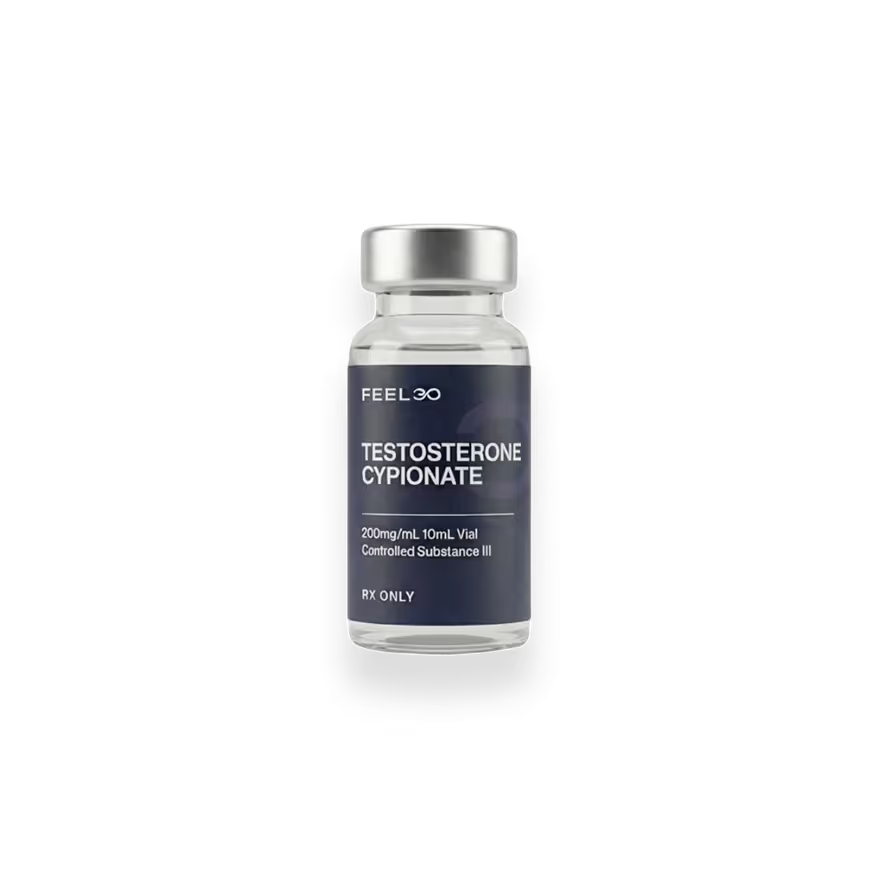
Supports energy, focus, sexual health, and overall wellbeing
Shop NowAs you age, your hormone levels may change. For example, testosterone levels can decline with age, although the pattern varies between men. When testosterone becomes low enough to cause hypogonadism, symptoms may include reduced sex drive, fewer morning erections, erectile dysfunction, fatigue, low energy, and decreased muscle mass (Khera et al., 2025). However, testosterone therapy does not reverse aging, and it's only recommended when there are relevant symptoms of low testosterone and low levels confirmed through testing. If you're worried that you may have low testosterone, talk to a healthcare provider who can decide whether testing is appropriate, either in the office or through an at-home testosterone test.
When treatment is appropriate, Feel30 offers provider-led testosterone therapy at home, including laboratory testing and ongoing monitoring. Interestingly, some of the measures that can slow aging also support testosterone naturally. You should also read about how exercise affects testosterone.
Peptides are sometimes discussed alongside hormones in the longevity space. Sermorelin, for example, stimulates the pituitary gland to release growth hormone, and there’s an interest in its role in sleep, recovery, and metabolism. However, it has not been shown to reverse biological aging. If you're considering it, first understand what sermorelin is and how it works, and discuss the potential benefits, limitations, and risks with a qualified healthcare provider.
Credible evidence shows that certain interventions can modestly slow some measured indicators of biological aging in humans. For example, one study shows that caloric restriction can slow the pace of biological aging in humans. (Columbia University Mailman School of Public Health, 2023) However, researchers are not sure how reliably those changes translate into slower overall aging, better long-term health, or longer life.
You can support healthy aging by being physically active, not smoking, maintaining a healthy weight, getting good sleep, and treating hypertension and high cholesterol (National Institutes of Health, 2024).
At What Age Does Aging Speed Up?
Biological aging occurs at different rates across your cells, tissues, and organs throughout life. Your genes and lifestyle also contribute to how you age (da Silva & Schumacher, 2021). Healthy habits like regular exercise and a good diet may potentially slow aging.
According to the Food and Drug Administration (FDA), no medication has been proven to slow or reverse the aging process. Available evidence suggests that lifestyle modifications like regular physical activity, a healthy diet, sufficient sleep, and maintaining a healthy weight may potentially slow aging (National Institutes of Health, 2024).
Some studies have shown that biological-aging clock measurements can shift toward younger values or that the measured pace of aging can slow. However, this does not necessarily mean that the overall aging process has been reversed. Healthy habits such as regular exercise, a balanced diet, sufficient sleep, and not smoking can support health and reduce the risk of age-related diseases. Hormone levels may change with aging, but don't choose treatment without consulting your healthcare provider for appropriate testing and recommendations.
Take the first step toward renewed energy and confidence with Feel30’s expert care.



4.9 out of 5 · 2,400+ reviews


Always Tired, Gaining Weight? Low T Was the Real Reason
Is Low T Hurting Your Relationship?
This gaming laptop is a powerhouse, equipped with the latest graphics card and a high-refresh-rate display.
Jane Smith
Feel30 has completely changed the game for me. I feel more energized, focused, and confident like I did years ago.
Emily Johnson
This smartphone offers an exceptional camera experience, with stunning low-light performance and vibrant colors.
John Doe
What are you waiting for?
Take the first step toward renewed energy and confidence with Feel30’s expert care.


Feel 30 again with physician-supervised treatment that restores the energy, confidence, and performance you remember. No hassle or hidden fees.