Stay informed with expert insights on testosterone therapy, men's health, and performance optimization.
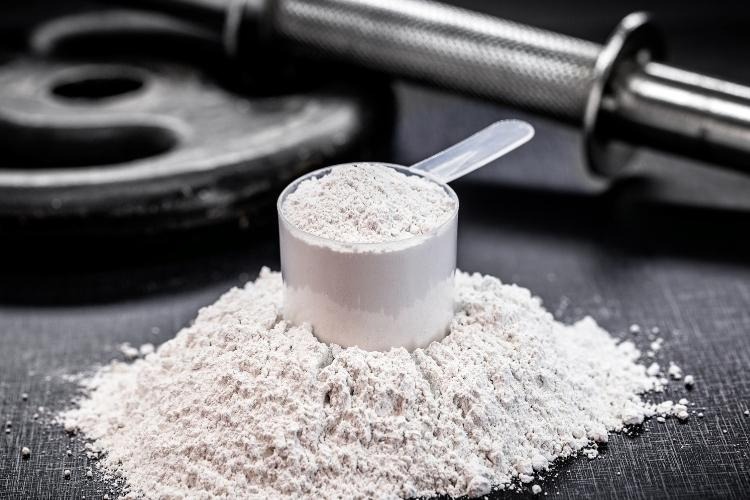
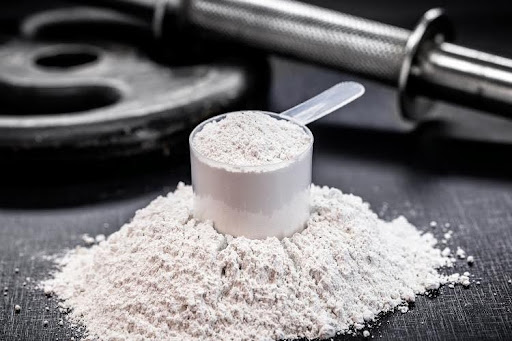
Photo by Getty Images, Canva].
Even though the store aisles are packed with colorful creatine supplements in all shapes and forms, the truth is that the cheapest, plainest one is usually the best creatine for men over 40.
Creatine monohydrate is backed by more evidence than any other form, and using evidence-backed supplements matters more as you age, because muscle and strength get harder to retain. Testosterone also gradually declines after 40, so supplements that may help protect lean muscle mass are definitely worth investigating.
Creatine is one of the few supplements shown to consistently deliver, and the good news is, you don't need the most expensive version to reap the benefits.
You don't automatically retain muscle after you reach the mid-30s; in fact, muscle strength and mass decrease gradually as you age. Furthermore, the decline accelerates each decade. You'll notice slower recovery between workouts and less strength in activities that used to be easy (Forbes et al., 2021). Understanding muscle loss with age can help put these changes into perspective and explain why maintaining strength becomes increasingly important after 40.
Testosterone also plays a role in muscle health because levels tend to decrease from the age of 30, and testosterone is important for building and retaining muscle (Cruz-Jentoft & Sayer, 2019). If you want more information on testosterone, read: The Benefits of Testosterone.
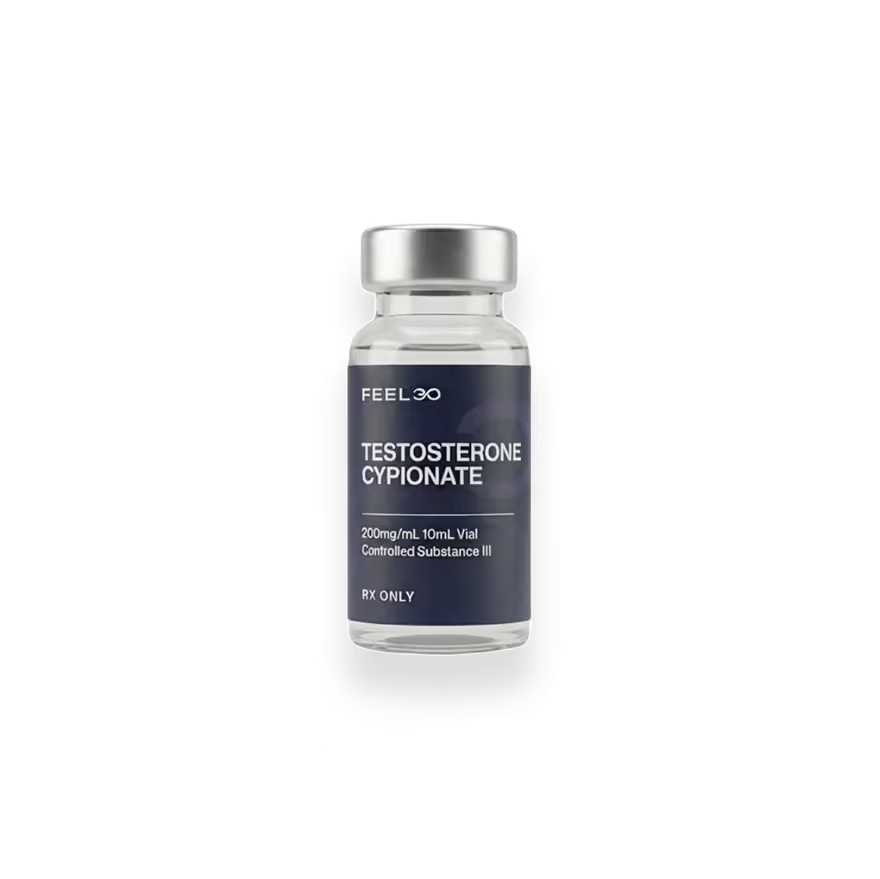
Supports energy, focus, sexual health, and overall wellbeing
Shop NowCreatine isn't a replacement for training or testosterone, but it does give your muscles more of the fuel needed for the type of work that maintains your strength as you age. If you're a man over 40 who's trying to hold onto muscle, creatine may provide that needed extra edge.
The human body makes and stores creatine as phosphocreatine in the muscles, which helps regenerate adenosine triphosphate (ATP), the molecule cells burn for energy (Antonio et al., 2021). The kidneys and liver make approximately a gram of creatine per day, and you also get creatine from food, for example, fish and red meat (Candow et al., 2023). That's typically why vegans and vegetarians have lower levels of creatine.
Your muscles use up ATP rapidly during short, intense bouts of exertion, and having more phosphocreatine available allows the body to regenerate ATP faster, allowing you to push harder and recover faster (Candow et al., 2023).
Supplementing creatine tops up your stores beyond what your body and diet provide naturally, which may improve strength and power.
Creatine comes in many forms, with different price ranges and proposed claims and side effects.
Forms of creatine supplements:
Creatine monohydrate is the most widely studied and clinically effective form. The International Society of Sports Nutrition says that claims of other forms of creatine being more effective or better absorbed are unfounded (Candow et al., 2023). A separate study reached the same conclusions and reiterated that monohydrate is still the best choice, regardless of the marketing around the newer forms (Antonio et al., 2021).
In controlled tests, buffered and hydrochloride creatine haven't shown evidence of increased muscle uptake or results, and ethyl ester has been shown to elevate muscle creatine less effectively than monohydrate.
In effect, the takeaway is simple: Pure creatine monohydrate is what research has been built on, and paying more for different versions isn't worth it.
It’s important to note that creatine is a dietary supplement, not a drug, that may be beneficial in a supportive role when taken while training.

[Photo by Pexels, Canva].
Lean muscle growth and strength improvement have the most evidential support. In a meta-analysis of 16 randomized controlled trials involving older adults, researchers found that when creatine was combined with resistance training, lean tissue mass was increased by approximately 1.32 kg more than resistance training alone, with notable improvements in leg and chest strength (Forbes et al., 2021).
However, this doesn't mean that creatine is a fat-loss solution, and if you're not training while taking it, you won't build muscle; it simply amplifies the work you're already doing. Creatine doesn't directly trigger muscle protein synthesis, but it enables extra strength and training, which provides the stimulus your body needs to build new muscle tissue. Following a structured exercise program for men over 50 can help ensure that strength training, cardio, mobility, and recovery are incorporated into a sustainable routine.
The brain uses creatine for energy in the same way muscles do, which is why research teams study whether creatine supplementation can improve cognition.
In a meta-analysis by Prokopidis et al. (2023), it was found that creatine did improve memory, with the most distinct effect in older adults. Another more recent review, specifically of seniors, revealed that there may be a link between creatine and cognition in healthy older adults, particularly when it comes to attention and memory (Marshall et al., 2026).
These small studies are promising; however, the evidence is still limited, so cognition as a benefit of creatine should be considered a possible bonus, rather than a reason to take it.
Bone health is often associated with creatine, but there's less evidence supporting its benefits. In a meta-analysis by Forbes et al. (2018), when creatine was paired with resistance training, no significant improvement in bone mineral density was noted. It's more the training itself that has beneficial effects on bone health.
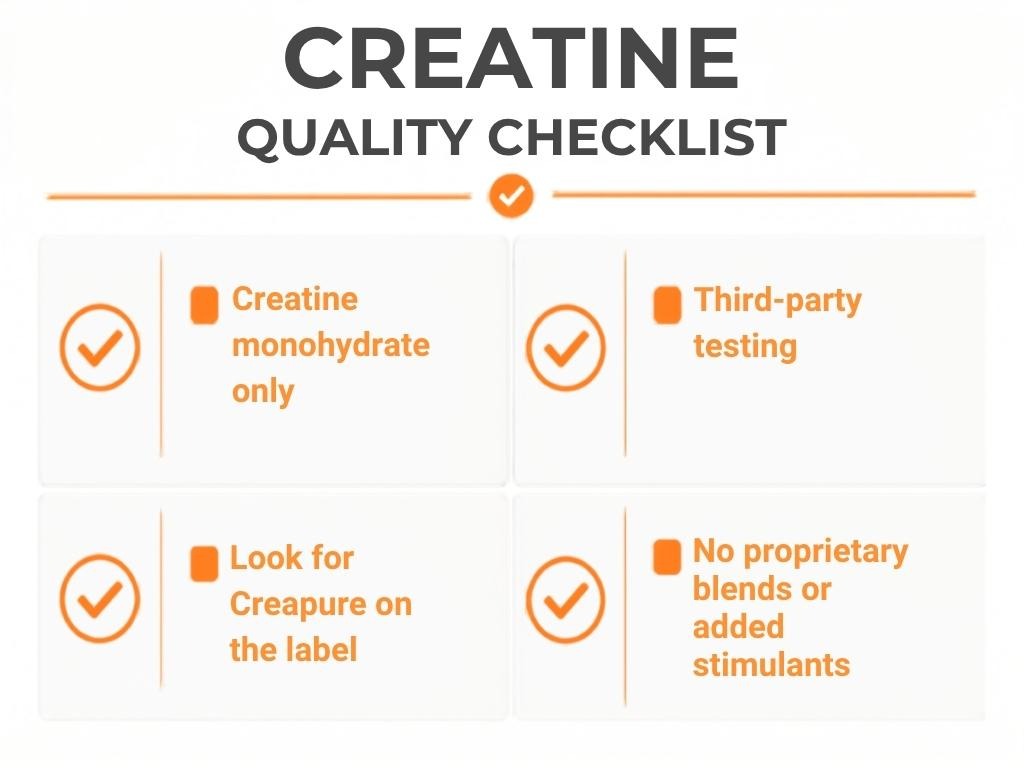
The best creatine supplements have a few factors in common. To ensure the quality of your product, look out for the following on the label:
Creatine is very cost-effective, and you don't need to pay a high premium to get a quality supplement.
The correct creatine dosage is unique to each individual, so it's best to confirm your own dosage with a healthcare provider.
In research studies, approximately 3 to 5 grams of creatine monohydrate is most commonly administered per day. Once muscle stores are established, this is considered a sufficient amount to maintain them (Candow et al., 2023).
You don't have to do a loading phase. Loading a higher amount for the first week does fill muscles faster, but taking a consistent 5 grams/day will get you to the same place; it will just take a little longer (Antonio et al., 2021). Being consistent is more important because creatine works by keeping your muscle stores saturated, so taking creatine daily, even on rest days, is what produces the best effect. The time of day you take it doesn't make much of a difference, and mixing the powder with a protein shake or water works equally well.
Note: Supplement labels aren't a substitute for medical advice. Your provider should tell you if creatine is suitable for you, taking your health history and medications into account.
For most men, creatine has a strong safety record in comparison to other supplements. According to the International Society of Sports Nutrition, no harmful effects have been noted with long-term use in studies of healthy adults taking 30 grams/day for up to five years (Candow et al., 2023).
However, there are some concerns that creatine use is sometimes associated with, such as:
Even though creatine is safe for most men, it's not a suitable supplement for everyone. Because it's a dietary supplement, it hasn't been reviewed by the FDA in the same way as a medication, and it also hasn't been evaluated to diagnose, treat, or cure conditions. That's why it's important to contact a healthcare professional before starting creatine supplements.
Talk to a provider before starting if:
If you're consistently training and taking creatine, but you've noticed that your strength and energy are still low, it may be a sign of low testosterone.
Low testosterone has many of the same symptoms men assume are caused by aging, such as muscle that doesn't respond to a strength training regimen and stubborn belly fat, so it's beneficial to do a test rather than simply guessing. You can do an in-office or at-home testosterone test to check your levels and review the outcome with a provider.
If you do find that your testosterone is low and are interested in how you can improve it naturally, read our guide: How to Raise Testosterone. Remember, creatine isn't a hormone, and it won't increase your testosterone (Candow et al., 2023).

In 2009, van der Merwe et al. studied college-age rugby players who were given 25 grams of creatine every day for seven days, and then 5 grams every day for 14 days. The research showed that levels of dihydrotestosterone (DHT), which is an androgen hormone associated with androgenetic alopecia (male pattern hair loss), increased by 56% in the loading phase and stayed 40% above baseline during the maintenance phase.
Because DHT attaches to receptors in the hair follicles on the scalp and causes them to shrink, media outlets concluded that creatine causes hair loss; however, according to subsequent research:
The International Society of Sports Nutrition (ISSN) explicitly states that current evidence does not prove that creatine causes hair loss.
Male pattern hair loss is mainly determined by hair follicle sensitivity to DHT and genetics, not minor fluctuations in hormone serum levels. If you are genetically prone to hair loss, your follicles will already be sensitive to DHT (Antonio et al., 2021).
It's best to avoid having a lot of caffeine at the same time as creatine, as it may lessen its effect because of the opposing physiological mechanisms (Mabrey et al., 2024) . Also, combining creatine powder with acidic drinks or hot liquids can speed up its conversion into inactive creatinine before it's ingested (Antonio et al., 2021).
Generally, you can, but you should tell your prescribing physician. Spironolactone is a diuretic (water pill) that needs regular blood tests to monitor kidney function through serum creatinine levels (Secora et al., 2020). Because supplementing with creatine elevates serum creatinine, you need to let your healthcare provider know you're taking it so your lab results aren't misinterpreted as drug-induced renal dysfunction (Antonio et al., 2021).
If you load creatine, your muscle stores will fill in about a week; if you take a steady daily dose, it will typically take a few weeks. It's best to give it a month or more of consistent supplementation and training before assessing the results.
Creapure is manufactured in a pharmaceutical-grade German facility under strict standards. It's widely regarded as the gold standard for creatine monohydrate. Its production process yields 99.9% purity, almost completely eliminating unwanted byproducts; each pack also has a unique code so it can be verified and traced, and the way it's processed minimizes the risk of contamination. That's also why it's trusted by competitive athletes who get tested for banned substances.
In conclusion, the best creatine for men over 40 isn't necessarily the most expensive or interesting-looking product; it's the plain and simple creatine monohydrate that's third-party tested for purity and taken regularly while doing resistance training. As you age, this combination can help build lean muscle mass and maintain your strength, and may even give you a small edge in memory, but, notably, creatine is not a quick fix for everything.
If your results have slowed down even though you've been putting in the work, it's also worth having your testosterone tested and consulting with a healthcare provider.
At Feel30, we offer provider-led TRT at home, with baseline testing, regular bloodwork, and treatment guided by how your body responds. For more information about the link between exercise and testosterone, read our guide: Does Exercise Increase Testosterone?
Take the first step toward renewed energy and confidence with Feel30’s expert care.



4.9 out of 5 · 2,400+ reviews


Always Tired, Gaining Weight? Low T Was the Real Reason
Is Low T Hurting Your Relationship?
This gaming laptop is a powerhouse, equipped with the latest graphics card and a high-refresh-rate display.
Jane Smith
Feel30 has completely changed the game for me. I feel more energized, focused, and confident like I did years ago.
Emily Johnson
This smartphone offers an exceptional camera experience, with stunning low-light performance and vibrant colors.
John Doe
What are you waiting for?
Take the first step toward renewed energy and confidence with Feel30’s expert care.


Feel 30 again with physician-supervised treatment that restores the energy, confidence, and performance you remember. No hassle or hidden fees.